Places to Visit in Shimla
Top attractions and must-see spots in Shimla
Cultural
1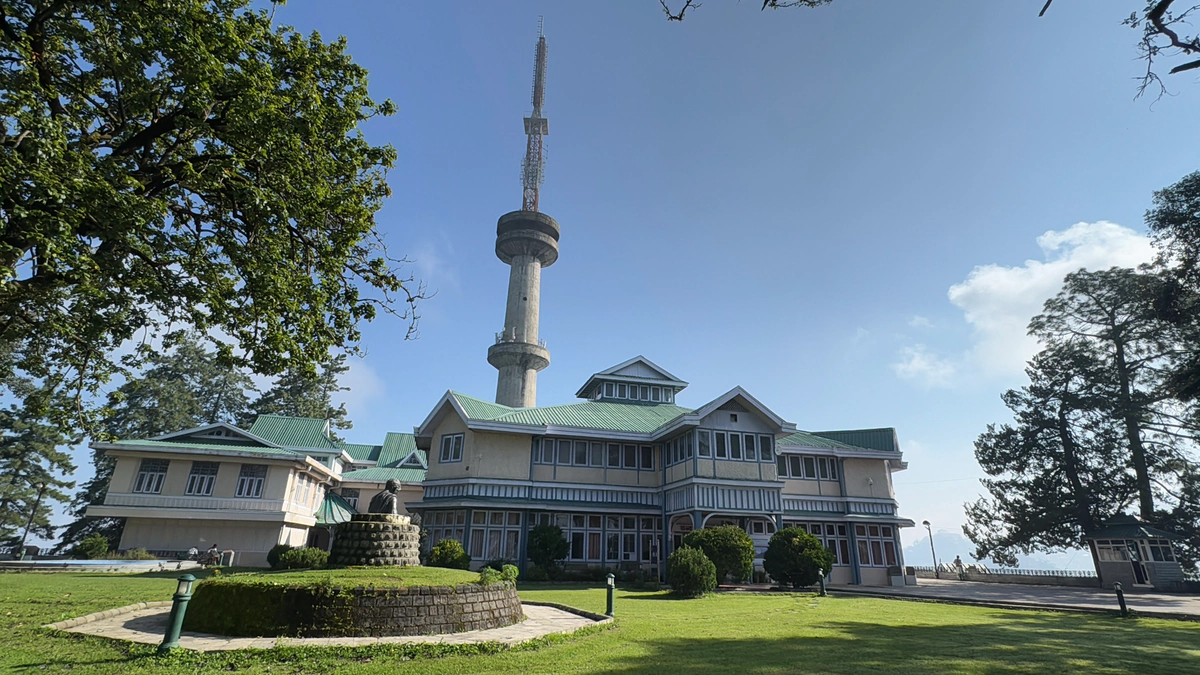
Shimla State Museum
Himachal Pradesh's main museum in a colonial Shimla mansion, housing one of India's finest collections of Pahari miniature paintings alongside bronzes and artefacts.
Landmarks
8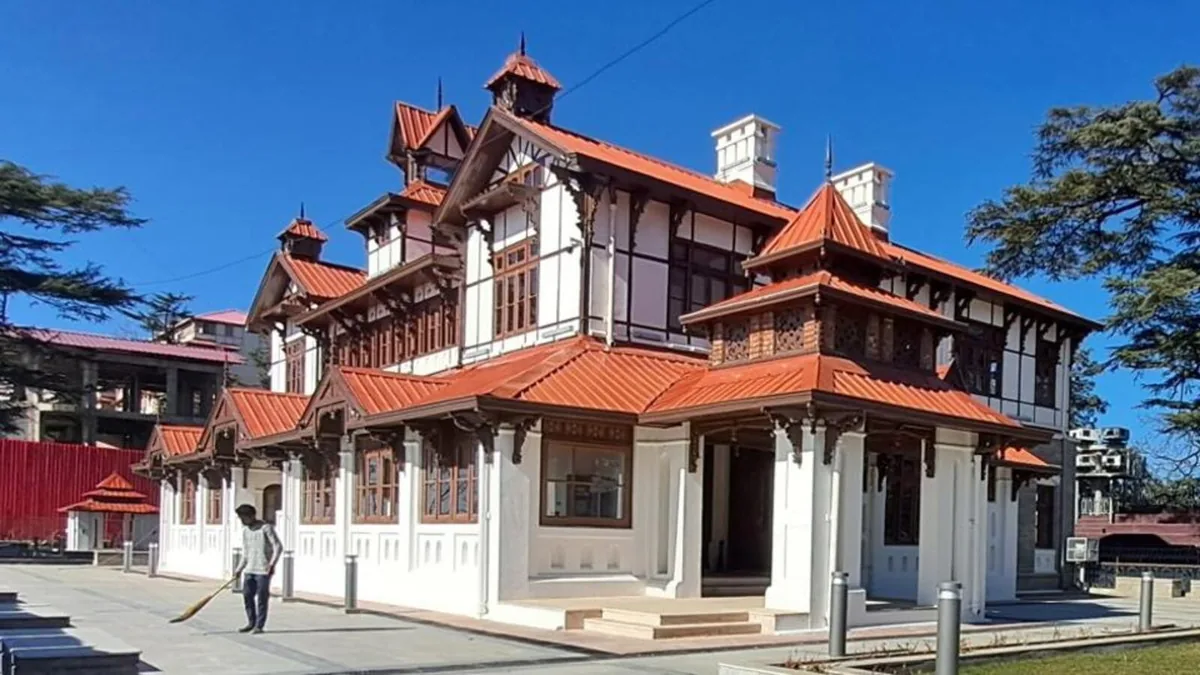
Bantony Castle
Originally the summer palace of the Maharaja of Sirmaur, this 19th-century mock-Tudor castle on Bantony Hill takes its name from Governor-General Lord Bentinck. Designed by T.E.G. Cooper, the building served through various functions over the decades, including a wartime government office and the Tribune newspaper's post-Partition home. Acquired by the Himachal Pradesh government in 2017 and restored, it now houses a Heritage Museum, a digital light-and-sound show narrating Shimla's history, and a platform for state arts and crafts.
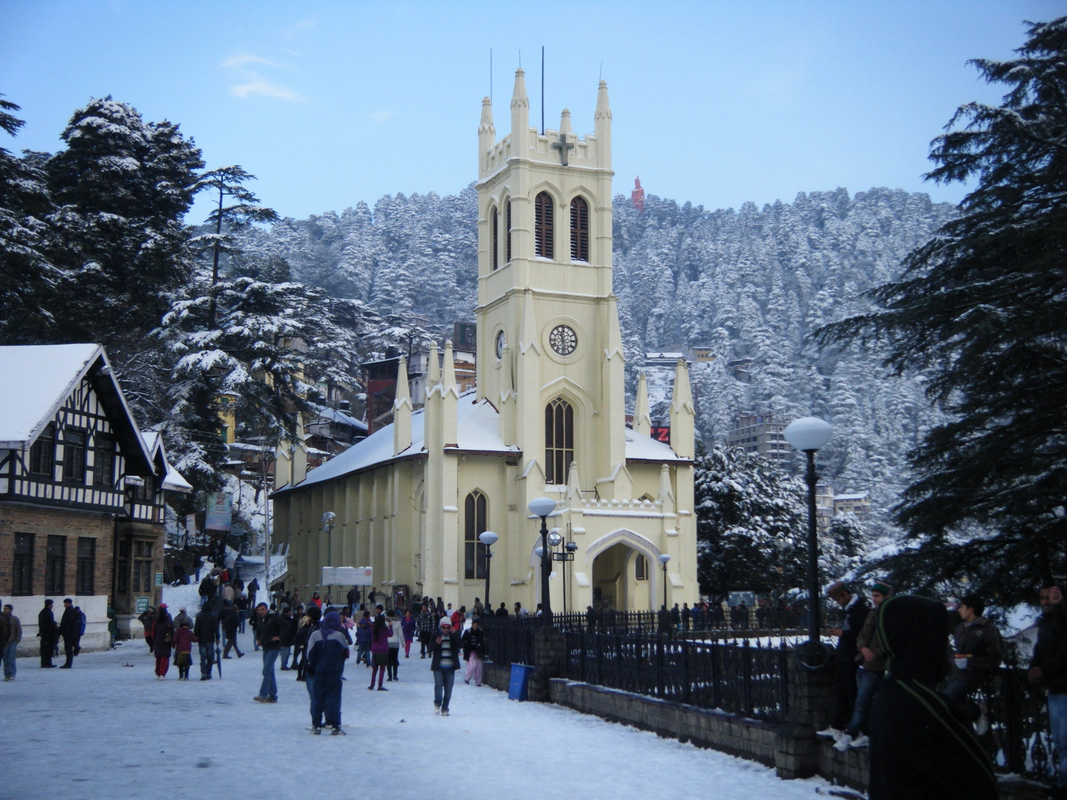
Christ Church
The second oldest church in North India on Shimla's Ridge, built in 1857 during the British Raj with beautiful stained glass windows and a prominent clock tower.
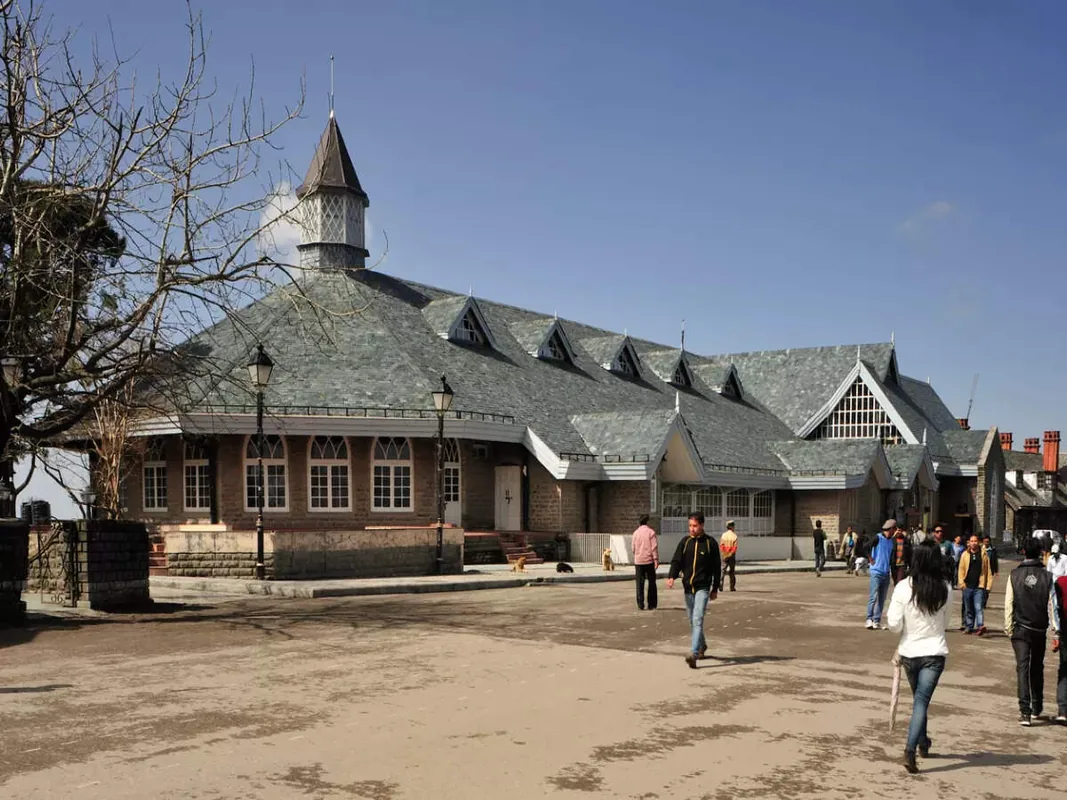
Gaiety Theatre
Opened on 30 May 1887 and designed by British architect Henry Irwin in Gothic Revival style, the Gaiety Theatre on Mall Road was the cultural heart of Shimla during the British Raj. It hosted performances by Rudyard Kipling, Prithviraj Kapoor, and K.L. Sehgal, earning comparisons to the Royal Albert Hall. Restored between 2003 and 2009, it now functions as the Gaiety Heritage Cultural Complex with an active stage, art gallery, and museum.
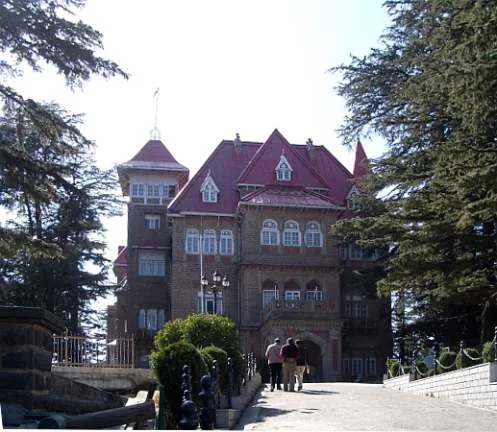
Gorton Castle
A three-storey neo-Gothic heritage building on Shimla's Mall Road, constructed in 1904 to designs by Sir Swinton Jacob, the architect behind Jaipur's Albert Hall. Built as the Imperial Government Secretariat when Shimla was British India's summer capital, the structure combines grey Sanjauli stone with distinctive Rajasthani jaali balconies. Now housing the offices of the Accountant General of Himachal Pradesh, it was declared a National Heritage Building in 2003 following a major restoration.
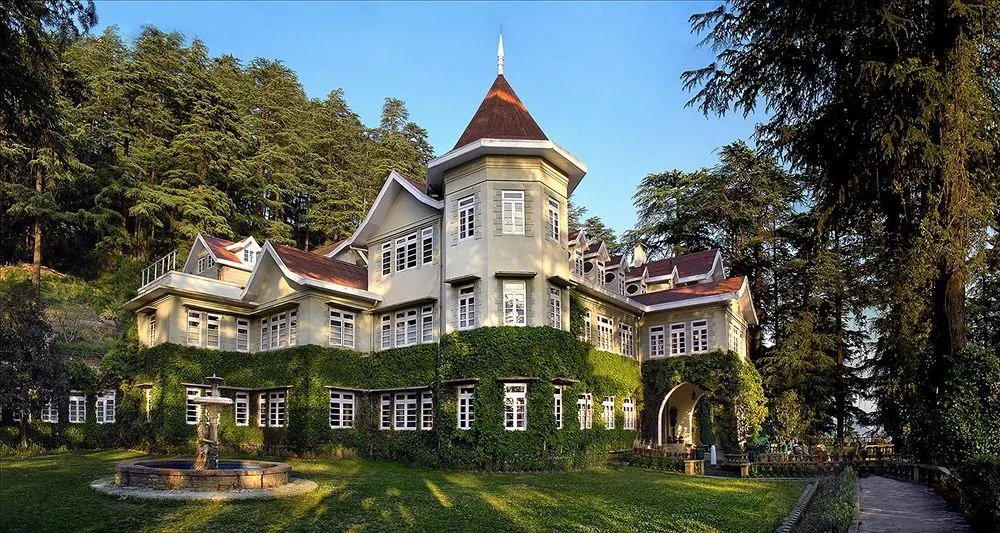
Rothney Castle
Known locally as Sheeshe Wali Kothi, this heritage mansion on Jakhu Hill is where Allan Octavian Hume, founder of the Indian National Congress, lived from 1881 onwards. It was here that Hume assembled the world's largest collection of Asiatic bird specimens and conceived the idea of forming a political body to represent Indian interests. The castle was originally built in 1838 by Colonel Rothney and passed through several owners before Hume transformed it into Shimla's most magnificent private residence. It stands within the city's Heritage Zone.
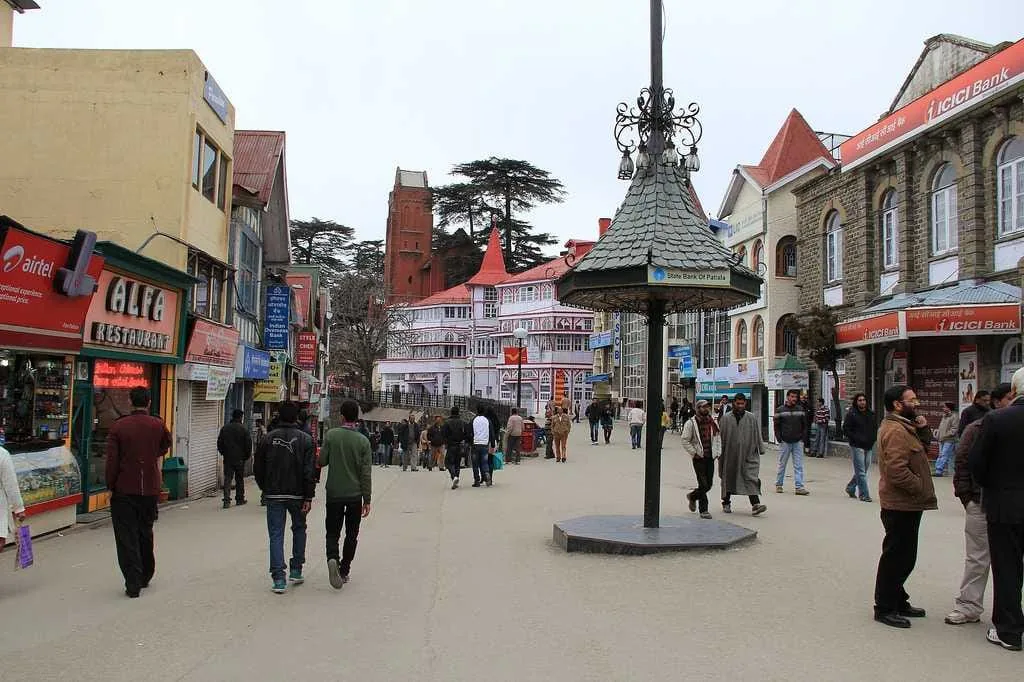
Scandal Point
The junction where Mall Road meets The Ridge is Shimla's most storied crossroads, named after an 1892 episode in which Maharaja Bhupinder Singh of Patiala reportedly eloped with the daughter of the British Viceroy and was subsequently banned from the city, prompting him to build Chail as his own summer capital. Today a lively gathering spot for locals and visitors, it offers panoramic views of the Himalayan ranges and the valley below. A prominent statue of freedom fighter Lala Lajpat Rai stands at the point as its most visible landmark.
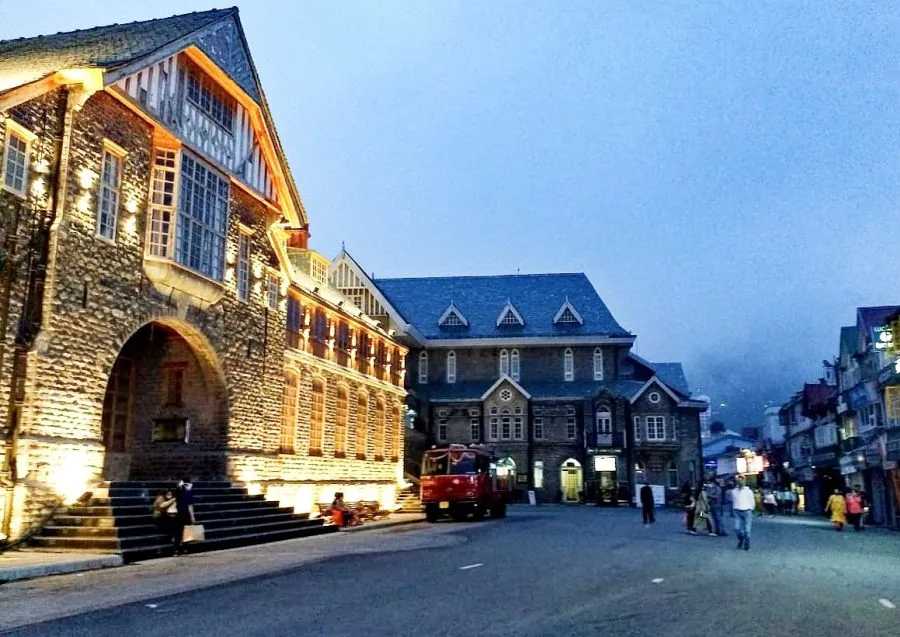
Shimla Town Hall
A commanding colonial landmark on Mall Road built in 1910, the Shimla Town Hall combines neo-Gothic and Tudor Revival elements in a red-brick and timber-framed facade topped with a clock tower. Constructed during the height of Shimla's role as the British summer capital, it served as a venue for civic gatherings and social functions of the era. Restored alongside the adjacent Gaiety Theatre, the building now houses the Municipal Corporation of Shimla and remains one of the most photographed structures on the Mall.
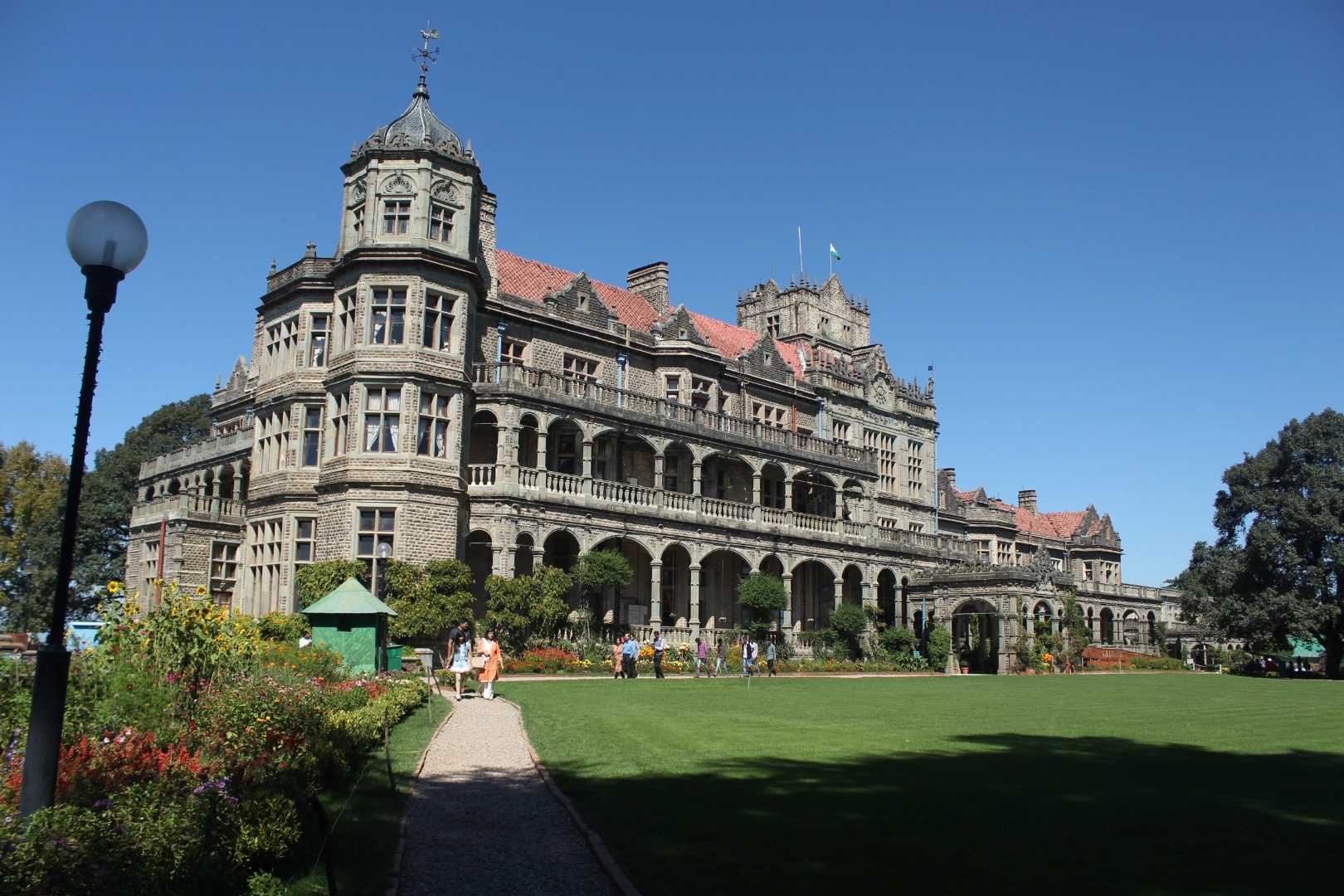
Viceregal Lodge (Indian Institute of Advanced Study)
The magnificent 1888 Viceregal Residence in Shimla where crucial pre-independence political conferences were held, now the Indian Institute of Advanced Study offering heritage tours.
National Parks
2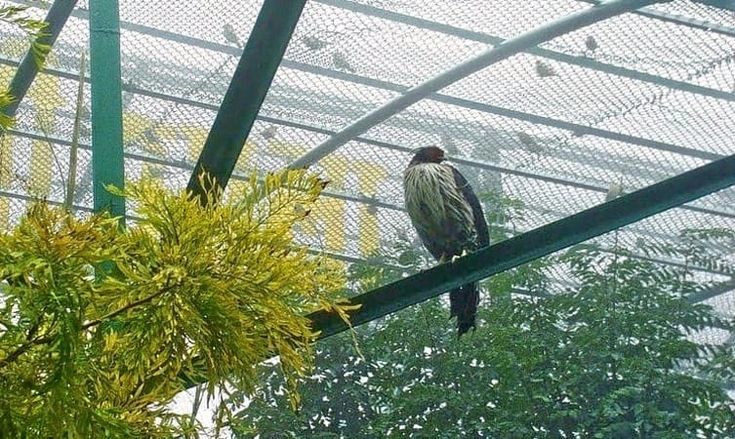
Himalayan Bird Park
A hillside park in Shimla housing Himalayan bird species including the Monal state bird, pheasants, and small Himalayan mammals in naturalistic enclosures.
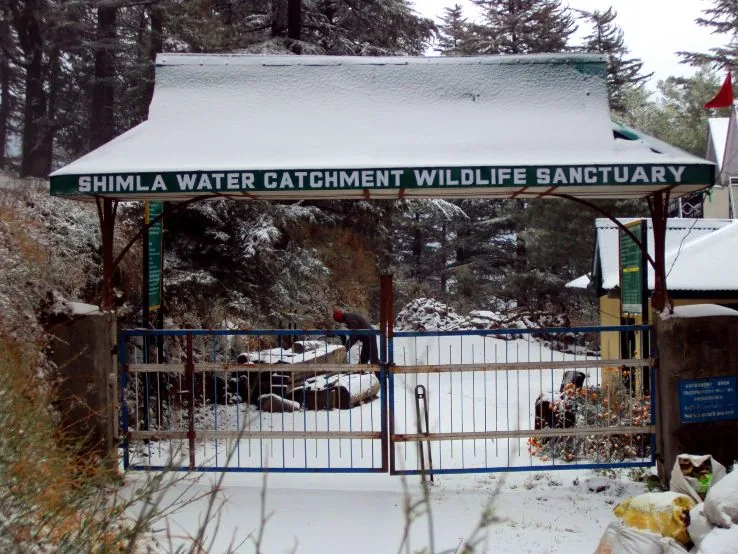
Shimla Water Catchment Wildlife Sanctuary
A 951-hectare protected forest 9 km east of Shimla on the Hindustan-Tibet Road, first leased from the Rana of Koti by the British in 1878 to secure Shimla's water supply and declared a wildlife sanctuary in 1990. Nine perennial streams including God Ki Nala and Churat Nala flow through the sanctuary's dense cedar, oak, and pine cover, feeding a gravity-based reservoir system that still supplies the city today. The sanctuary shelters leopards, barking deer, musk deer, Koklass and Kaleej pheasants, and connects southward to the Chail Sanctuary through a forest corridor.
Scenic Spots
15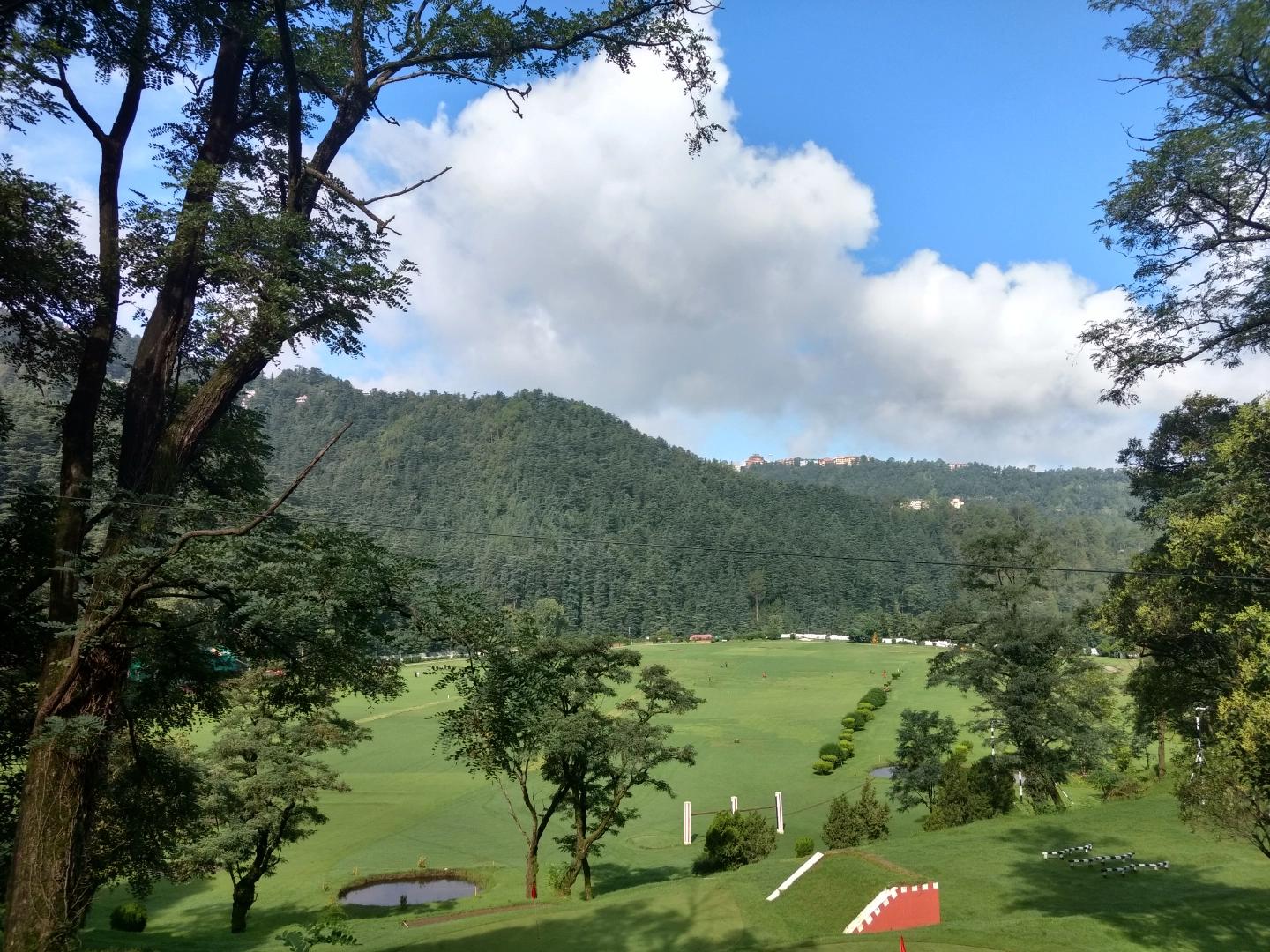
Annandale Ground
A historic flat meadow in Shimla used by the British for polo and horse racing, now a helipad surrounded by pine-covered hills.
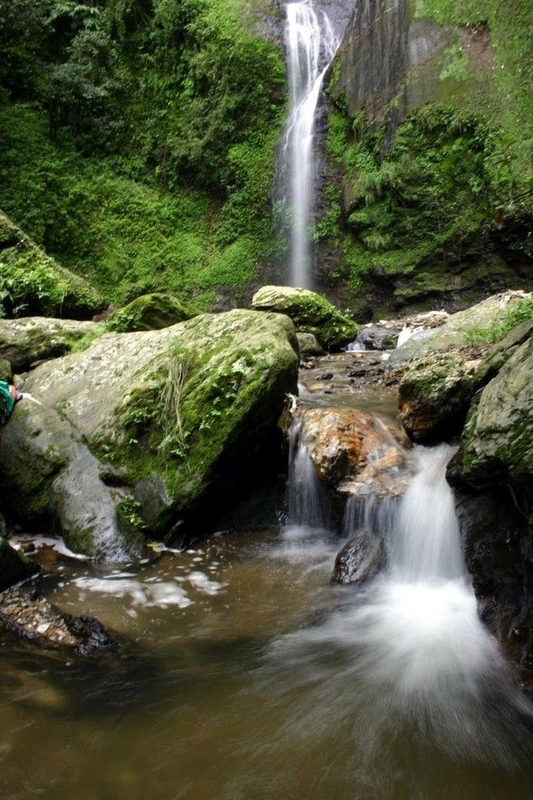
Chadwick Falls
A scenic 67-metre waterfall in a forested valley 7 km from Shimla, reached by a pleasant forest trail and most impressive during monsoon.
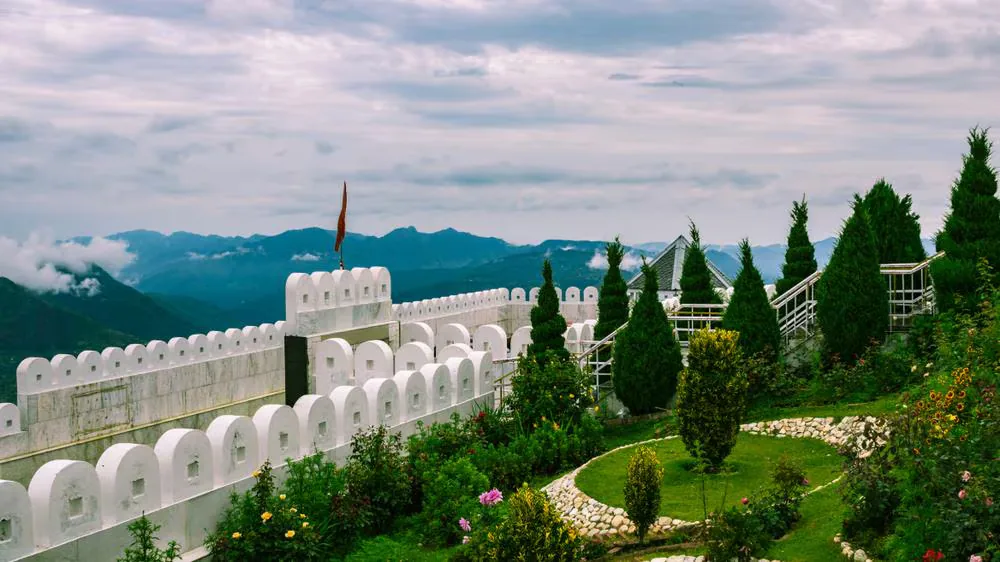
Chail
A hill station 44 km from Shimla founded as a royal act of defiance by Maharaja Bhupinder Singh of Patiala after he was banned from Shimla by the British. Chail Palace, built in 1891 across 75 acres of pine-forested hillside, now operates as a heritage hotel. The Maharaja also levelled a hilltop at 2,444 metres to create what remains the world's highest cricket ground, established in 1893 and still maintained by the Chail Military School. Together with the Kali Tibba temple and sweeping views of the Sutlej Valley, Chail has a compact but exceptional set of attractions for a day trip or overnight stay from Shimla.
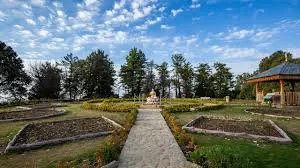
Craignano
A colonial-era Italian estate 12 km from Shimla on the Shimla-Naldehra road, built in the 1890s by Chevalier Federico Peliti, who served as chief confectioner to the Viceroy and named the property after his hometown near Turin. Set at 2,350 metres amid deodar and cedar forest, the grounds feature manicured lawns, terraced gardens, a treehouse, and a small lake. Now managed by the Shimla Municipal Corporation as Craignano Nature Park, it also houses the world's tallest gravity-fed water lift, originally constructed by the British to supply Shimla with water from the valley below.
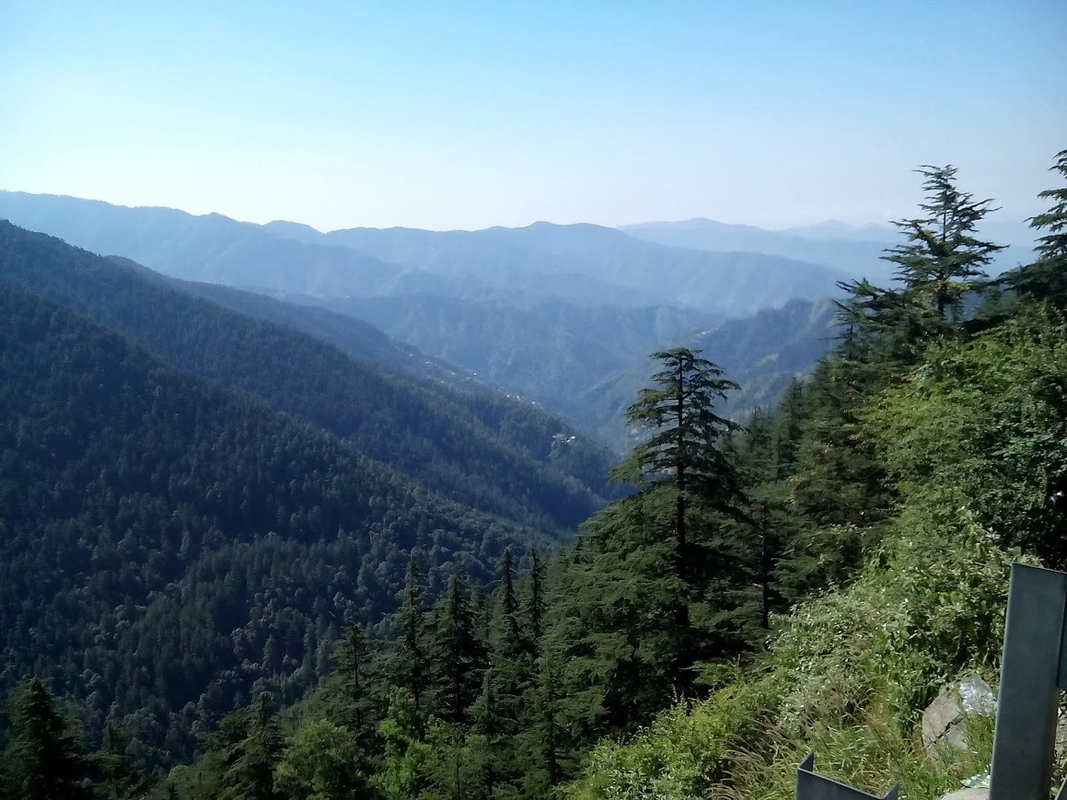
Green Valley
A lush pine and oak forested valley below Shimla's hills, popular for walks and photography, especially beautiful during the monsoon mist.
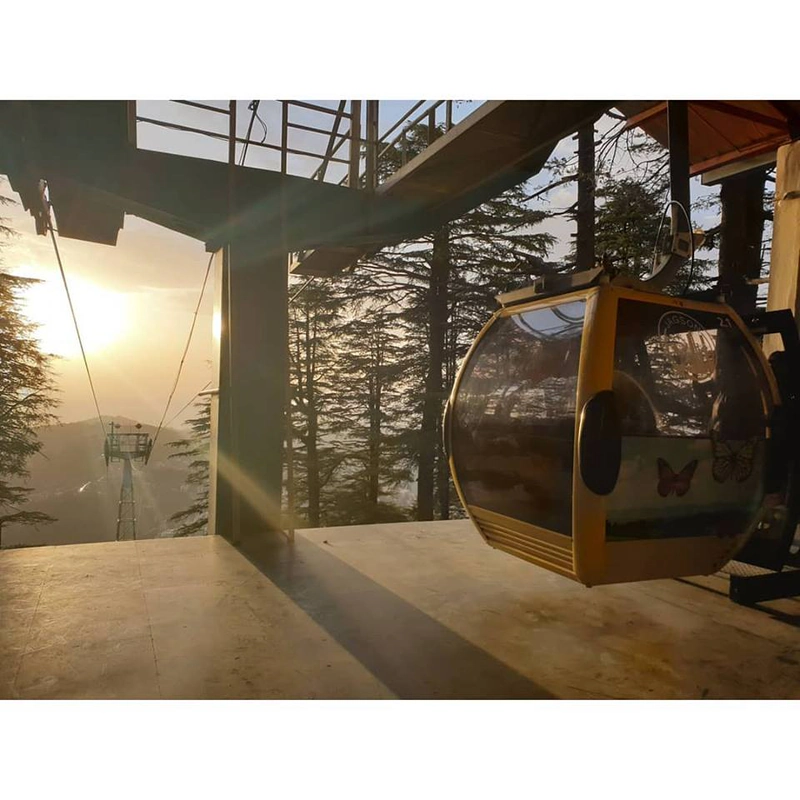
Jakhu Ropeway
A scenic cable car ride from Shimla's Ridge to Jakhu hilltop offering panoramic views of the city and Himalayan ranges.
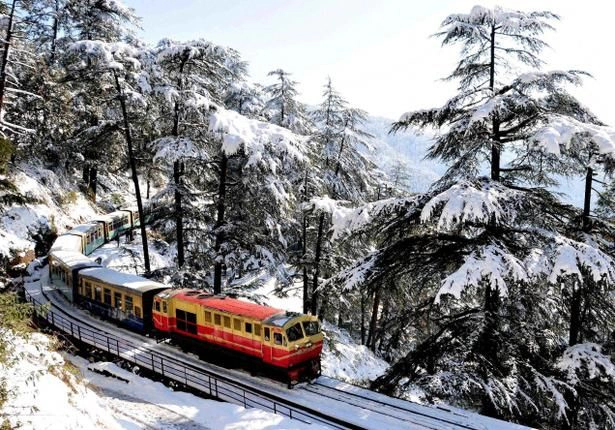
Kalka–Shimla Toy Train Ride
A UNESCO World Heritage narrow-gauge railway climbing 96 km through 102 tunnels and 800 bridges from Kalka to Shimla — one of the great mountain train journeys.
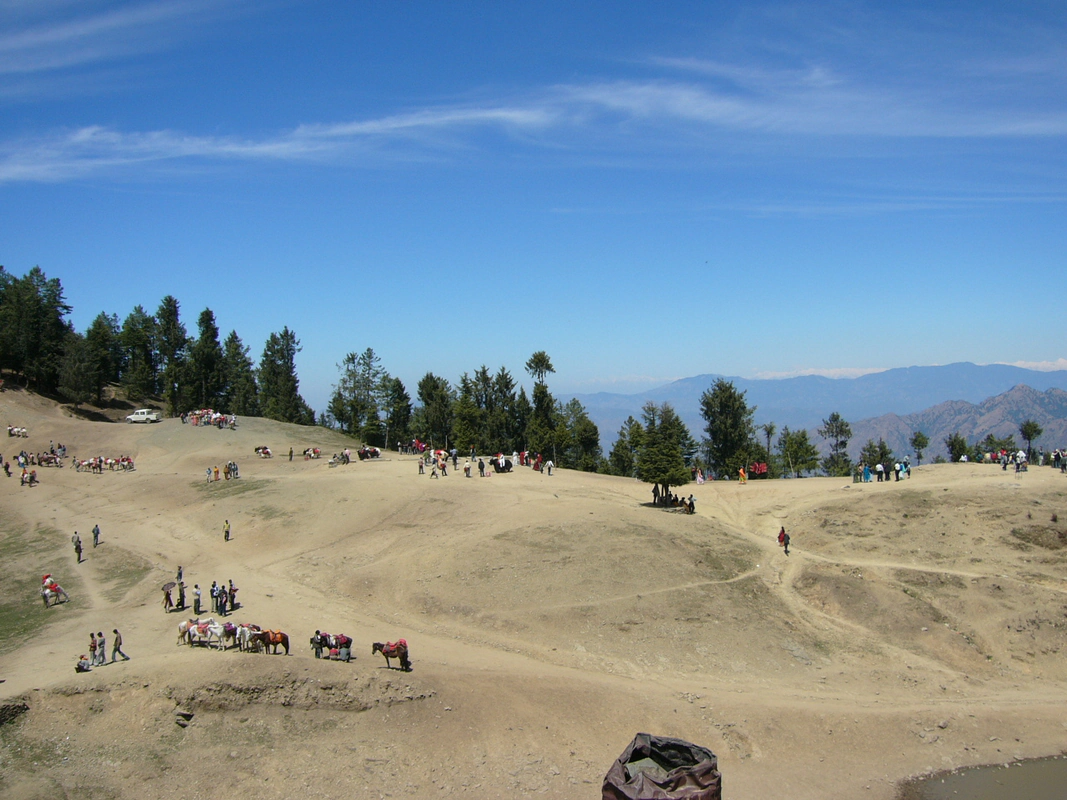
Kufri
A small hill station 16 km from Shimla known for winter skiing, the Himalayan Nature Park with snow leopards, and panoramic Himalayan views.
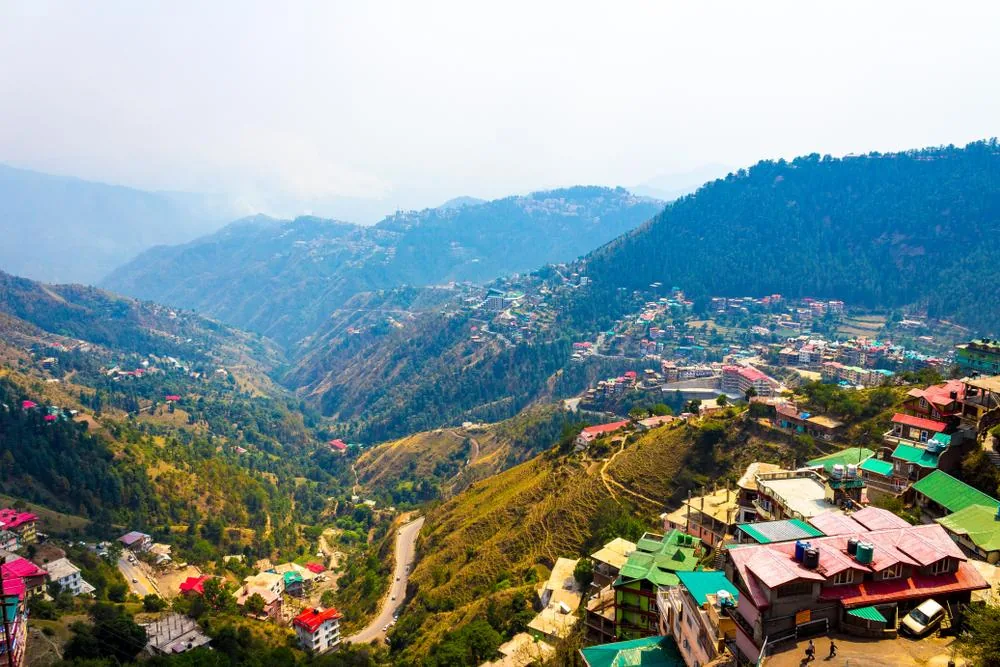
Mashobra
A quiet hill retreat 13 km east of Shimla at 2,246 metres, Mashobra sits above the Shimla Reserve Forest Sanctuary amid apple orchards, oak woodland, and deodar forest. The Retreat, a colonial-era bungalow on the outskirts, serves as the summer residence of the President of India. Craignano Nature Park, the Mahasu Devta Temple, and trails toward Shali Tibba draw visitors seeking an unhurried alternative to the busier hill stations nearby. The annual Mahasu Jatara fair brings folk music, archery, and community gatherings to the village each year.
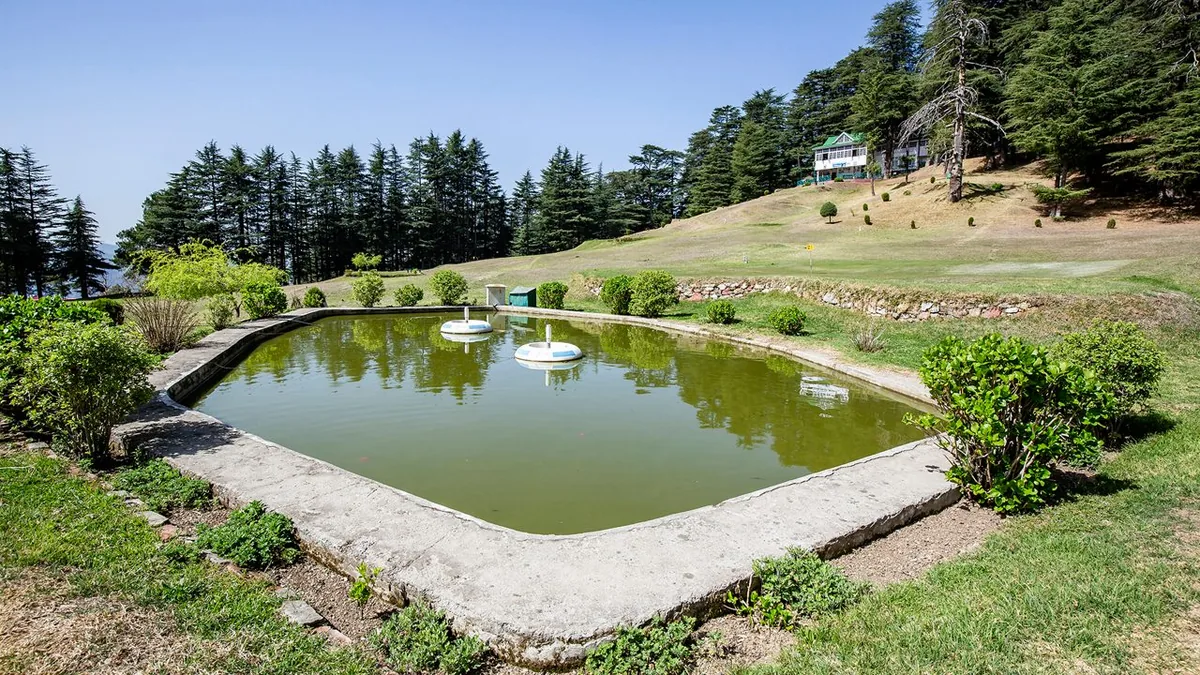
Naldehra
A serene meadow village 22 km from Shimla at 2,200 metres, Naldehra is home to one of India's oldest golf courses, laid out in 1905 by Viceroy Lord Curzon on a natural sloping glade of deodar forest that reminded him of the Scottish links. So taken was Curzon with the place that he named his daughter Alexandra Naldehra in its honour. The course today spans 18 holes across 4,285 yards and is maintained by Himachal Tourism. Beyond golf, Naldehra offers horse riding through the surrounding cedar forests and serves as the starting point for excursions to Tattapani and Shali Tibba.
Prospect Hill
One of Shimla's seven hills, Prospect Hill rises to 2,155 metres above sea level about 4 km from the city centre on the Shimla-Bilaspur road. A 15-minute climb through deodar forest from Boileauganj leads to the hilltop Kamna Devi Temple, an 18th-century shrine dedicated to a form of Goddess Kali where devotees come to seek fulfilment of wishes. The summit offers sweeping views of the Himalayan ranges and the Kalka-Shimla toy train threading through the valleys below.
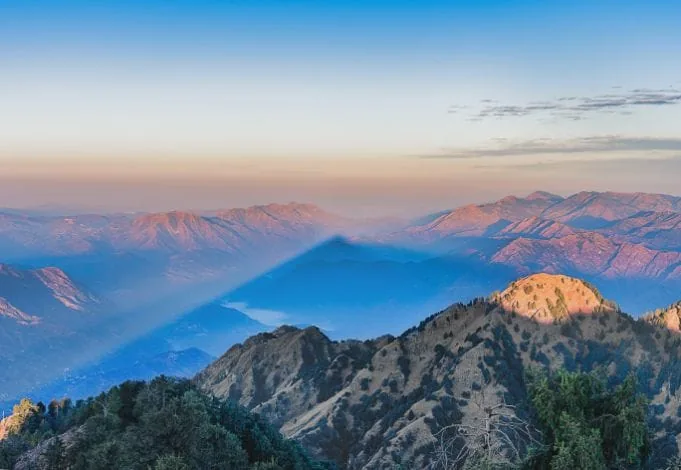
Shali Tibba
The highest peak in the Shimla district, Shali Tibba rises to 2,870 metres above sea level behind the Mashobra ridge, about 50 km from the city by road. A moderate 7 km trek from the base village of Khatnol threads through dense blue pine and deodar forest to the summit, where a Kath Kuni temple dedicated toawati Mata has stood for centuries. The peak commands a 360-degree panorama taking in Shimla, Kufri, Fagu, and Narkanda, and draws both trekkers and pilgrims, especially during Navratri.
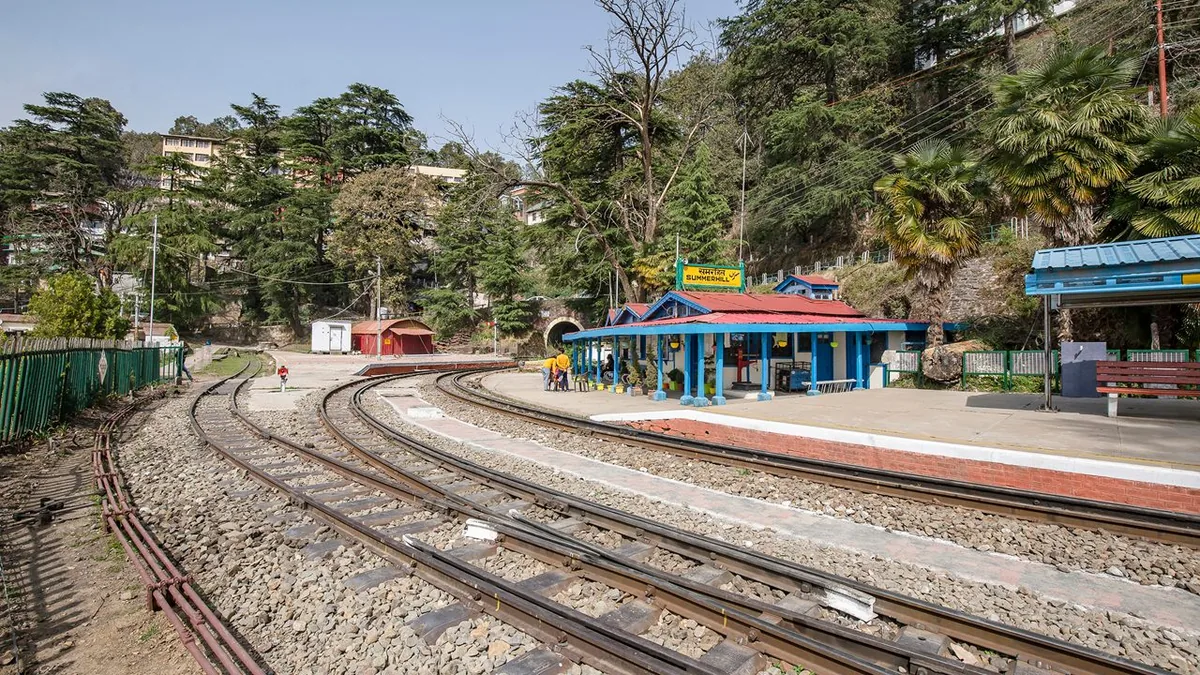
Summer Hill
A quiet suburb 5 km west of Shimla's Ridge at 2,123 metres, Summer Hill is one of the seven hills of the city and a stop on the Kalka-Shimla Heritage Railway. Also called Potter's Hill, it is historically associated with Mahatma Gandhi, who stayed at the Georgian mansion Manorville during his visits to Shimla as the guest of Rajkumari Amrit Kaur. The campus of Himachal Pradesh University occupies its upper slopes, and the lanes lined with pine and deodar retain the unhurried character of colonial-era Shimla.
Tattapani
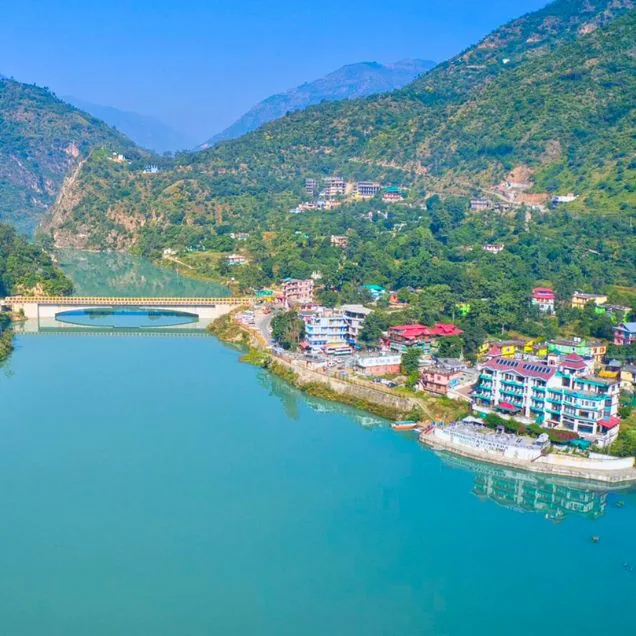
A village on the right bank of the Sutlej River 51 km from Shimla, Tattapani takes its name from the hot sulphur springs that once bubbled up through its riverbanks and were revered for therapeutic properties going back centuries. The original springs were submerged after the 800 MW Kol Dam reservoir filled in 2015, but the site retains strong pilgrimage significance, drawing enormous crowds for the Makar Sankranti mass bathing festival each January. The Sutlej also makes Tattapani a base for white-water rafting, and local folklore ties the springs to the sage Jamadagni of the Treta Yuga.
The Ridge
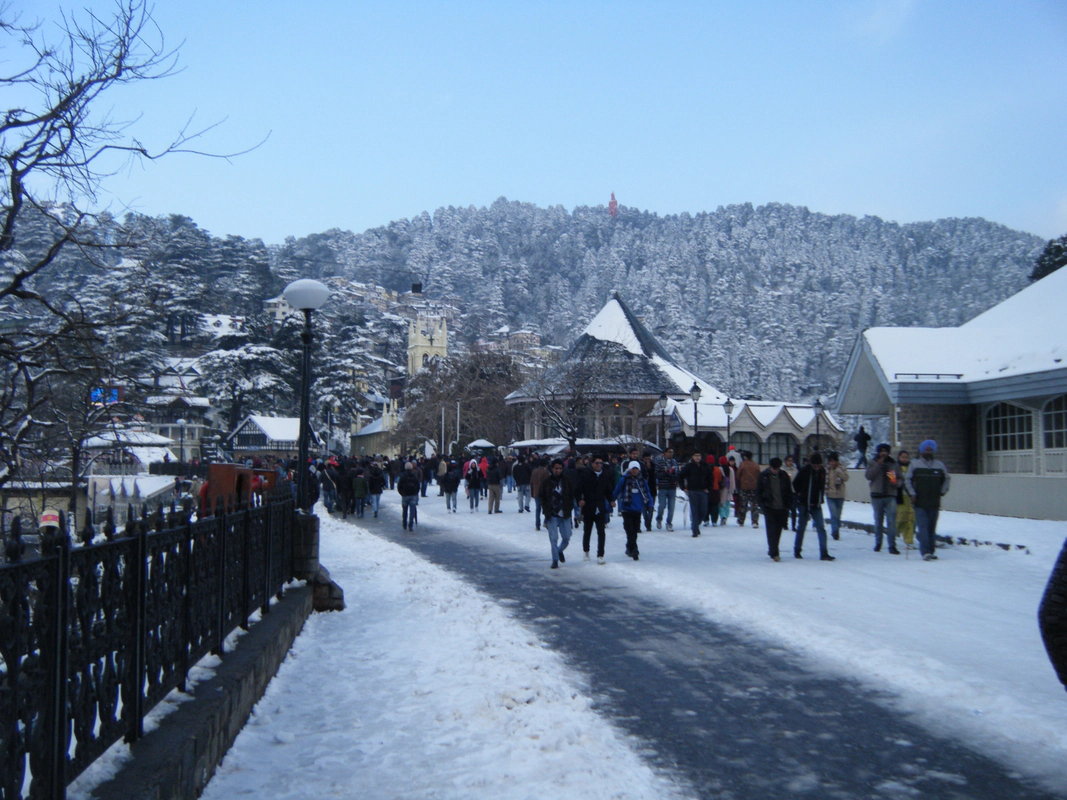
Shimla's central open promenade atop the main ridge offering Himalayan panoramas, flanked by Christ Church and the Gaiety Theatre — the city's social heart.
Shopping
4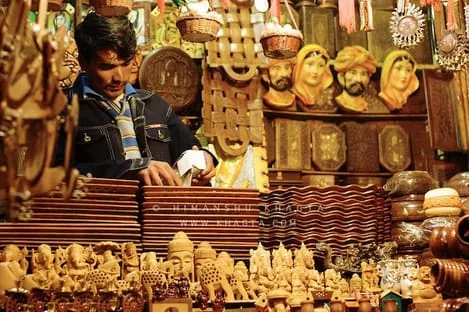
Lakkar Bazaar
Shimla's dedicated wood market, a narrow lane adjoining The Ridge lined with shops selling deodar and walnut wood handicrafts ranging from walking sticks and carved figurines to kitchen items and toys. The market traces its origins to Sikh carpenters who settled here from Hoshiarpur during the colonial period when Shimla's role as the British summer capital drove strong demand for wooden furniture and fittings. It also stocks Tibetan carpets, Kullu shawls, and Pashmina, making it the most concentrated souvenir shopping stretch in the city.
Lower Bazaar
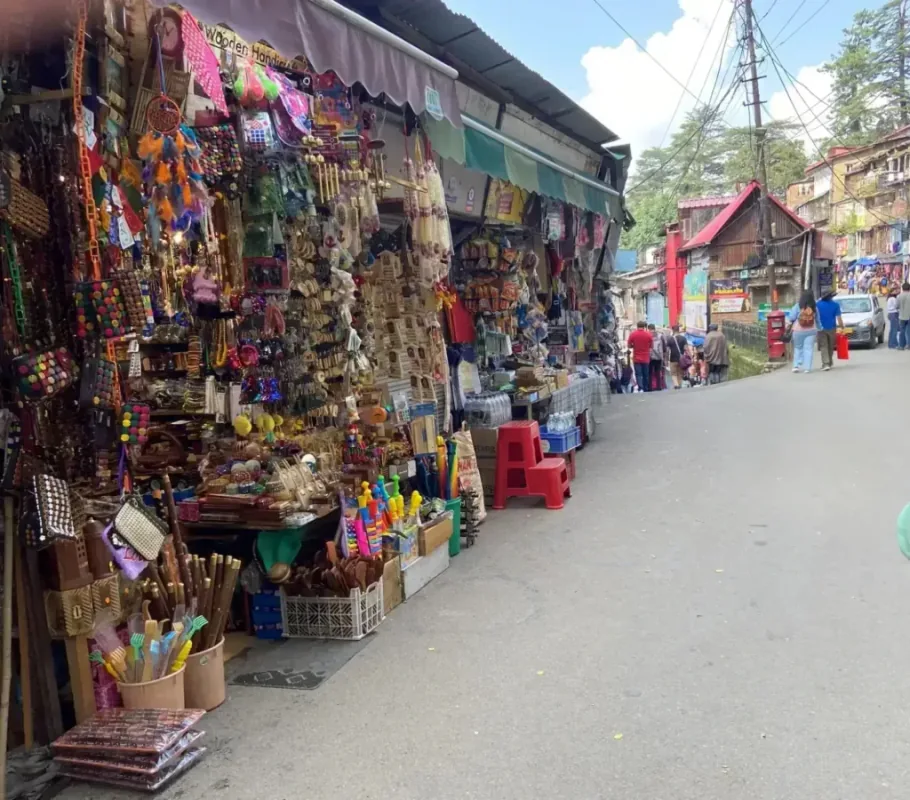
The working-class commercial heart of Shimla, stretching below Mall Road from the bus stand toward the western end of the town. Originally created by the British to serve the Indian population who were barred from the Mall, Lower Bazaar (also called Subzi Mandi) is a dense, chaotic network of lanes selling fresh produce, clothing, spices, bangles, utensils, and daily goods. It gives visitors the most unfiltered view of local Shimla life, in sharp contrast to the colonial promenade above it.
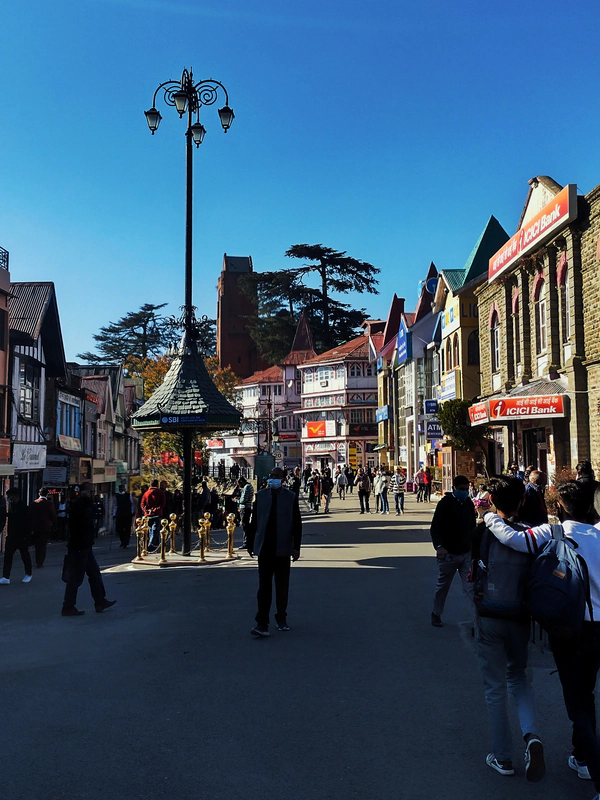
Mall Road
The main commercial street in Manali lined with shops, cafes, and hotels, making it the bustling heart of the town's tourism scene.
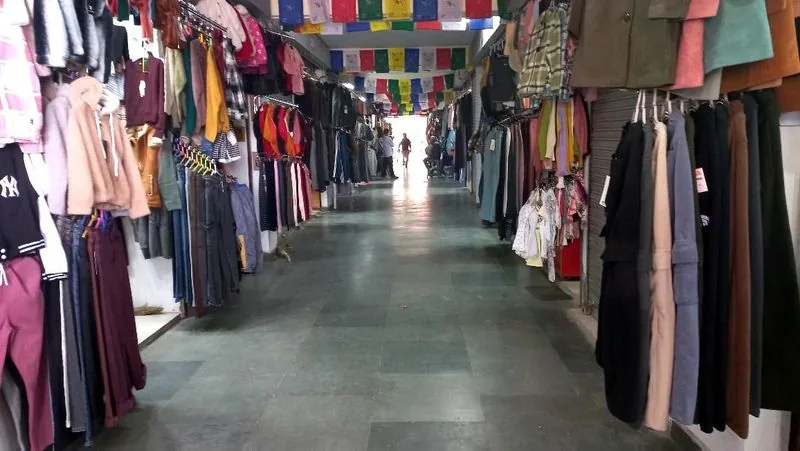
Tibetan Market
A cluster of street-side stalls and small shops on the slopes below The Ridge where Tibetan traders sell carpets, metal-bead jewellery, prayer flags, woollen clothing, and curios. The market is part of the wider network of Tibetan refugee commerce that has established itself across Indian hill stations, and Shimla's version is a compact but well-stocked stop for those looking for Tibetan handicrafts and woollens at negotiable prices.
Temple
4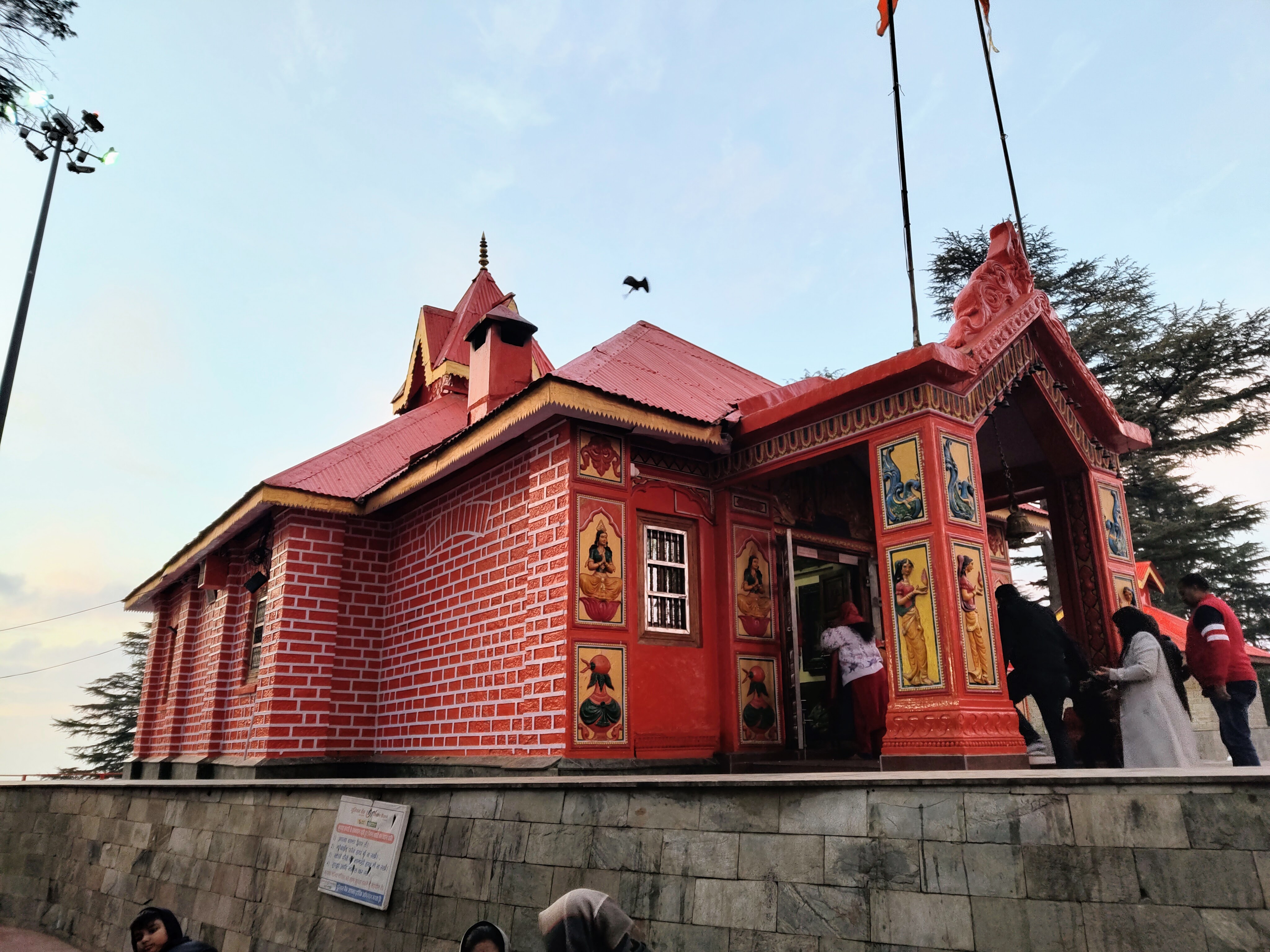
Jakhu Temple
A mountaintop Hanuman temple with a towering 108-ft idol, offering panoramic views of the Himalayas.
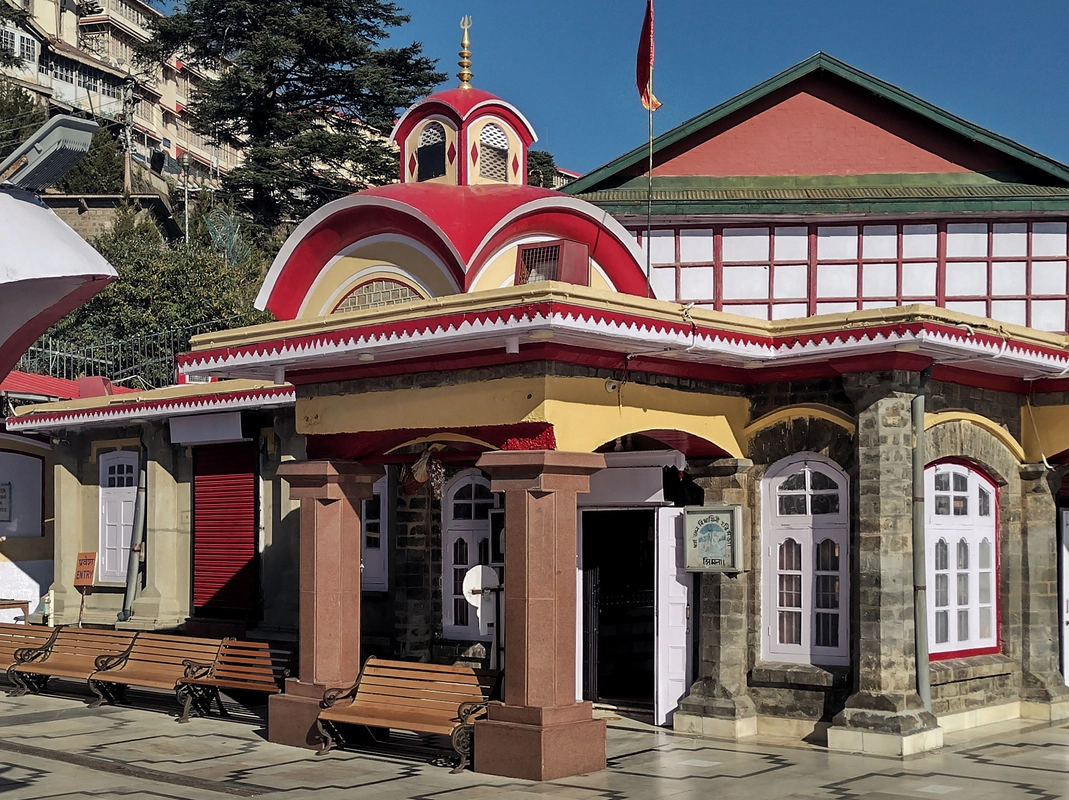
Kali Bari Temple
A prominent Kali temple on Shimla's Mall Road, beloved by locals and especially vibrant during Navratri celebrations.
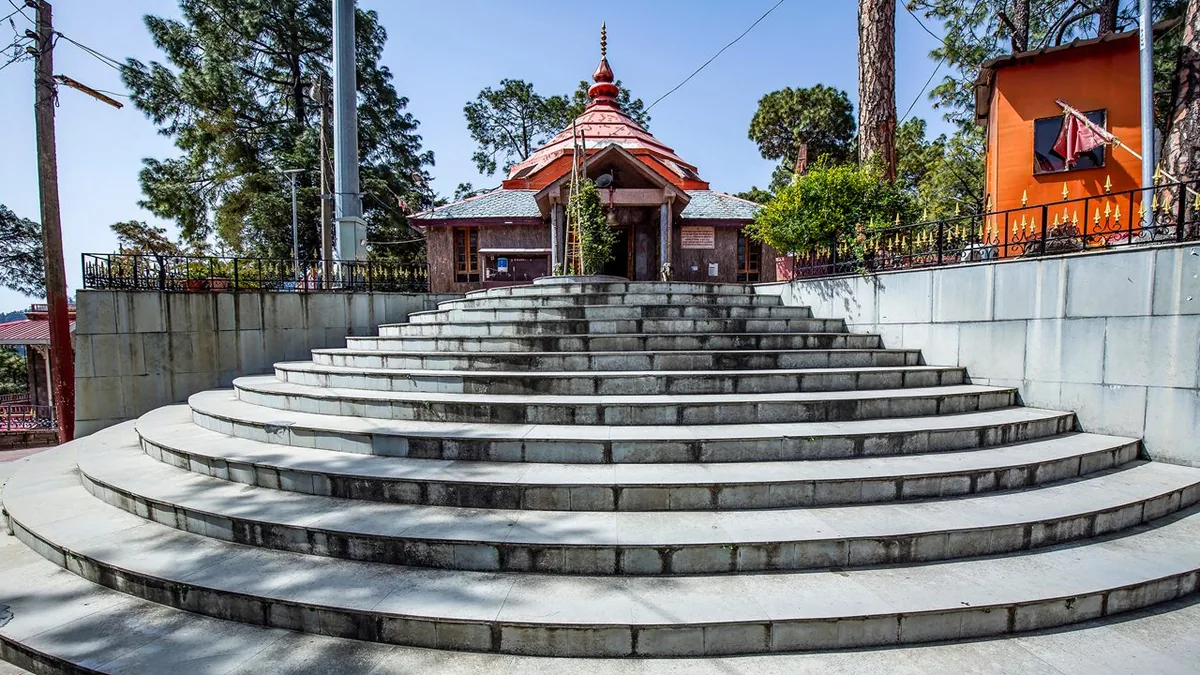
Sankat Mochan Temple
A Hanuman temple 5 km from Shimla, established in 1966 by Neem Karoli Baba after he spent ten days meditating in the surrounding forest. Situated at 1,975 metres with panoramic views of the city and the Shivaliks, the complex also houses shrines to Rama, Sita, Shiva, and Ganesha. It ranks as Shimla's second most visited temple after Jakhu and hosts a weekly Sunday bhandara that draws large community gatherings.
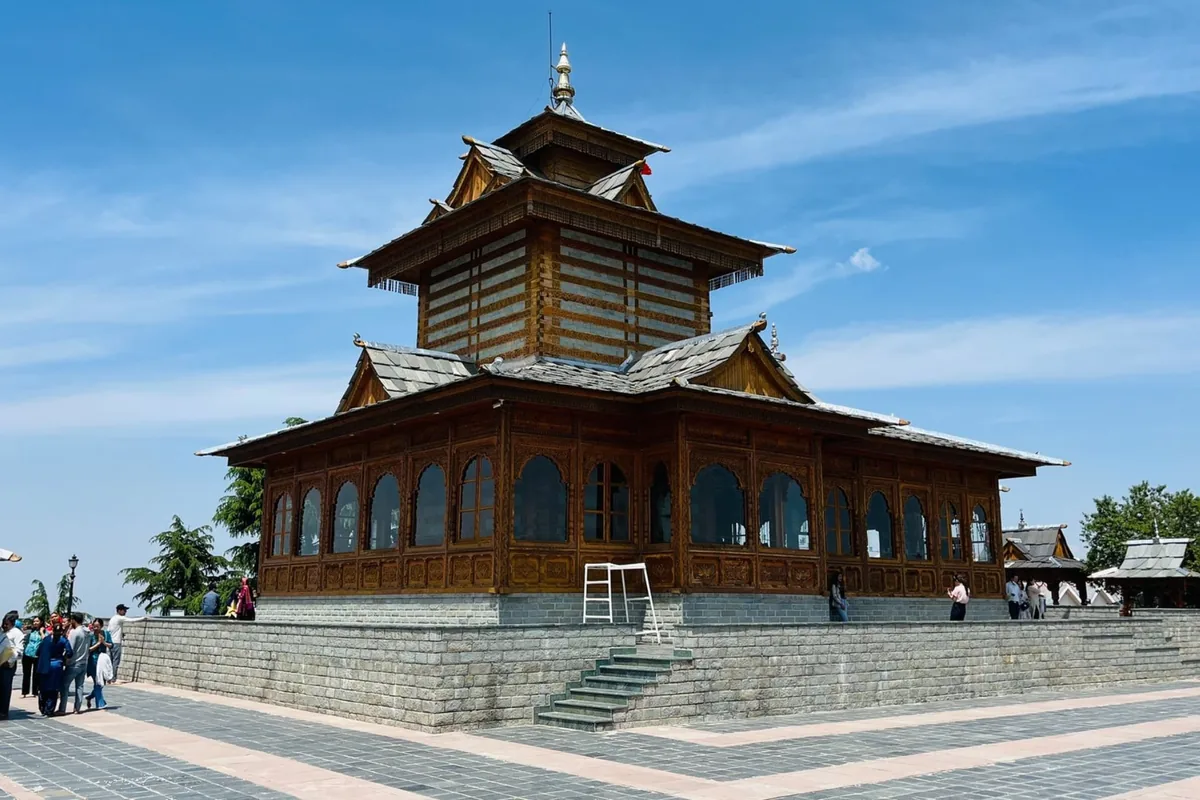
Tara Devi Temple
Perched at 7,200 feet on Tara Parvat near Shoghi, 11 km from Shimla, this 250-year-old hilltop shrine is dedicated to Goddess Tara, the second of the ten Mahavidyas. The idol was brought from Bengal by the Sen dynasty rulers, who venerated her as their kuldevi. Surrounded by deodar and oak forests with sweeping Himalayan views, the temple sees its grandest celebrations during Navratri and draws pilgrims arriving via the nearby toy train station.
No places found for ""
Try a different search term or switch to All.
No places match your current filter
Try a different search term or switch to All.