Places to Visit in Vrindavan
Top attractions and must-see spots in Vrindavan
Landmarks
1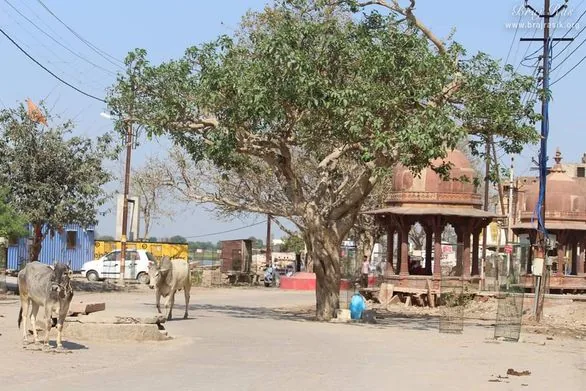
Vrindavan Parikrama Marg
The sacred circumambulatory path encircling Vrindavan stretches approximately 10 km, passing ancient ghats, forested groves, and historic temples along the Yamuna. Walked barefoot by pilgrims as an act of devotion, the parikrama is a deeply immersive Braj experience best undertaken in the early morning hours during the cooler months of the year.
Scenic Spots
2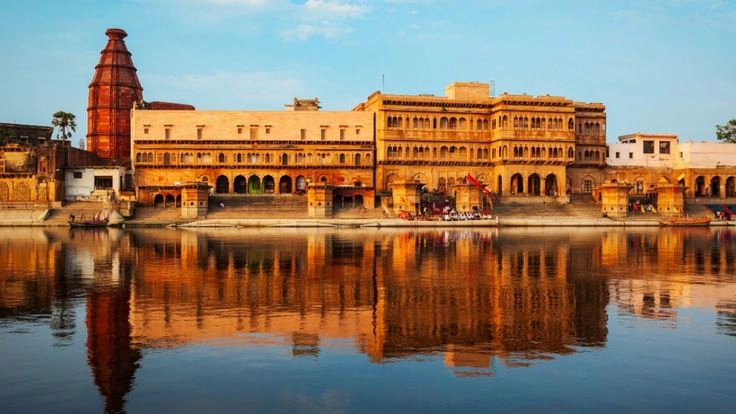
Keshi Ghat
A sacred Vrindavan ghat on the Yamuna where Krishna slew the demon Keshi, famous for its beautiful evening Yamuna Aarti ceremony.
Kusum Sarovar
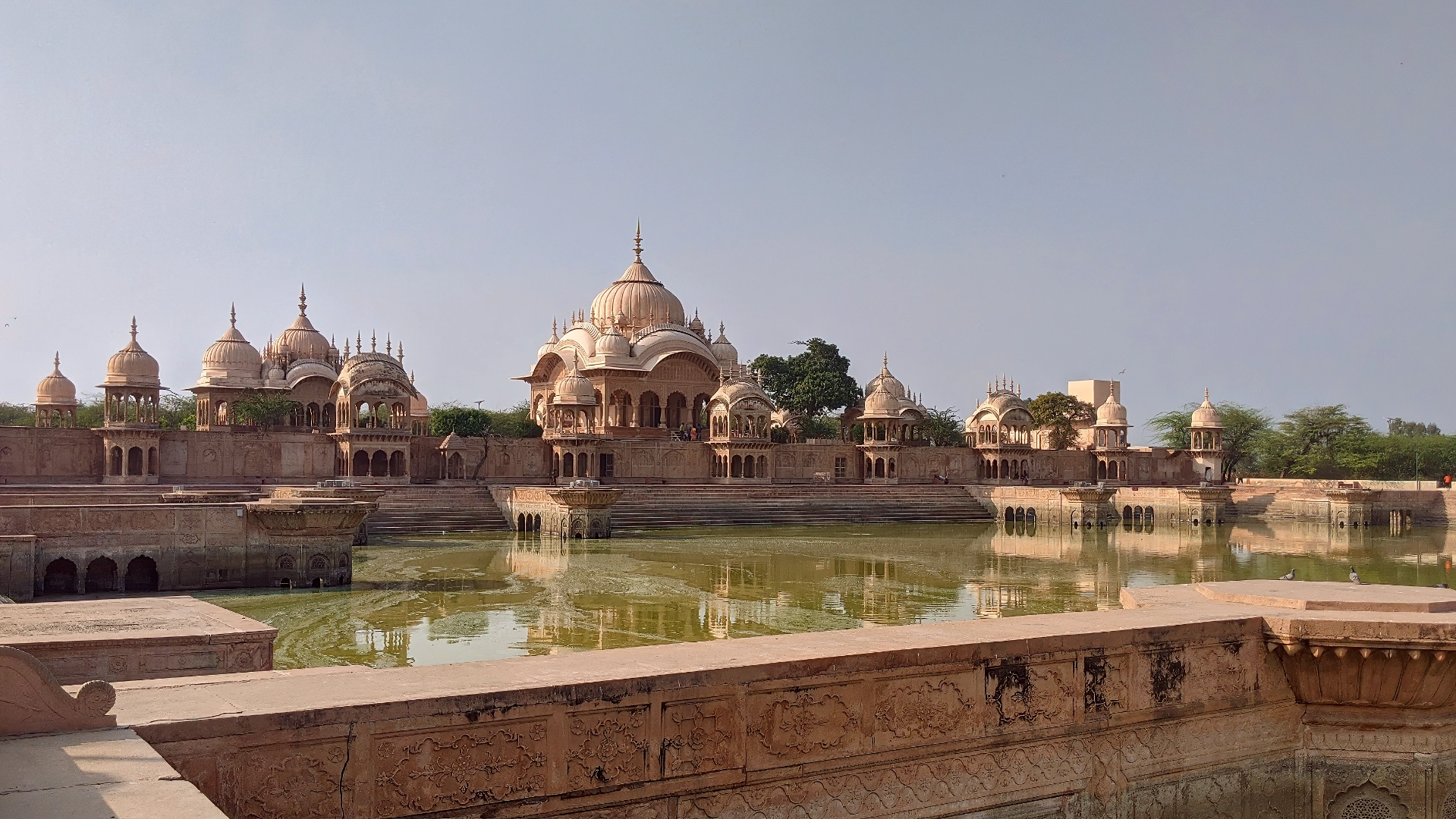
A beautiful 18th-century octagonal stepped reservoir near Govardhan associated with Radha-Krishna pastimes, surrounded by sandstone pavilions and Braj forest.
Shopping
4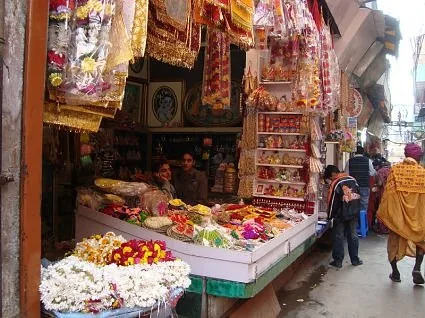
Banke Bihari Temple Street Shops
Dense pilgrim shopping lanes for dresses for deities, prasadam sweets, and souvenirs.
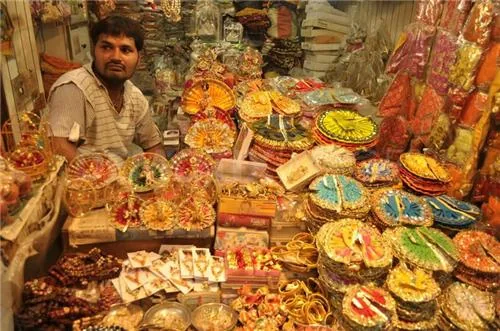
Loi Bazaar
Vrindavan's main market street, Loi Bazaar is a lively hub for religious textiles, deity shringar items, devotional music, and the region's beloved Peda sweets. A favourite among pilgrims and visitors alike, the bazaar's colourful lanes reflect the town's devotional spirit and offer a rich cultural shopping experience at the heart of Vrindavan.
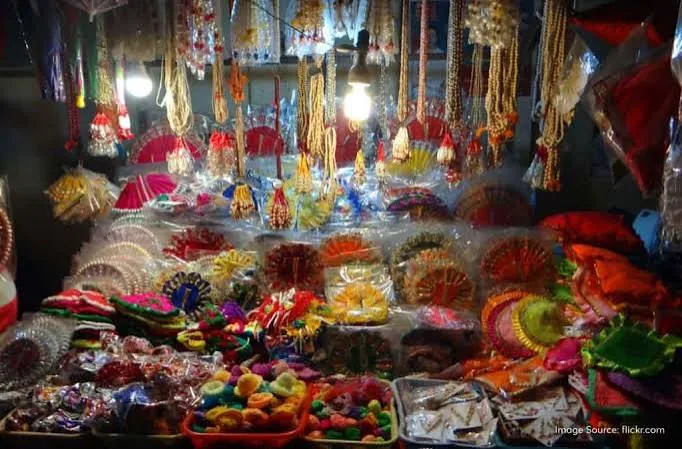
Prem Mandir Market Stalls
Souvenir and snack stalls around Prem Mandir for gifts and quick buys.
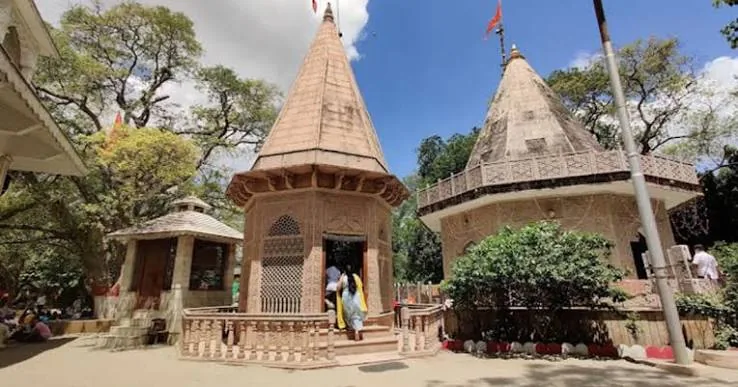
Raman Reti Road Market
Retail stretch for religious goods, clothes, and traveller essentials near ISKCON and Raman Reti.
Temple
14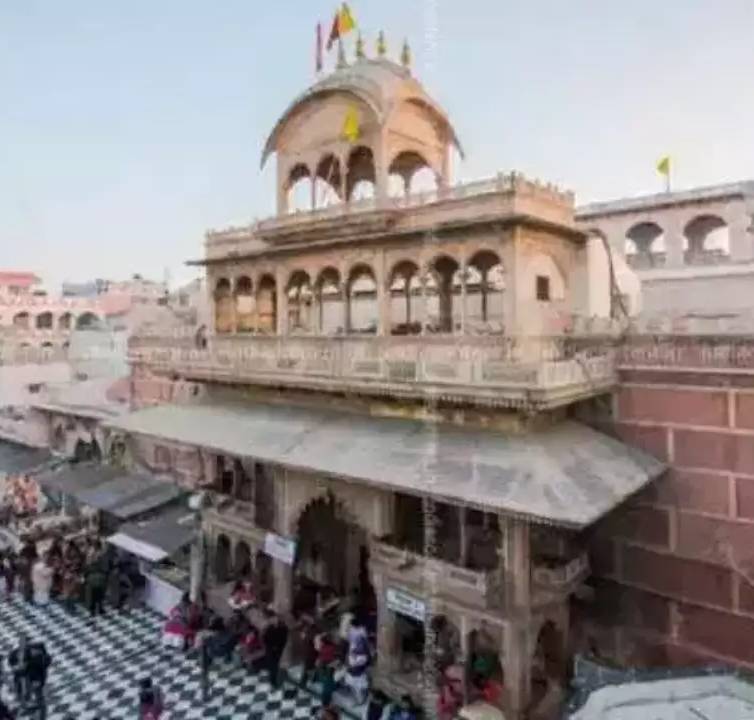
Banke Bihari Temple
One of Vrindavan's most beloved Krishna temples, where the dark-complexioned Banke Bihari deity is worshipped with unique rituals including the famous parda tradition of intermittently concealing the deity.
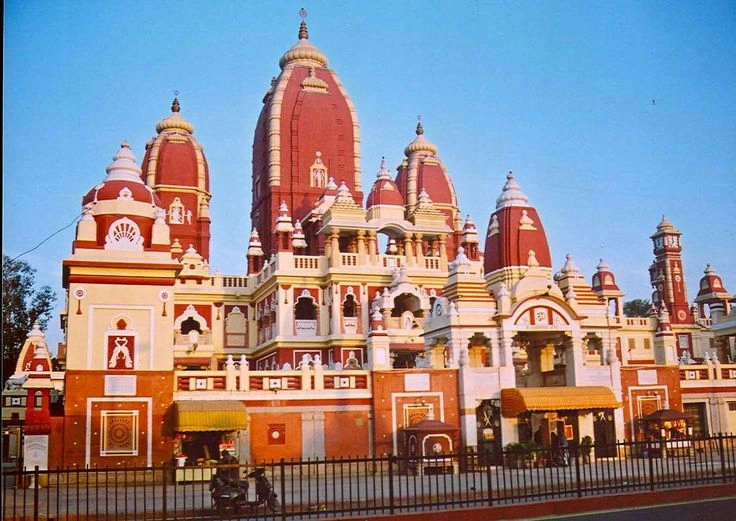
Birla Mandir (Gita Mandir)
A marble Birla temple in Vrindavan whose walls are inscribed with verses from the Bhagavad Gita, hence called Gita Mandir.
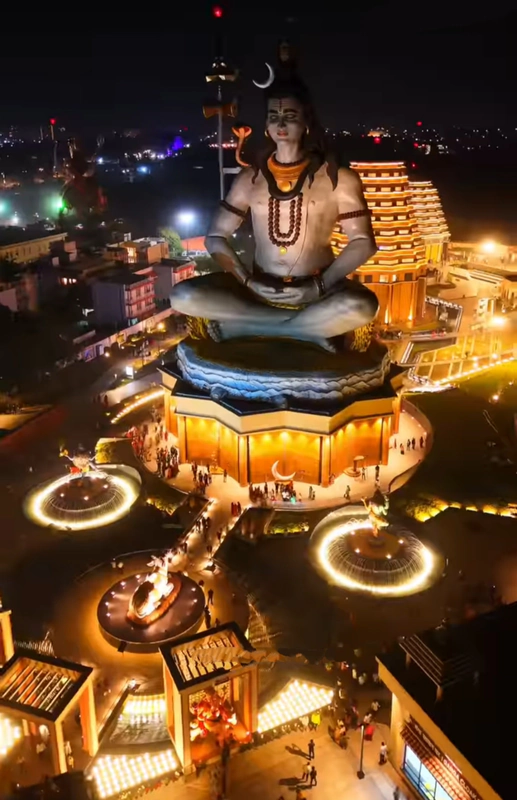
Char Dham Temple
A unique temple complex in Vrindavan replicating all four Char Dham shrines, allowing pilgrims to visit them in one place.
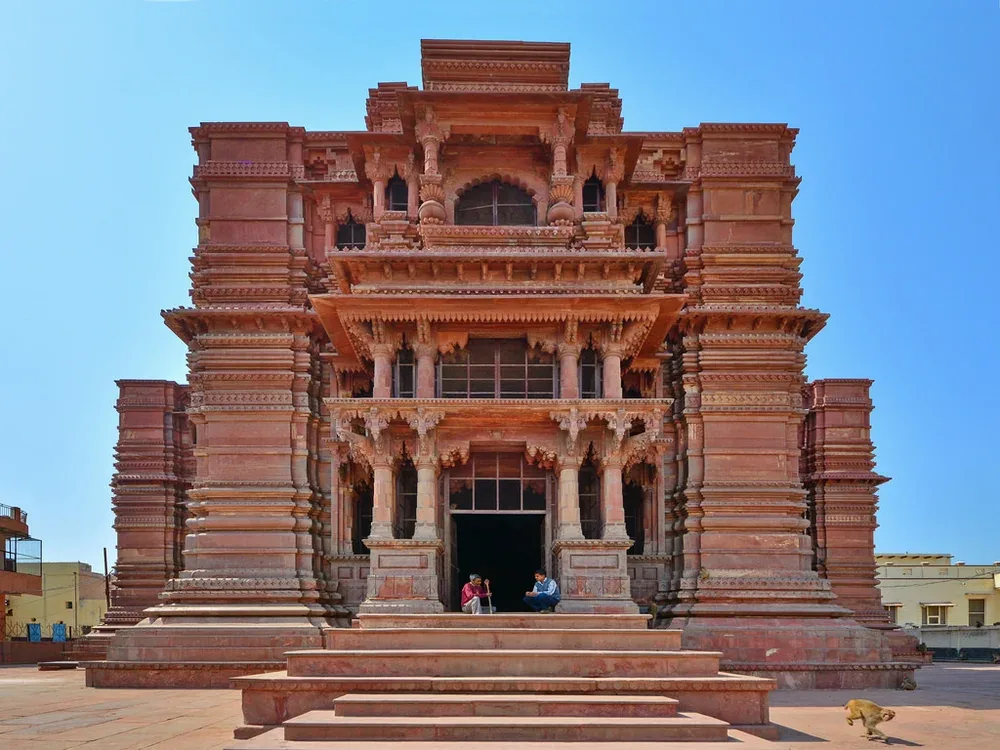
Govind Dev Temple
Built in 1590 by Raja Man Singh of Amber, Govind Dev was once considered the tallest temple in India before Aurangzeb ordered its upper floors demolished. The striking red sandstone structure remains one of Vrindavan's most important heritage sites. The presiding deity now resides in Jaipur's City Palace, but the ruins draw history lovers and pilgrims alike.
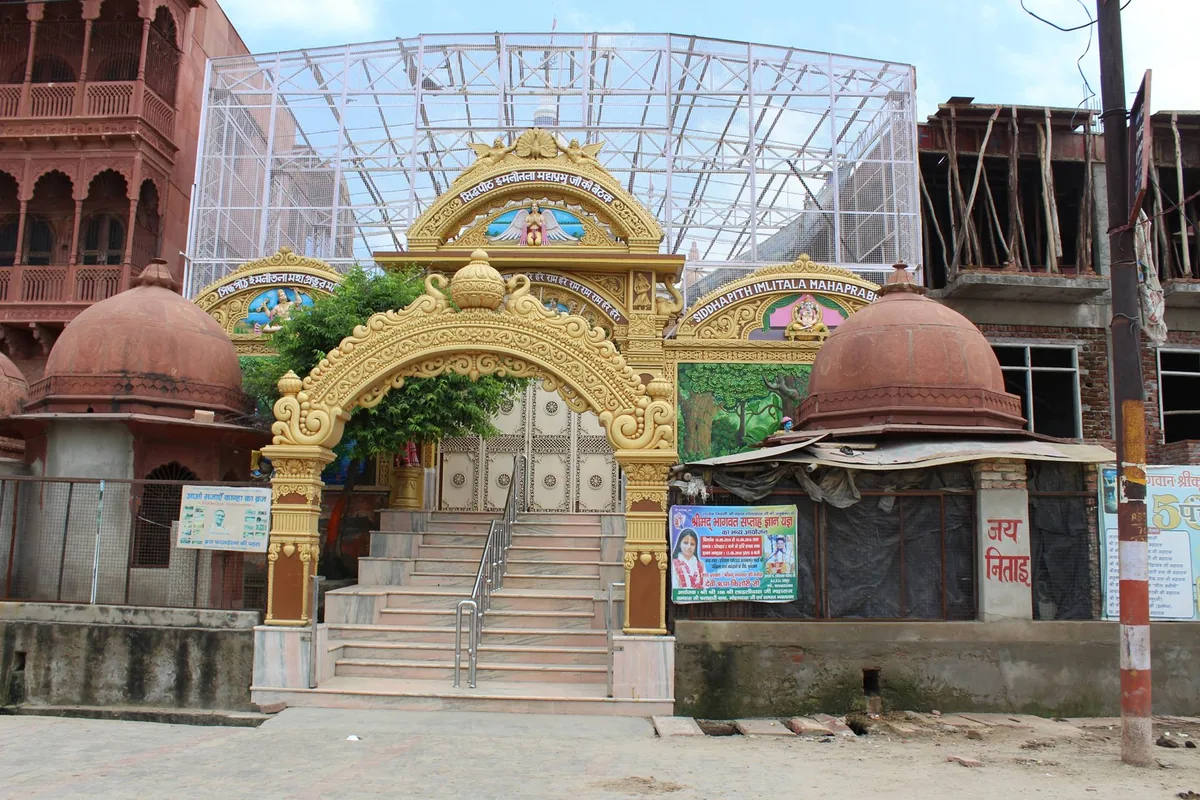
Imli Tala
A sacred tamarind tree in Vrindavan under which Chaitanya Mahaprabhu is believed to have meditated during his visit to Braj. One of the quietest and most spiritually charged spots in the town, Imli Tala is especially revered by Gaudiya Vaishnavas and offers a peaceful retreat from the bustle of Vrindavan's more crowded temple lanes.
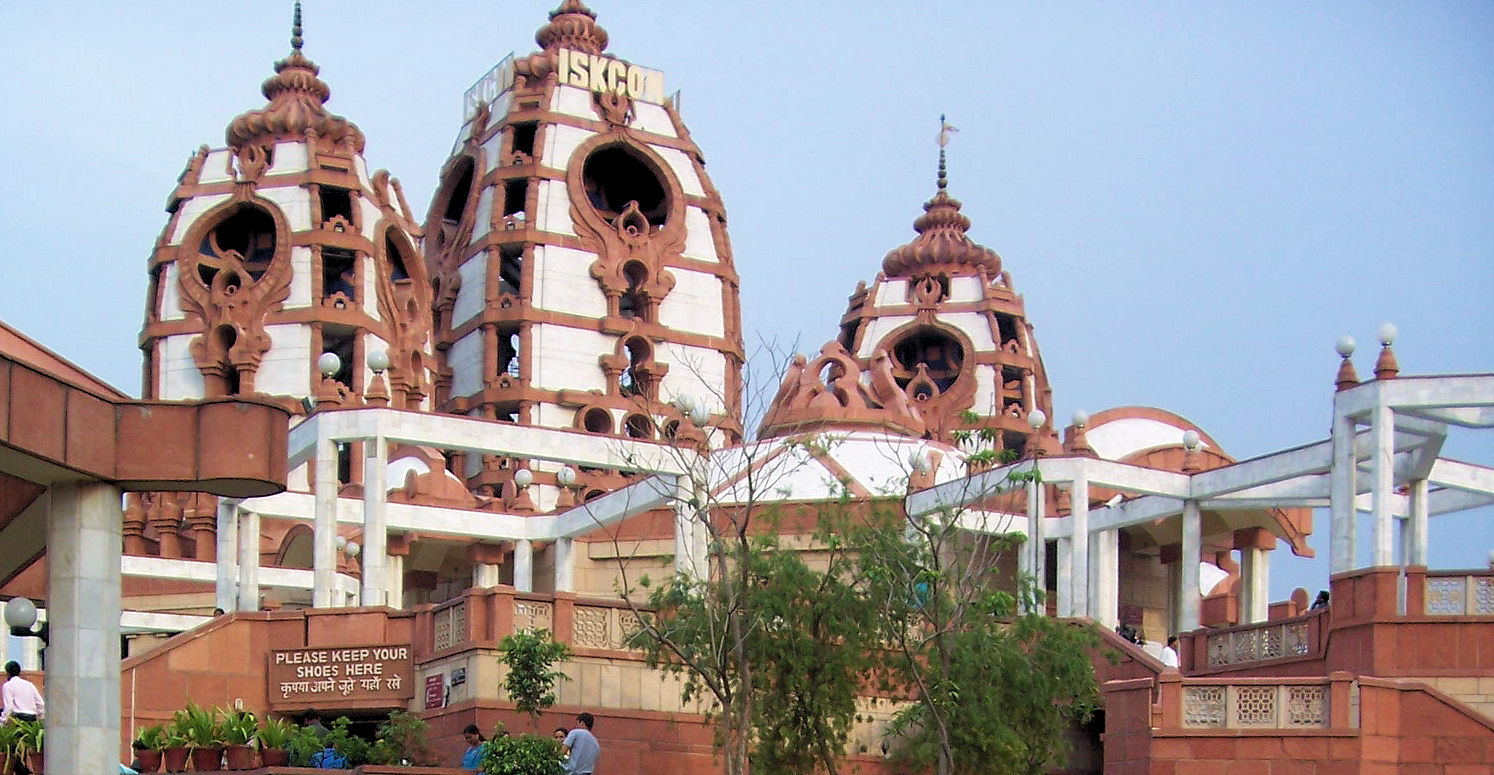
Iskcon vrindavan
A vibrant white marble temple dedicated to Krishna and Balaram.
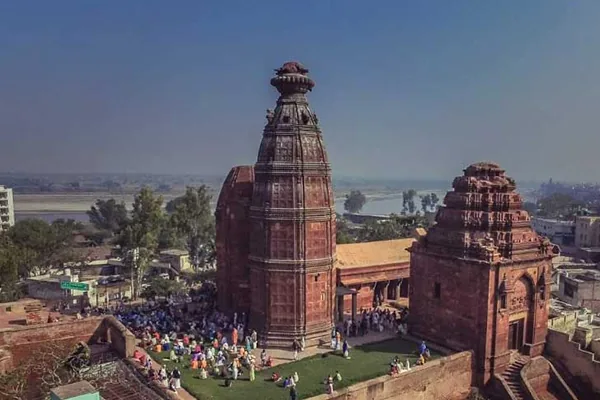
Madan Mohan Temple
One of the oldest temples in Vrindavan, Madan Mohan was built in the 16th century by Sanatana Goswami on a hilltop overlooking the Yamuna. Though the original deity now resides in Karauli, Rajasthan, the temple remains a major pilgrimage site with stunning river views and deep historical significance in the Gaudiya Vaishnava tradition.
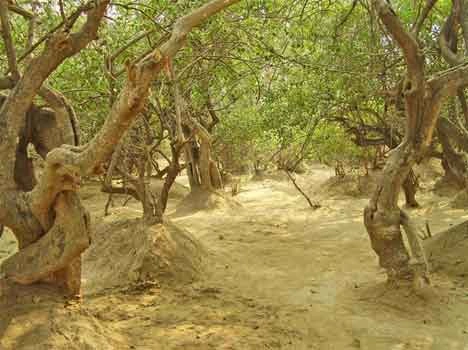
Nidhivan
A sacred grove in Vrindavan where Krishna and Radha's eternal Raas Lila is believed to occur nightly, closed to all after sunset.
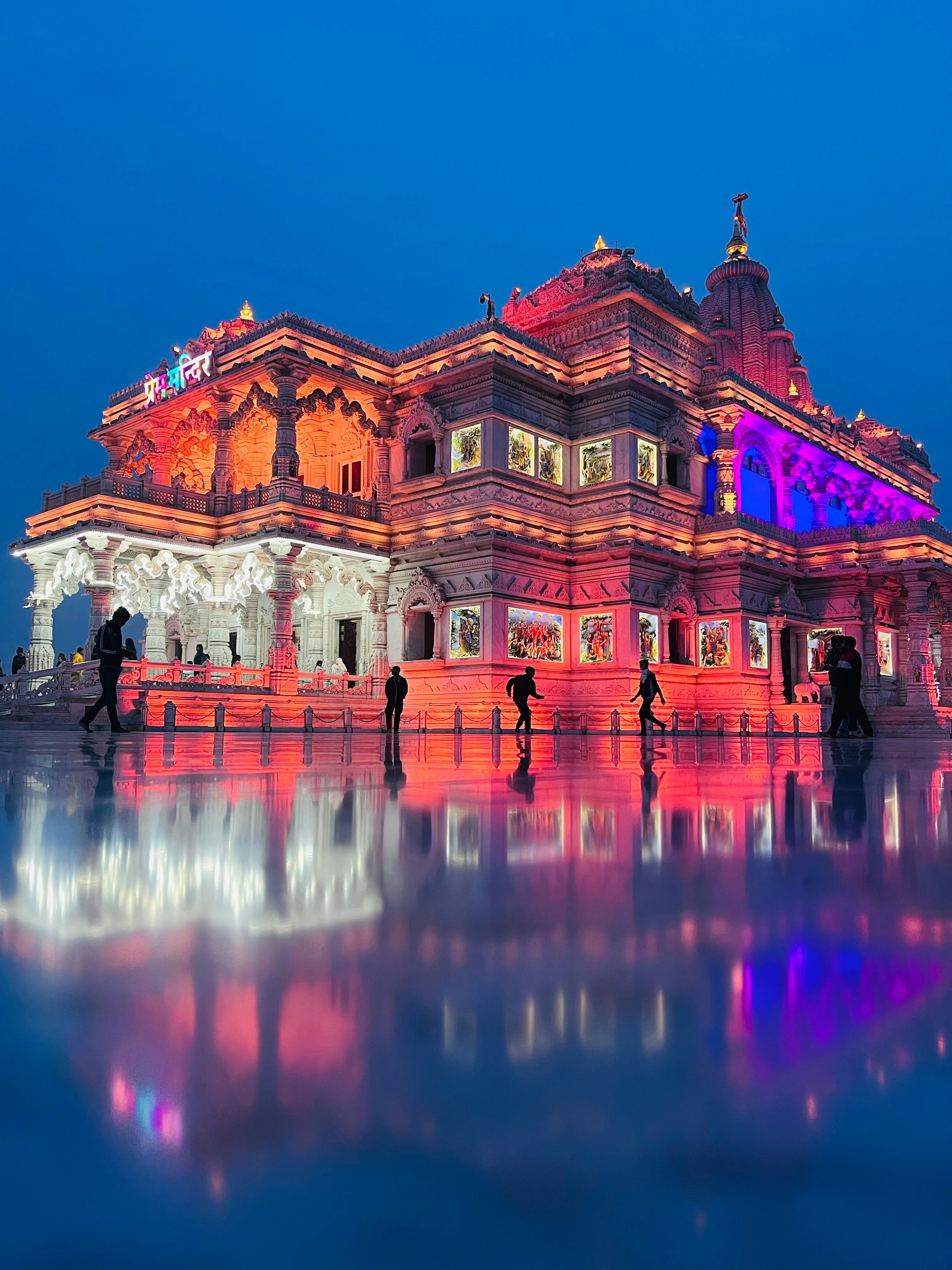
Prem Mandir
A modern white marble temple complex in Vrindavan built by Jagadguru Kripalu Ji Maharaj, dedicated to Radha Krishna and Sita Ram, illuminated spectacularly each evening.
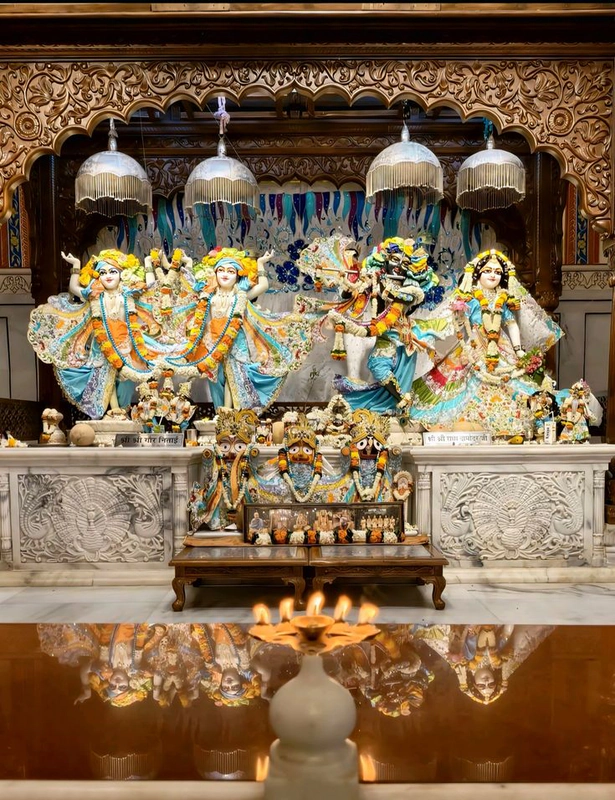
Radha Damodar Temple
A 16th-century temple founded by Jiva Goswami in Vrindavan where Srila Prabhupada lived before founding ISKCON worldwide.
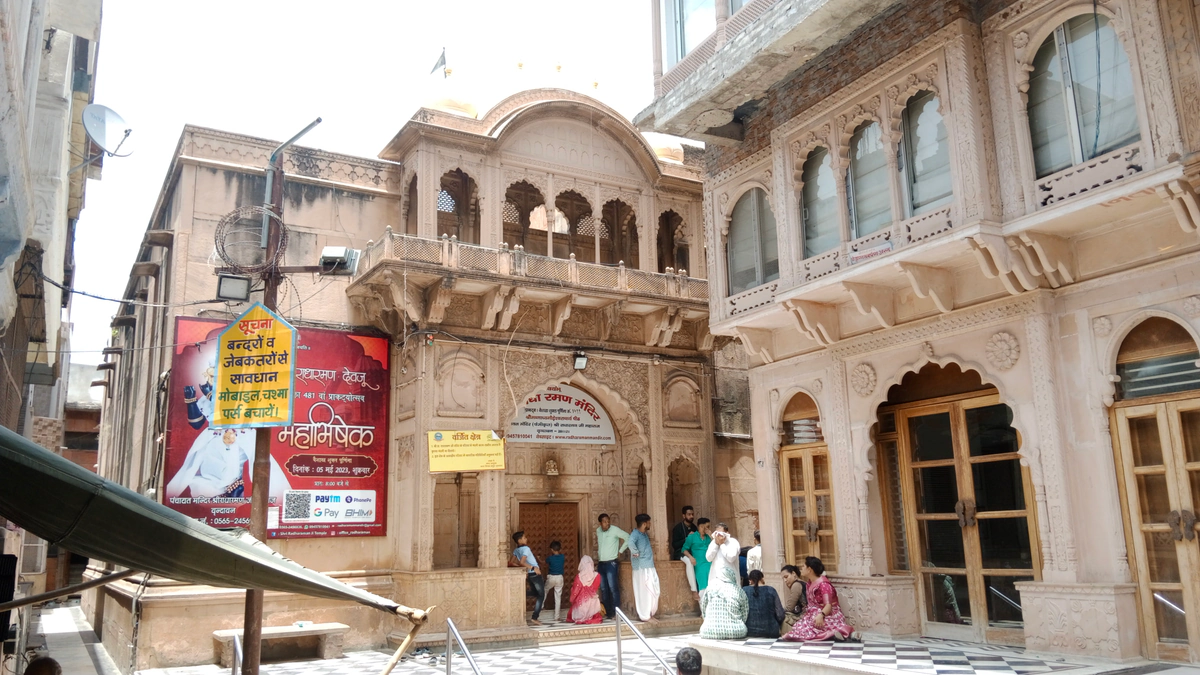
Radha Raman Temple
A 16th-century temple in Vrindavan housing the self-manifested Radha Raman deity, one of the few that never left Vrindavan during Mughal rule.
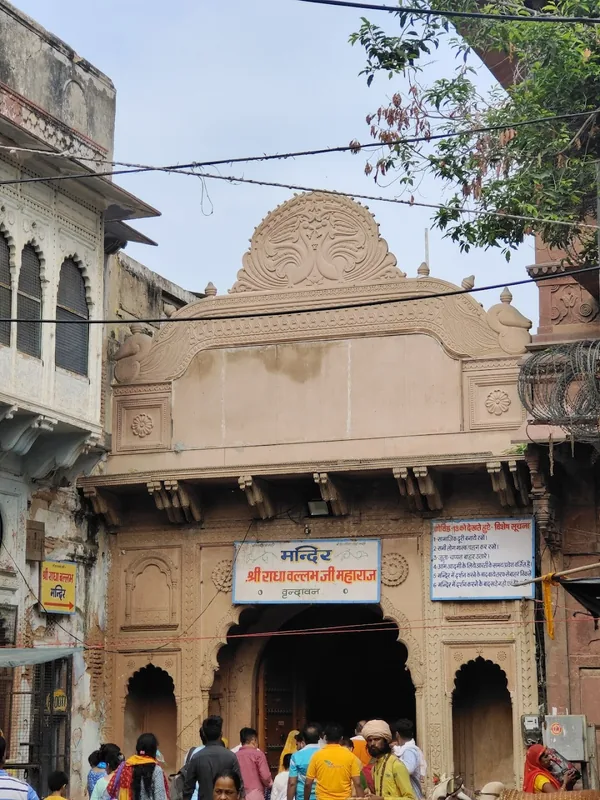
Radha Vallabh Temple
Founded in the 16th century by Sri Hita Harivamsha, Radha Vallabh Temple is one of Vrindavan's most theologically distinctive shrines. Only Radha's crown is placed beside Krishna, signifying her supreme status. An important centre of the Radha Vallabha sampradaya, the temple offers a uniquely intimate and devotion-filled atmosphere compared to Vrindavan's larger, busier temples.
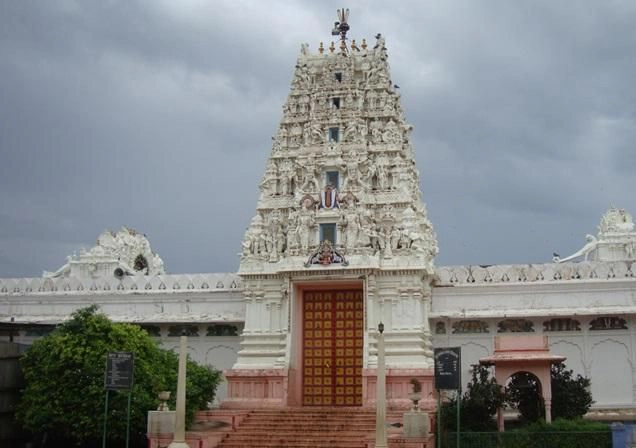
Rangji (Rangnath) Mandir
A grand Vrindavan temple blending South Indian and North Indian architecture, dedicated to Lord Ranganatha, famous for its elaborate Rath Yatra.
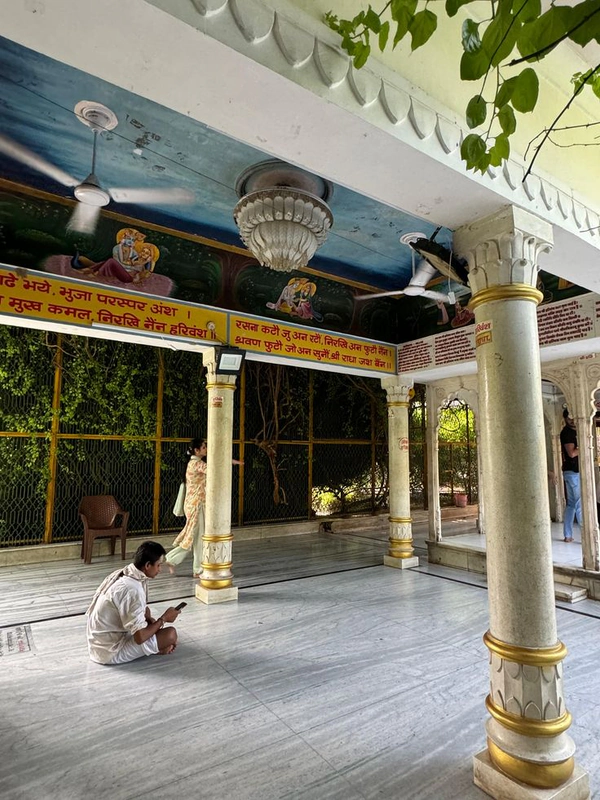
Seva Kunj
A sacred grove in Vrindavan where Krishna and Radha's Raas Lila is believed to occur, closed after sunset and revered for its divine energy.
No places found for ""
Try a different search term or switch to All.
No places match your current filter
Try a different search term or switch to All.