Places to Visit in Mahabalipuram
Top attractions and must-see spots in Mahabalipuram
Beaches
3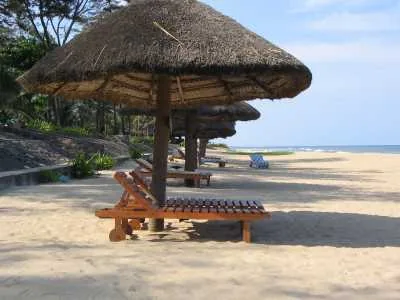
Kovalam (Covelong) Beach
Originally a small fishing village on the Coromandel Coast, Covelong Beach is now one of the most popular beach resorts in South India, located about 23 km from Mahabalipuram. It is home to a thriving surf culture with schools catering to beginners and experienced surfers, and hosts the annual Covelong Point Surf, Music and Yoga Festival. Olive Ridley turtles also nest along this coastline every year. Best visited between October and March for ideal weather and wave conditions.
Mahabalipuram Beach
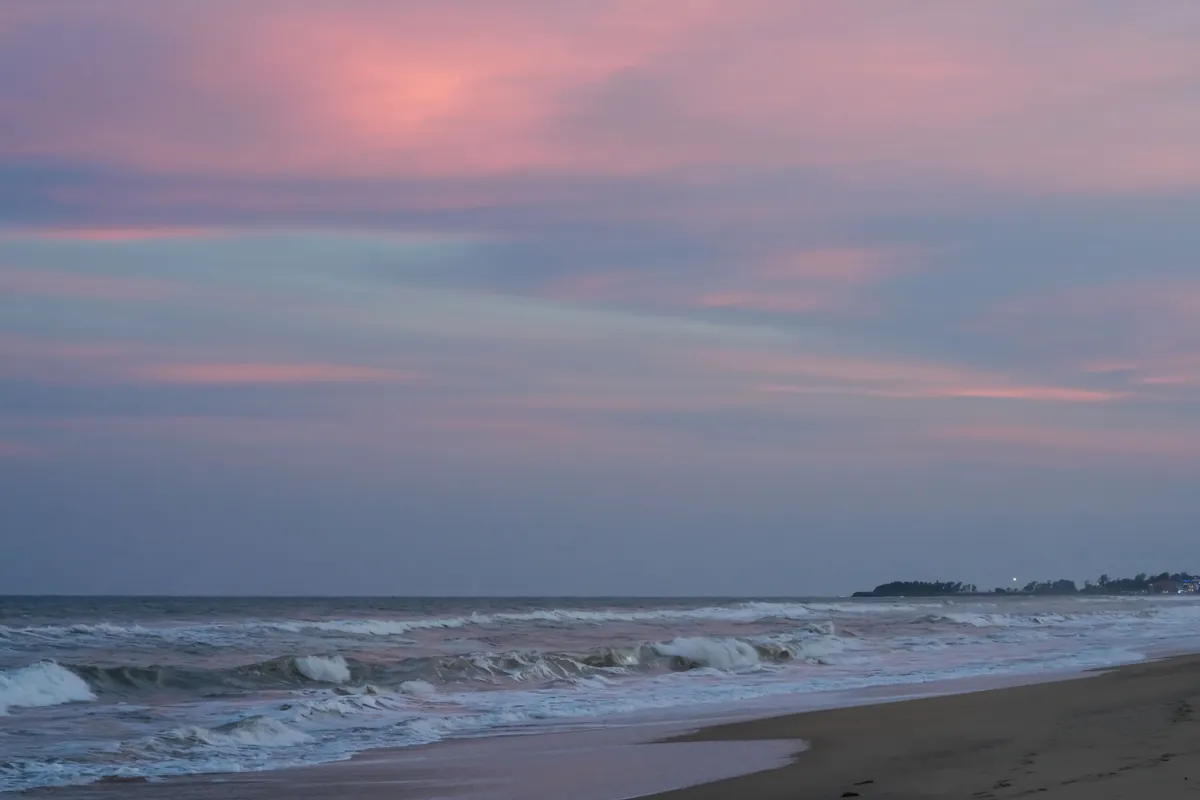
Famous for its rock-cut temples and sculptures along the shore.
Sadras Beach
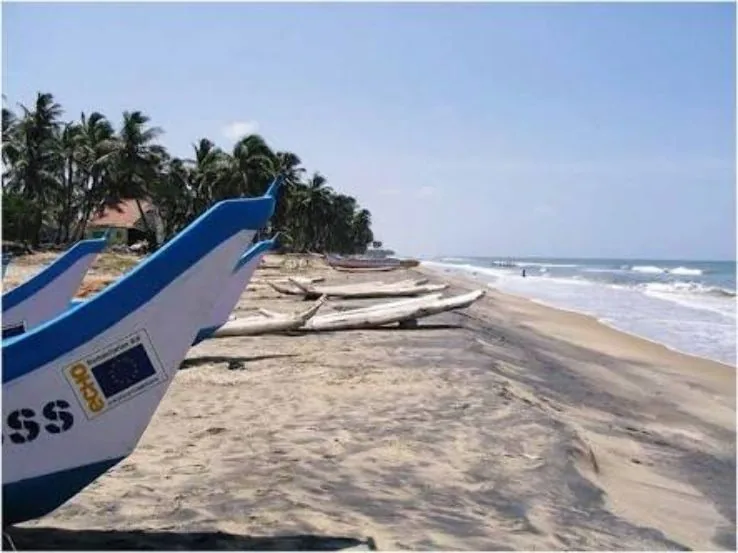
Sadras Beach is a calm and serene stretch of coastline 13 km from Mahabalipuram, surrounded by casuarina groves with clean sand and a shallow slope that makes it safe for wading. Far less crowded than the main Mahabalipuram beach, it is a good spot for sunrise views and shell collecting. A unique feature is the point where a backwater body merges with the sea during high tides. The nearby Dutch fort ruins add a historical dimension to the visit.
Cultural
1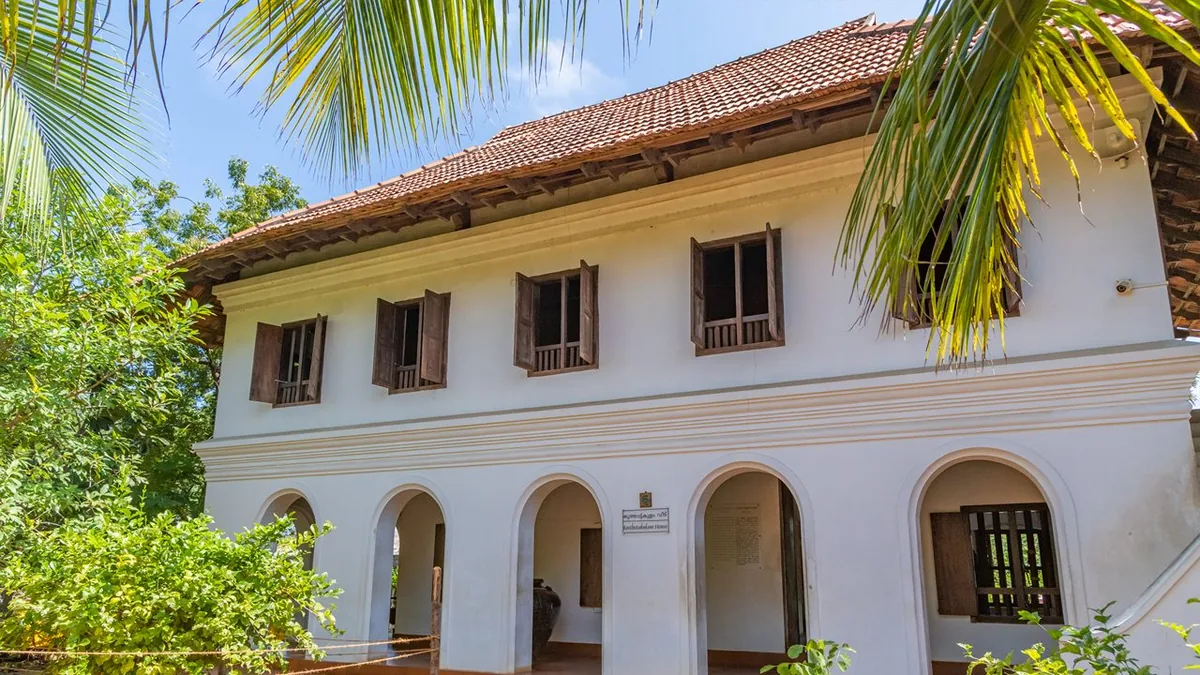
DakshinaChitra
A living heritage museum near Chennai with authentic relocated South Indian homes from four states, craft demonstrations, and cultural performances.
Landmarks
10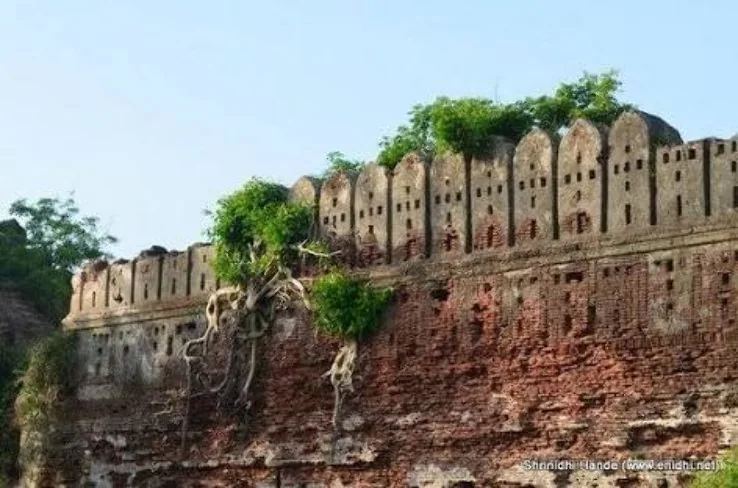
Alamparai Fort
Built during the Mughal era in the late 17th century, the Alamparai Fort once had a 100-metre dockyard stretching into the sea from which zari cloth, salt, and ghee were exported. It was later given to the French before being captured and demolished by the British in 1760 during the Carnatic Wars. Now a ruin slowly being consumed by the sea, the fort sits on a 15-acre coastal site near Kadappakkam village, 50 km from Mahabalipuram, and is a favourite among photographers and off-the-beaten-path travellers.
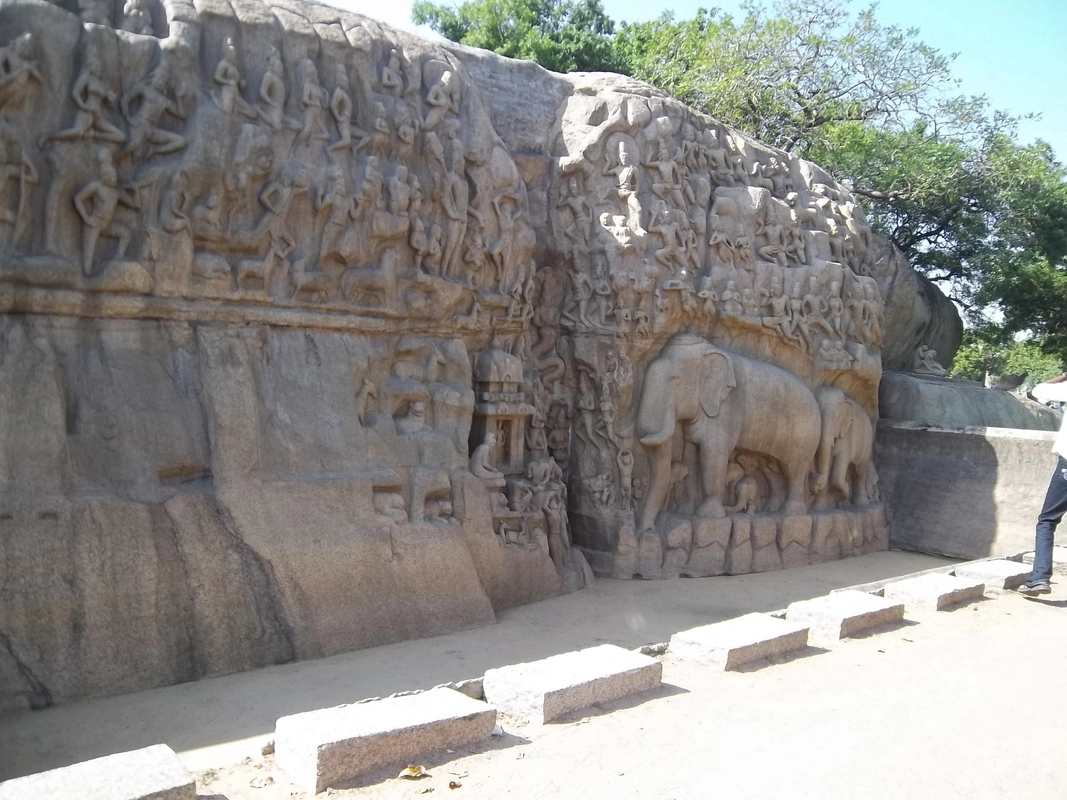
Arjuna’s Penance (Descent of the Ganges)
A 7th-century Pallava open-air bas-relief at Mahabalipuram — one of the world's largest — depicting the descent of the Ganga, a UNESCO World Heritage Site.
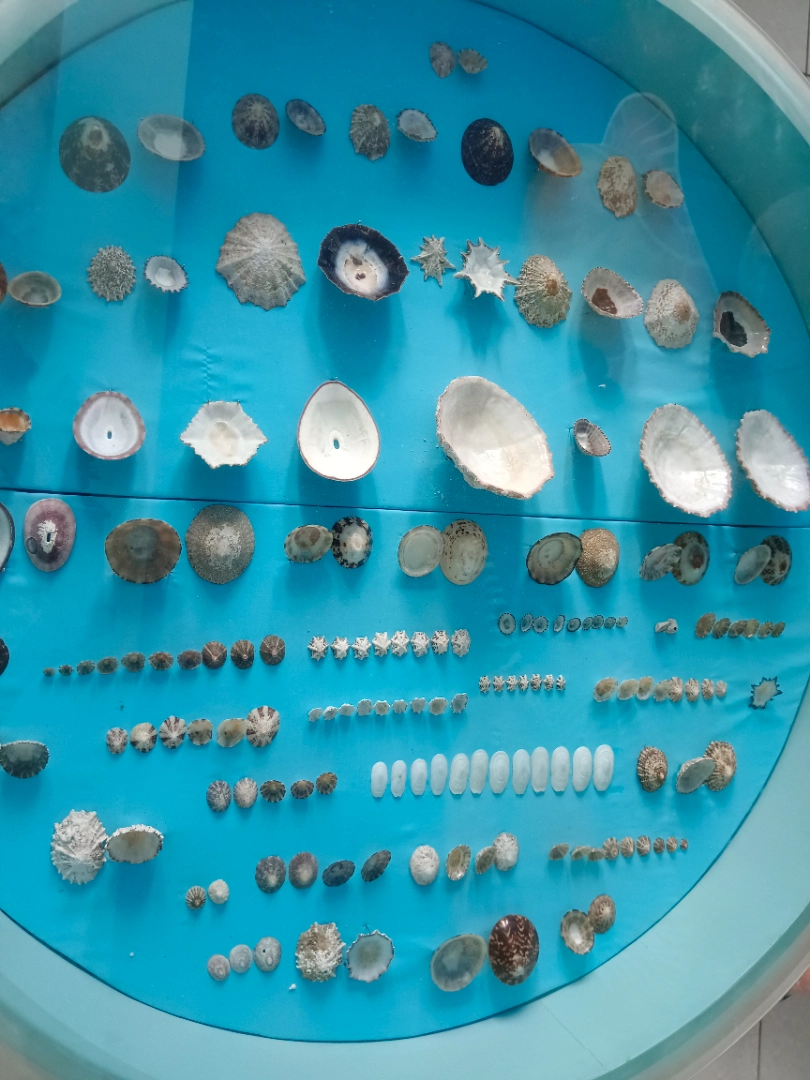
India Seashell Museum
A museum at Mahabalipuram housing over 4 lakh seashell specimens from Indian and international waters, one of the largest shell collections in India.
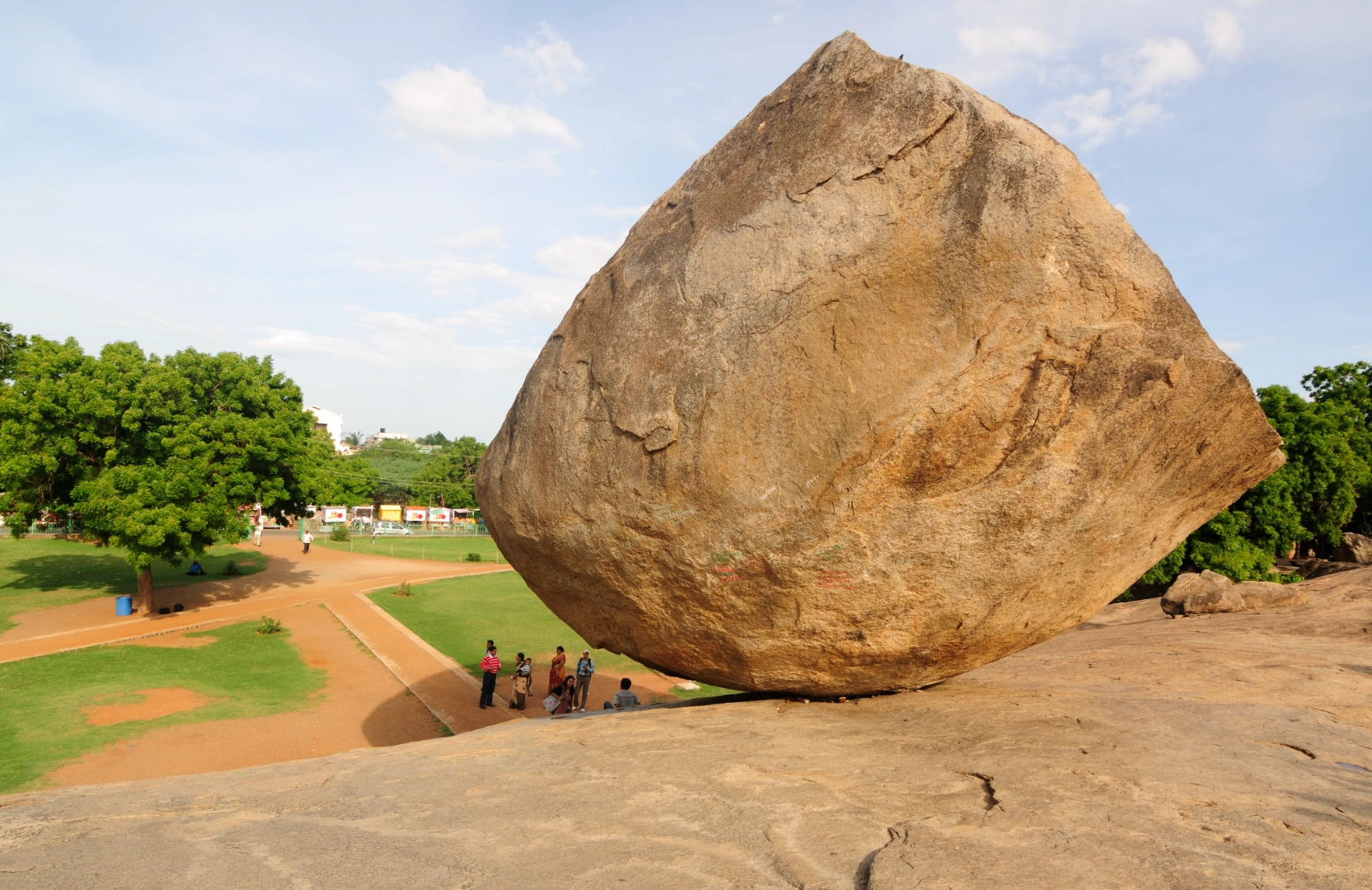
Krishna’s Butter Ball
A 250-tonne granite boulder at Mahabalipuram that has balanced on a tiny base for 1,200 years, defying all attempts to move it — a geological wonder.
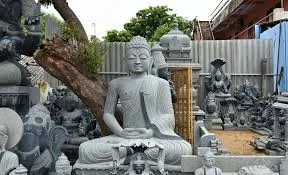
Little Art Gallery Street
Little Art Gallery is a street running around the monuments of Mahabalipuram, lined with shops selling handicrafts, lanterns, wall hangings, artificial jewellery, and showpieces. Several shops along the path to the beach also carry genuine leather items, seashell products, and curios at prices that respond well to bargaining. The range stretches from small inexpensive souvenirs to large stone sculptures costing thousands of dollars, with many pieces commissioned and shipped worldwide. Think of it less as a single shop and more as a curated shopping walk through the heart of town.
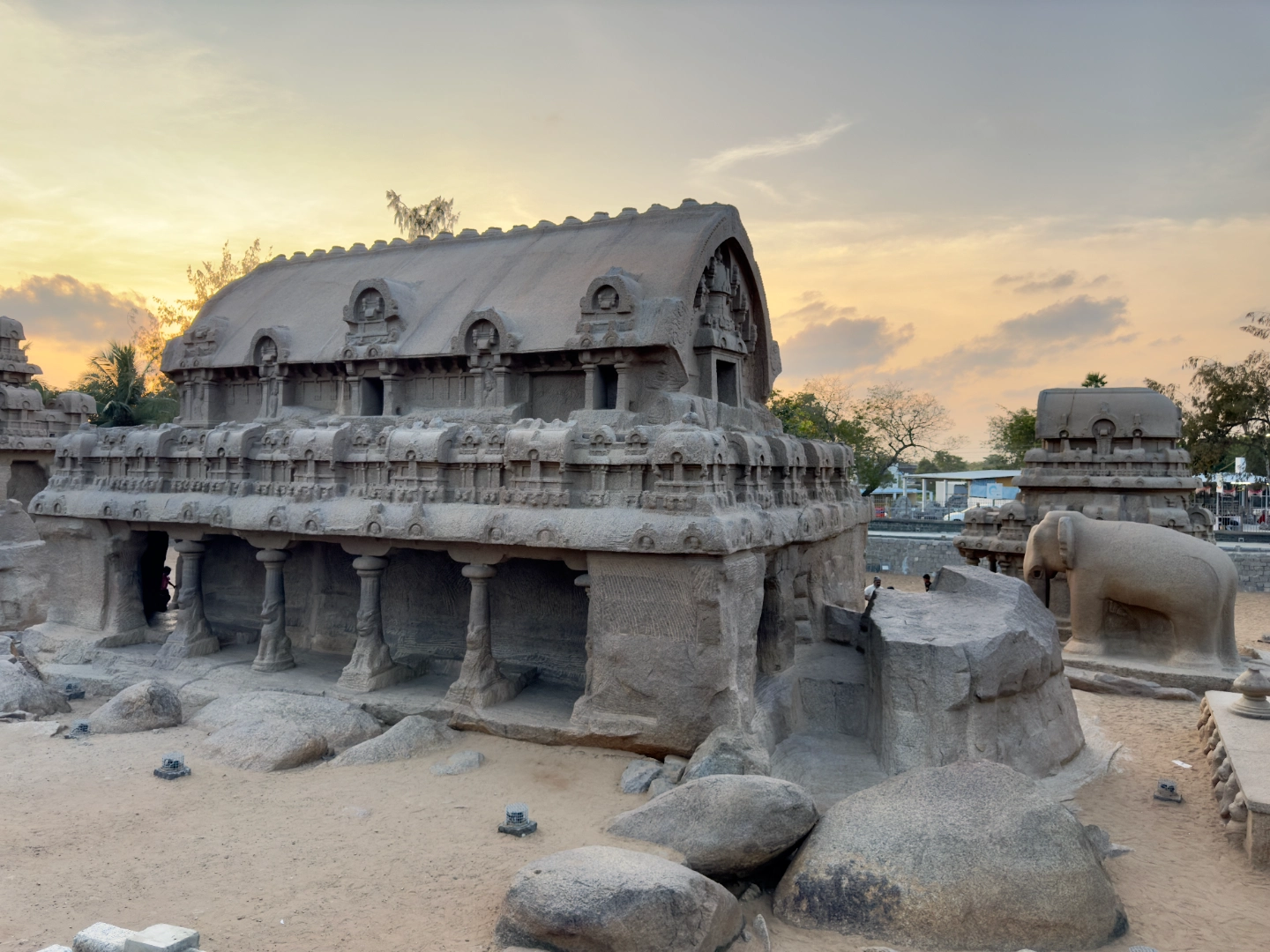
Pancha Rathas
Five monolithic Pallava rock-cut temple models at Mahabalipuram named after the Pandavas — architectural masterpieces of early Dravidian style and a UNESCO Heritage Site.
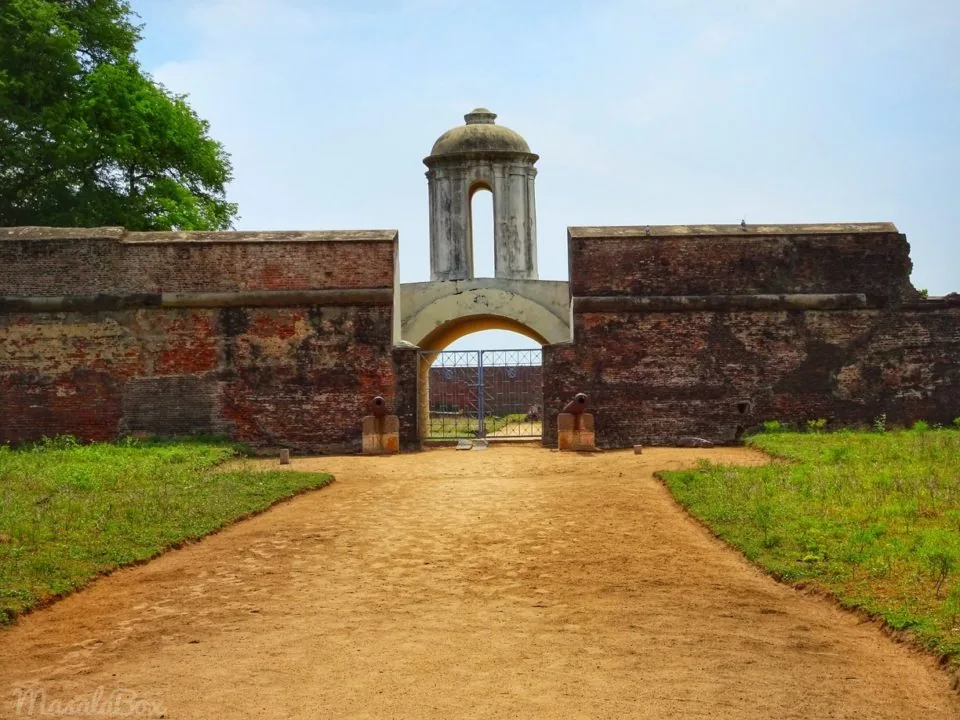
Sadras Fort
The Dutch established a trading factory at Sadras in 1648, exporting muslin, edible oils, and pearls; a fort eventually rose around it and, when completed in 1749, stood as a powerful Dutch outpost positioned between British Madras and French Pondicherry. The fort includes a cemetery with beautifully decorated graves dating between 1620 and 1769, and the bastions, bell tower, and arched entrance remain largely intact. Now protected by the Archaeological Survey of India, it is an offbeat and largely uncrowded stop for history enthusiasts.
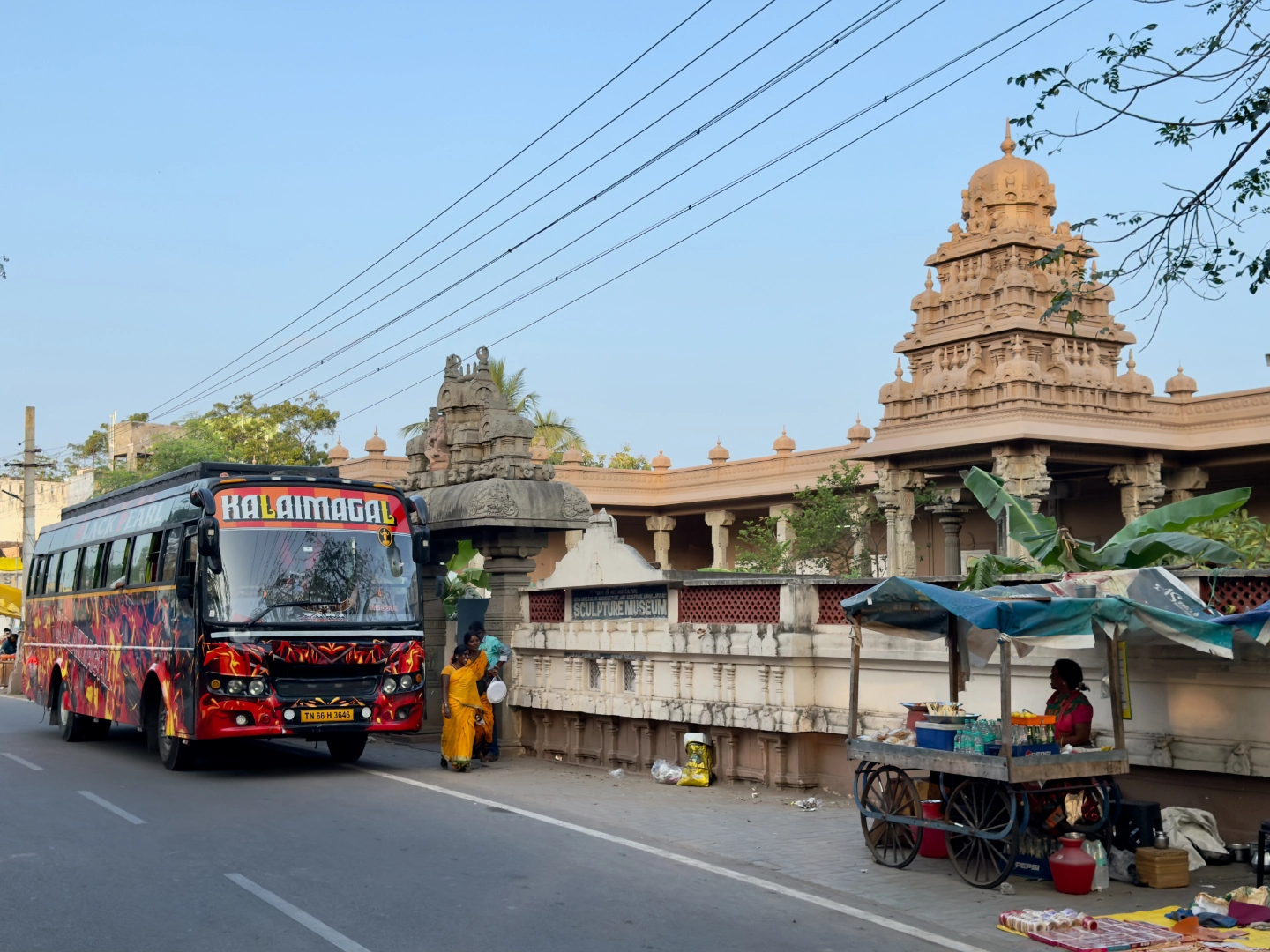
Sculpture Museum
An ASI museum at Mahabalipuram displaying Pallava sculptural fragments and architectural details from the UNESCO Heritage monument complex.
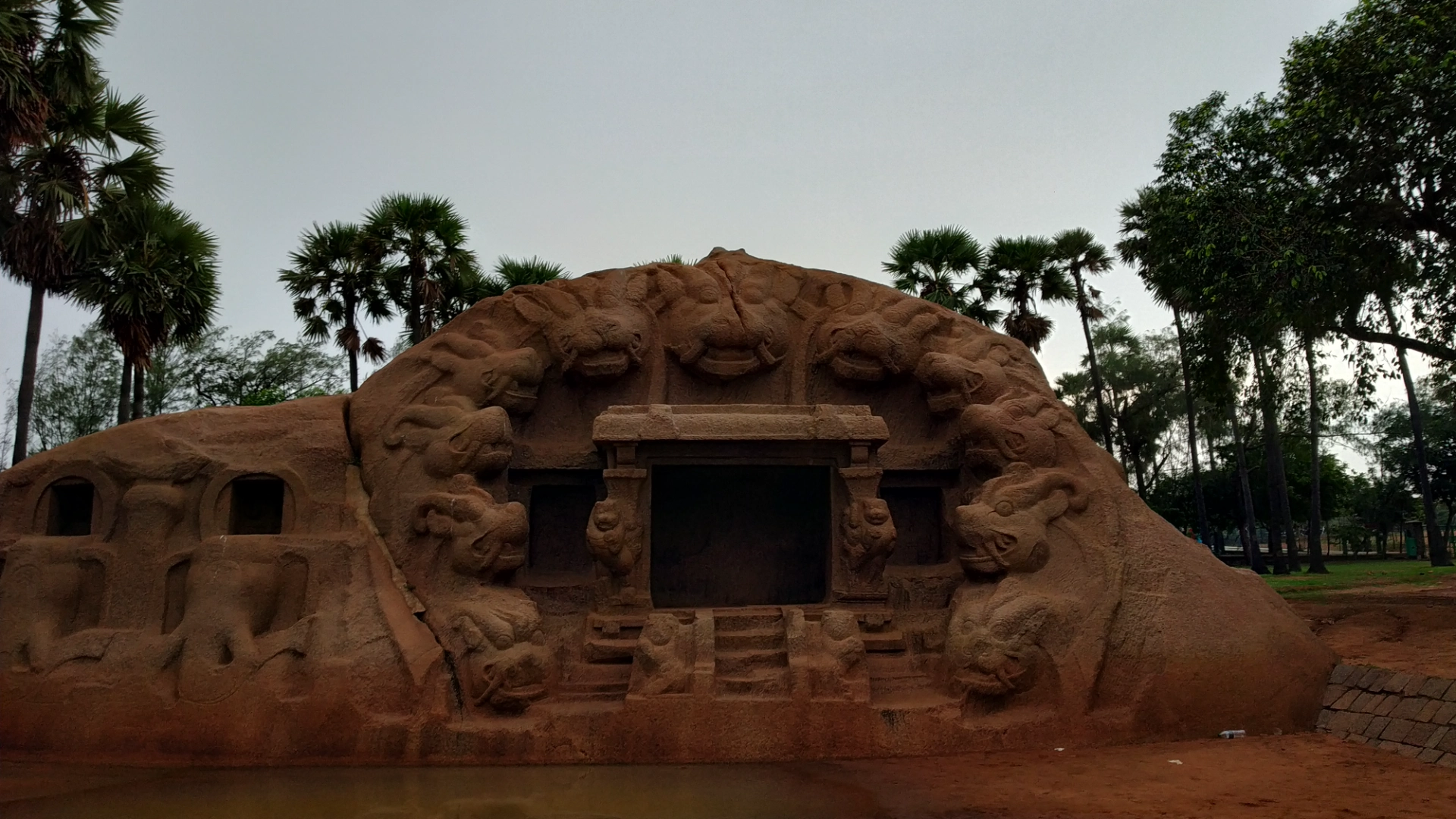
Tiger Cave
A unique 7th-century Pallava rock-cut monument near Mahabalipuram where a shrine is framed by an enormous carved yali (lion-tiger) face — unlike any other in South India.
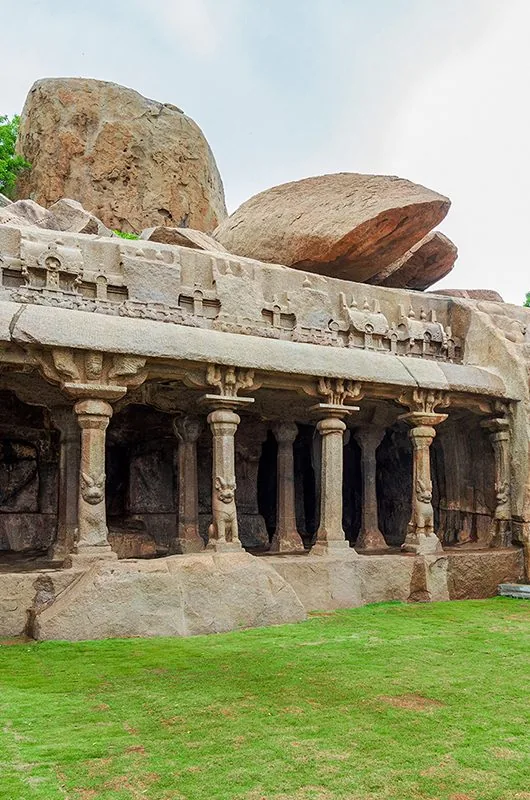
Trimurti Cave
Perched atop a 100-foot cliff near Ganesha Ratha, the Trimurti Cave Temple is a 7th-century Pallava rock-cut shrine dedicated to the Hindu trinity of Brahma, Vishnu, and Shiva. Unlike other Pallava cave temples, it opens directly into three distinct shrines without a pillared mandapa, each housing beautifully carved deities with unique dvarapalas at the entrance. A Mahishasuramardhini niche and a bas-relief panel of elephants, monkeys, and peacocks add further richness to this UNESCO-listed monument.
National Parks
1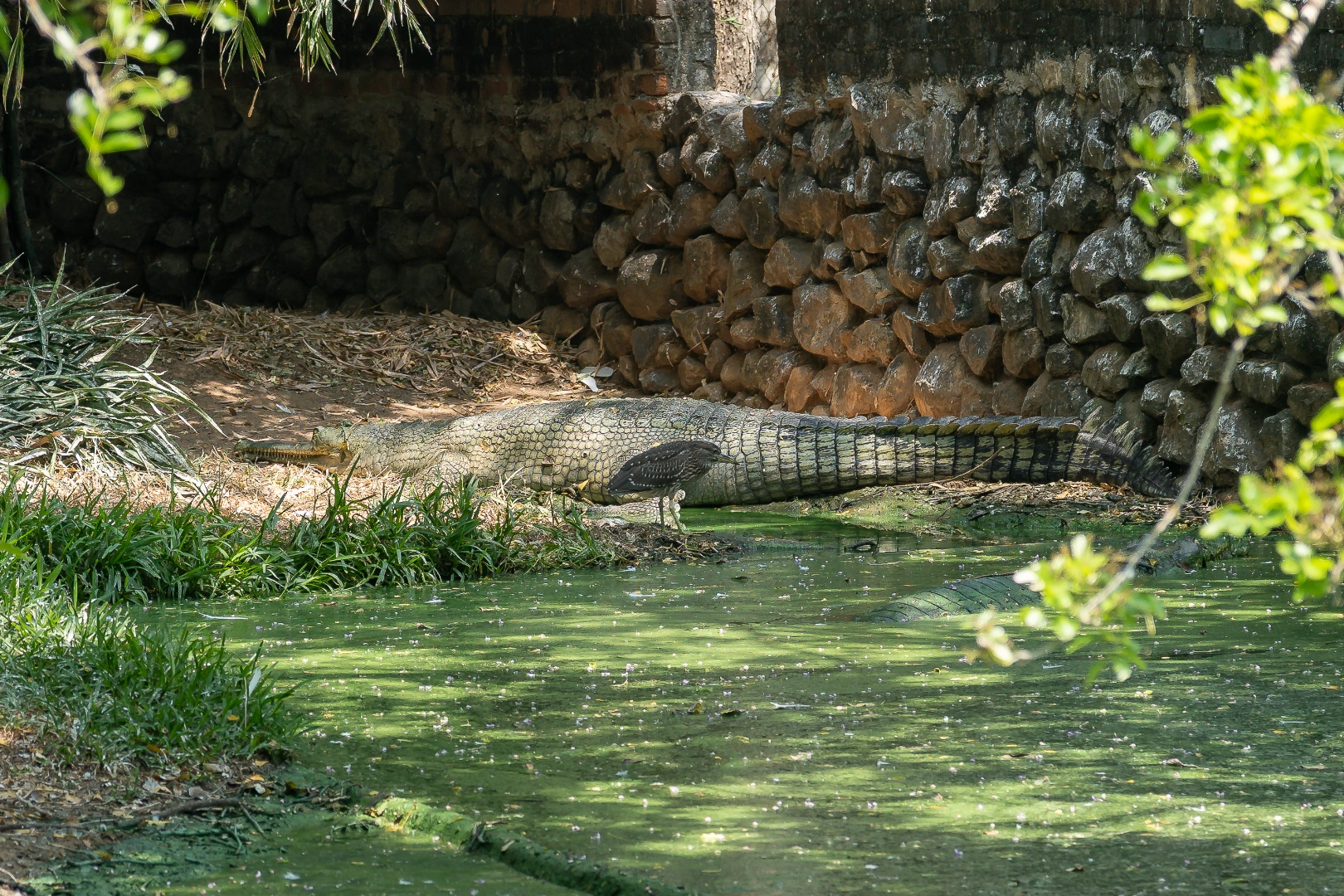
Crocodile Bank (Madras Crocodile Bank Trust)
India's premier crocodilian conservation centre near Mahabalipuram, home to 17 species including the endangered gharial, established by herpetologist Romulus Whitaker.
Scenic Spots
2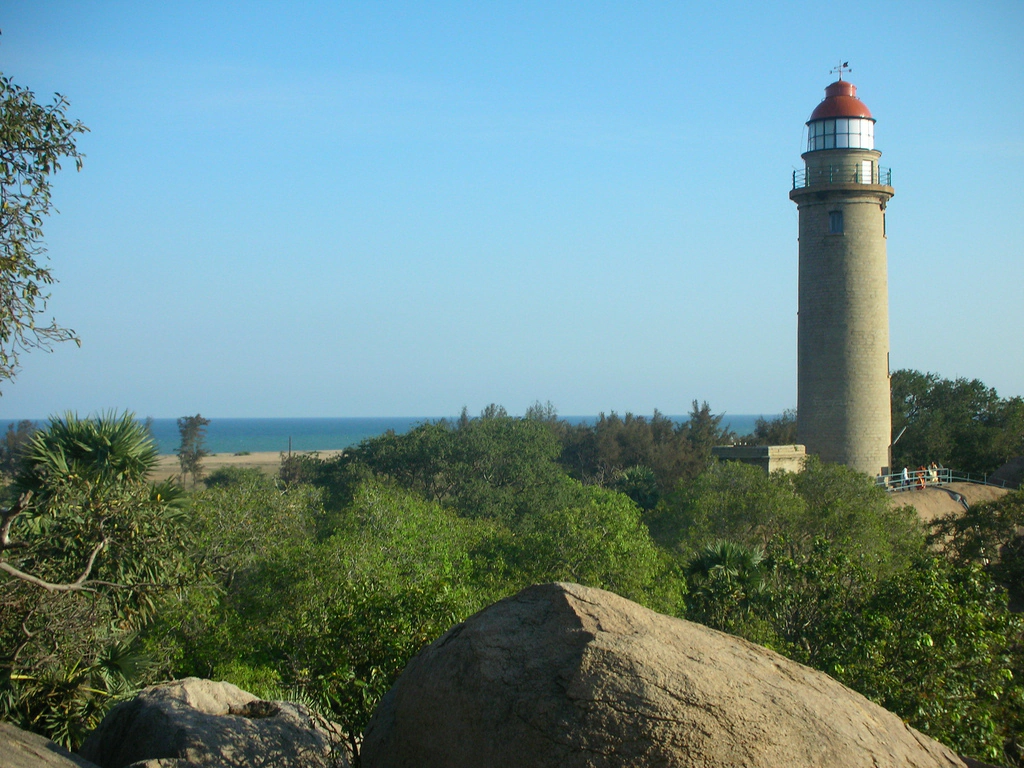
Mamallapuram Lighthouse
Mahabalipuram's lighthouse offering panoramic views of the Bay of Bengal coastline and the UNESCO Heritage temples, popular at sunrise and sunset.
Muttukadu Backwaters
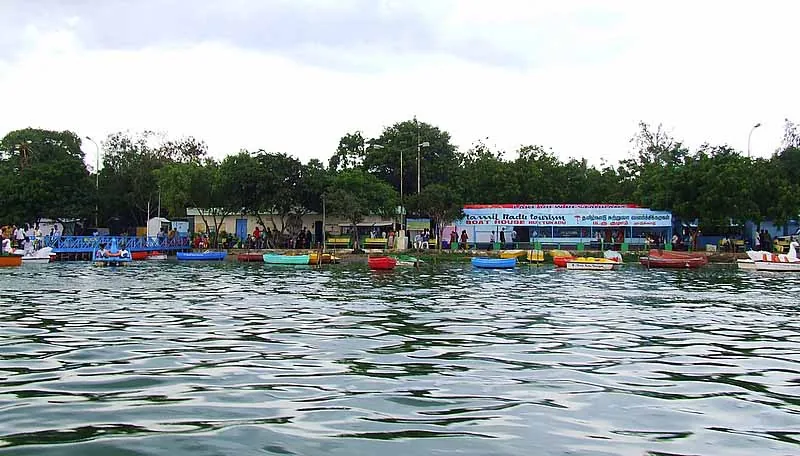
Muttukadu Lake is a vast freshwater lagoon stretching along the East Coast Road, running parallel to the Bay of Bengal and surrounded by coconut palms, mangrove forests, and aquatic vegetation. The TTDC boat house here offers boat rides, jet ski rentals, and windsurfing classes for beginners and experienced riders alike. During the migratory season, birdwatchers can spot kingfishers, herons, egrets, and occasionally flamingos. Located about 25 km from Mahabalipuram, it makes a natural stopover on the East Coast Road.
Shopping
6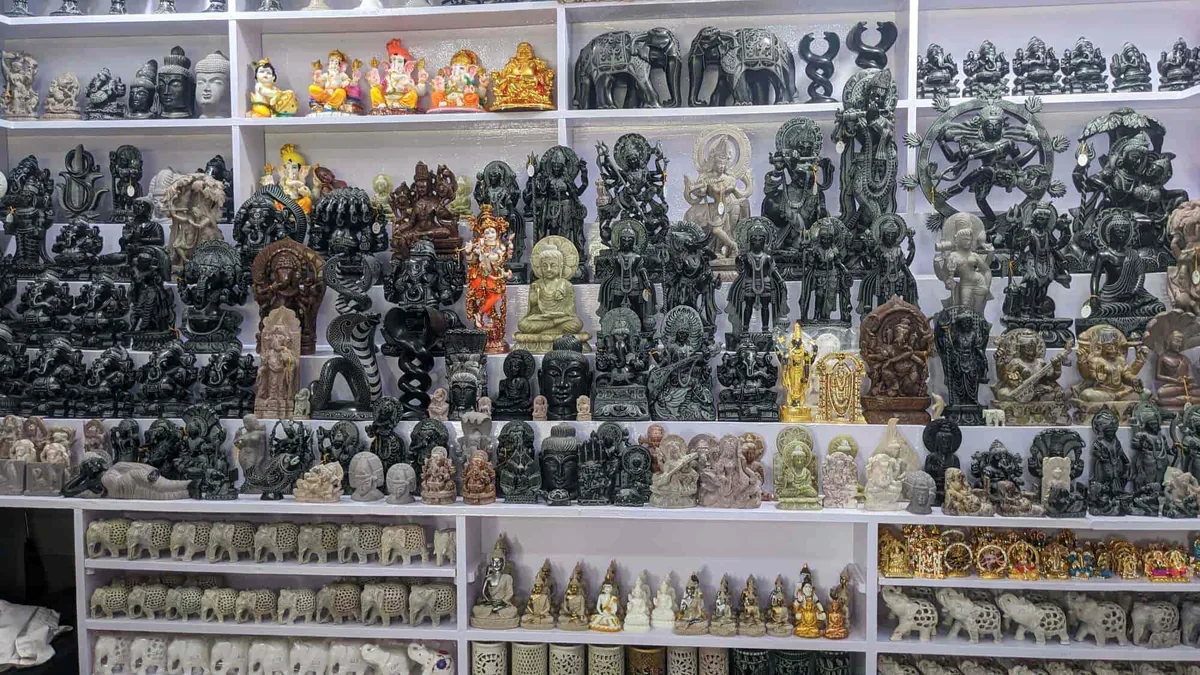
Handicrafts Emporium
One of the most visited shopping stops in Mahabalipuram, the Handicrafts Emporium is a well-maintained destination with a good and neatly organised selection of local craft products. It offers a broad mix of the town's signature items under one roof, making it convenient for travellers who want to cover multiple categories without walking the full length of the market. A practical choice for those short on time who still want to bring home something representative of the region's craft traditions.
Mount Road
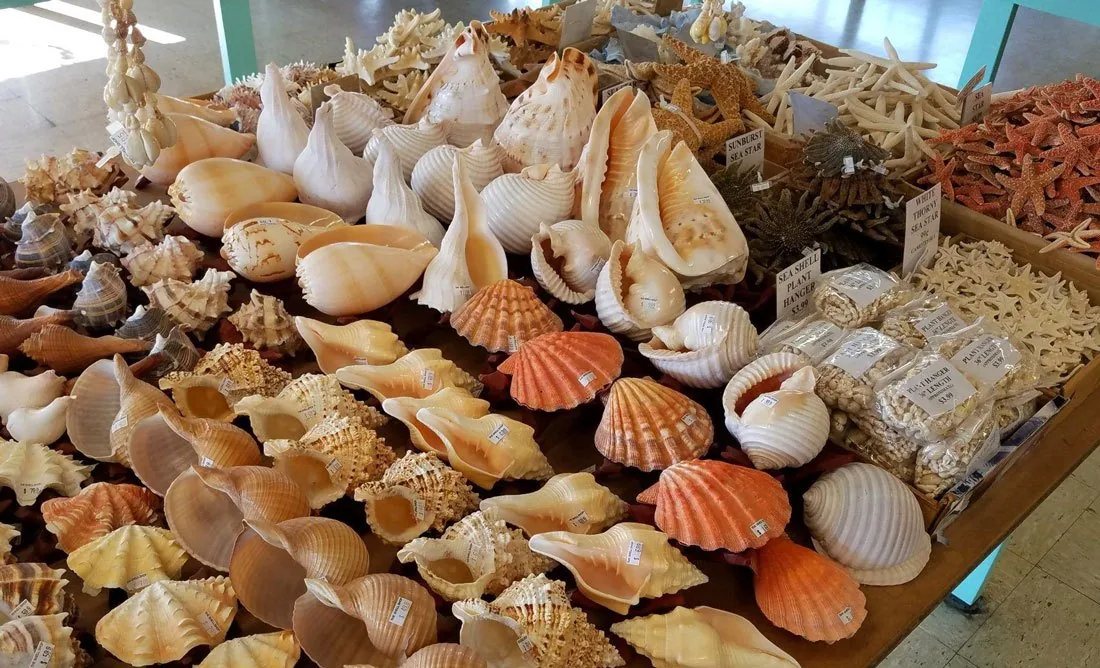
The best place to look for handicrafts and sculpture artifacts in Mahabalipuram, Mount Road is lined with shops selling granite and wooden statues, soapstone carvings, and seashell items. Government-run emporiums here offer fixed-price shopping, making it a reliable option for authentic South Indian crafts without bargaining. You can also watch stone carvers at work and try your hand at chipping with a chisel in the workshops that dot the street. A good first stop for anyone looking to take home a piece of Mahabalipuram's sculpture tradition.
Poompuhar (Government Emporium)
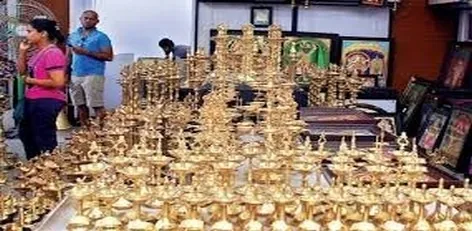
Established in 1973 as the retail arm of the Tamil Nadu Handicrafts Development Corporation, Poompuhar is named after the ancient port city of Kaveripattinam and was set up to preserve the state's traditional crafts while supporting local artisans. Poompuhar has its own stone sculpture manufacturing centre at Mahabalipuram, in addition to production units at Swamimalai for bronze icons and Kallakuruchi for sandalwood carving. The emporium stocks Kanjivaram silk sarees, Tanjore paintings, brass lamps, bronze deities, rosewood carvings, and temple jewellery at fixed prices.
Sky Blue Handicrafts
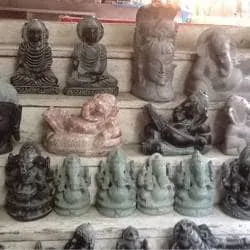
Sky Blue Handicrafts carries an eclectic range including silver jewellery with and without precious stones, real Pashmina shawls, cotton and silk shawls, brass statues, wall hangings, singing bowls, bed covers, table covers, cushion covers, and bags. The store is particularly noted for its walnut wood products, where the softness of the wood makes it ideal for producing finely detailed handicraft items fabricated locally. A well-reviewed stop for visitors looking to pick up textiles and tribal art alongside the usual stone-based crafts.
Southern Arts and Crafts
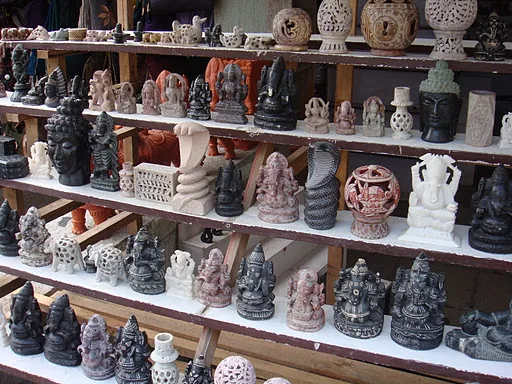
Southern Arts and Crafts is known for beautiful curios sourced from local homes, on the pricier side but worth a visit for those looking for something genuinely distinctive. Located on East Raja Street in the Fisherman Colony, the store specializes in wooden carved products and locally made antiques. It is a good option for travellers who want to move beyond the standard souvenir stalls and find pieces with more character and provenance, though budget-conscious shoppers may find the pricing steep.
Street Market
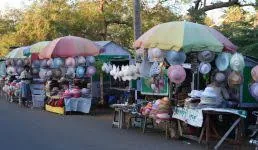
The street market running around Mahabalipuram's monument zone is a lively stretch of stalls selling handcrafted souvenirs, traditional garments, and intricate jewelry, with vendors eager to share the stories behind their work. Shops near the lighthouse area range from small inexpensive souvenirs to large commissioned stone sculptures that ship worldwide. Bargaining is expected and prices can drop significantly with some back and forth. Evenings bring a more vibrant atmosphere with cooler temperatures and food stalls serving local snacks alongside the shopping.
Temple
6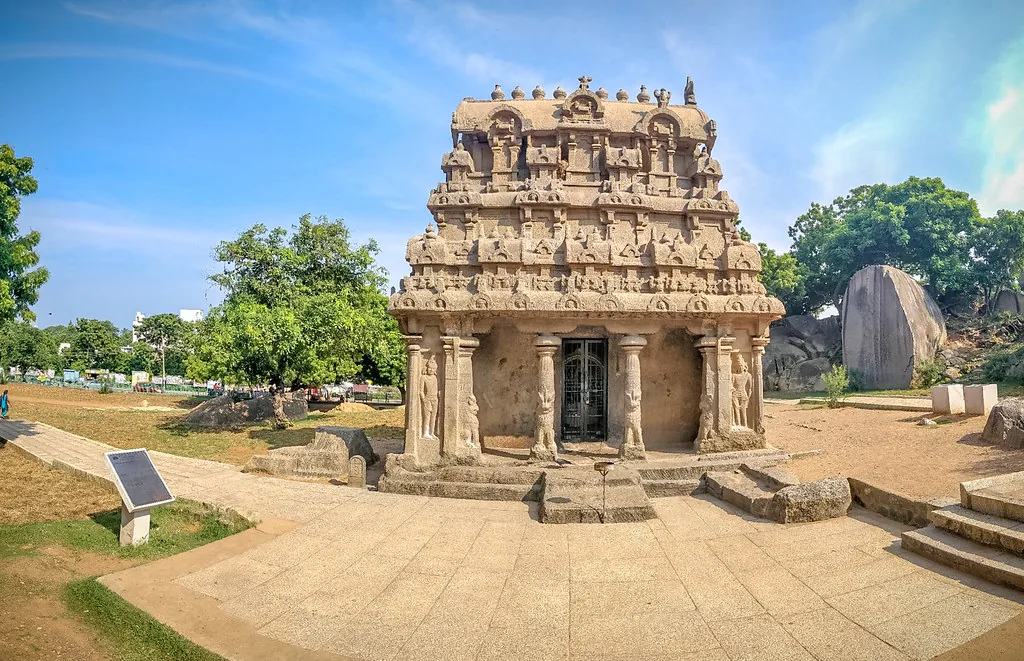
Ganesh Ratha Temple
One of ten rathas carved from pink granite within Mahabalipuram's UNESCO World Heritage site, the Ganesha Ratha is a fully completed monolithic temple from the late 7th century, built during the reigns of Mahendravarman I and Narasimhavarman I. Originally dedicated to Lord Shiva, the shrine was rededicated to Lord Ganesha in the 1880s when villagers replaced the Shiva Linga with a Ganesha idol. Unlike the more massive monuments nearby, it offers a quiet and intimate experience with intricate carvings and an active daily puja.
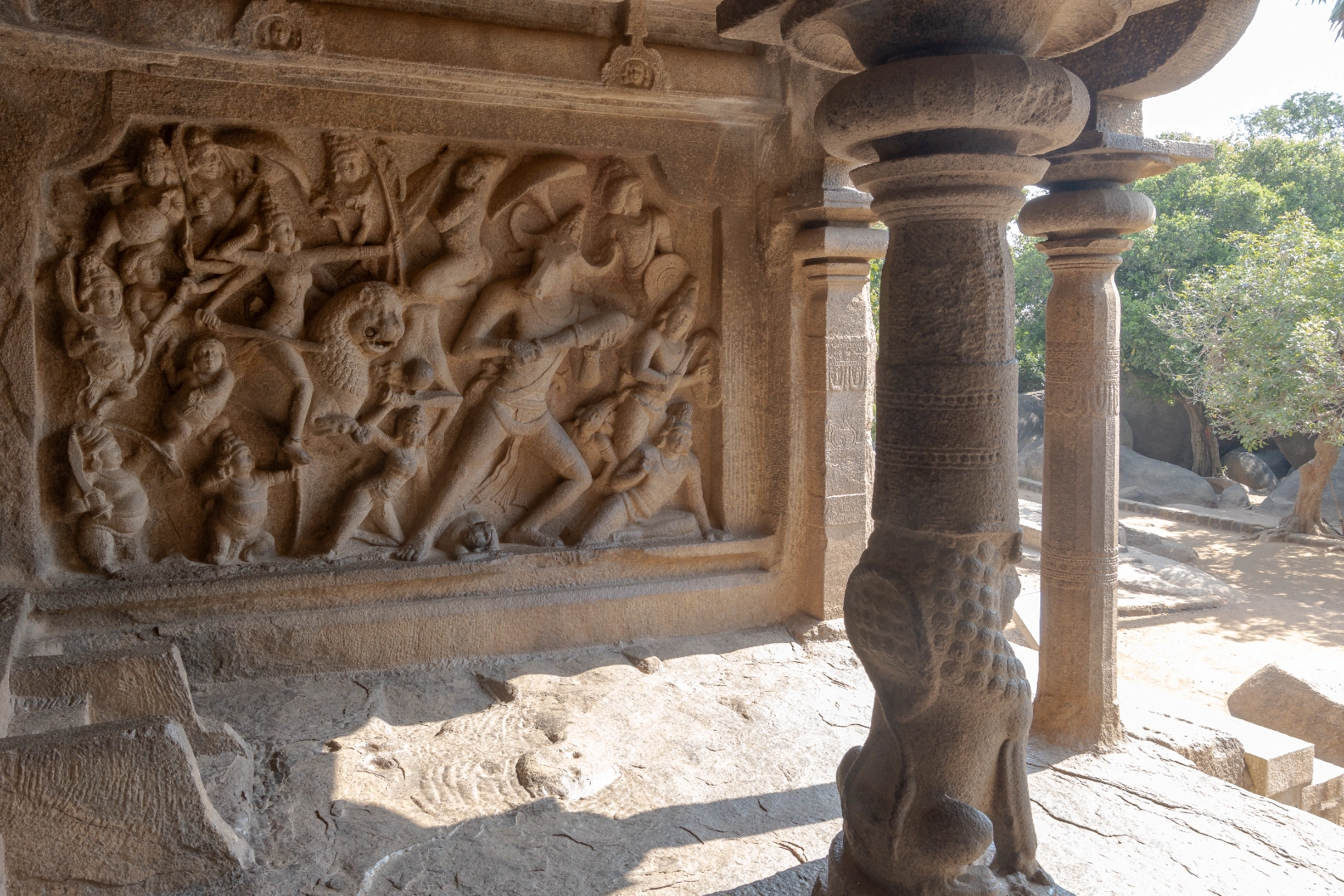
Mahishasuramardini Cave Temple
A 7th-century Pallava rock-cut cave with an iconic bas-relief of Durga slaying Mahishasura, part of Mahabalipuram's UNESCO Heritage site.
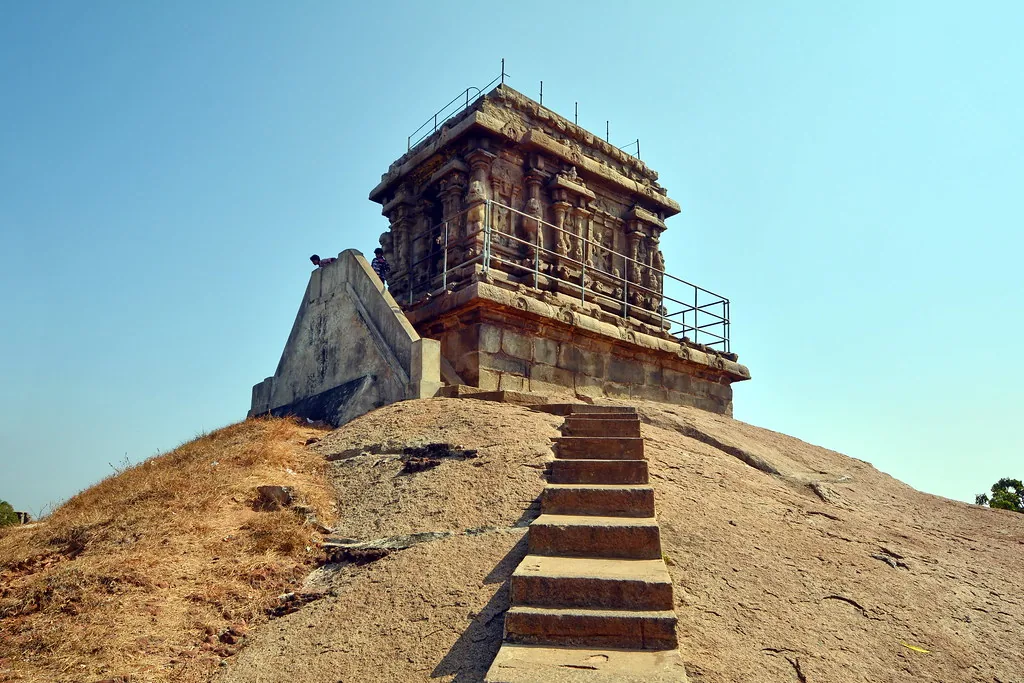
Olakkannesvara Temple (Old Lighthouse)
Built in the late 7th to early 8th century by Pallava king Rajasimha, the Olakkannesvara Temple is a grey granite Dravidian shrine perched on a rocky hillock in Mahabalipuram, overlooking the Coromandel Coast. The temple's name translates to "flame-eyed," a reference to fires once lit on its rooftop terrace to guide ships navigating the Bay of Bengal, making it one of India's earliest known lighthouse structures. Its walls carry carved depictions of Shiva as Dakshinamurti, Nataraja, and the Ravana lifting Kailasa scene.
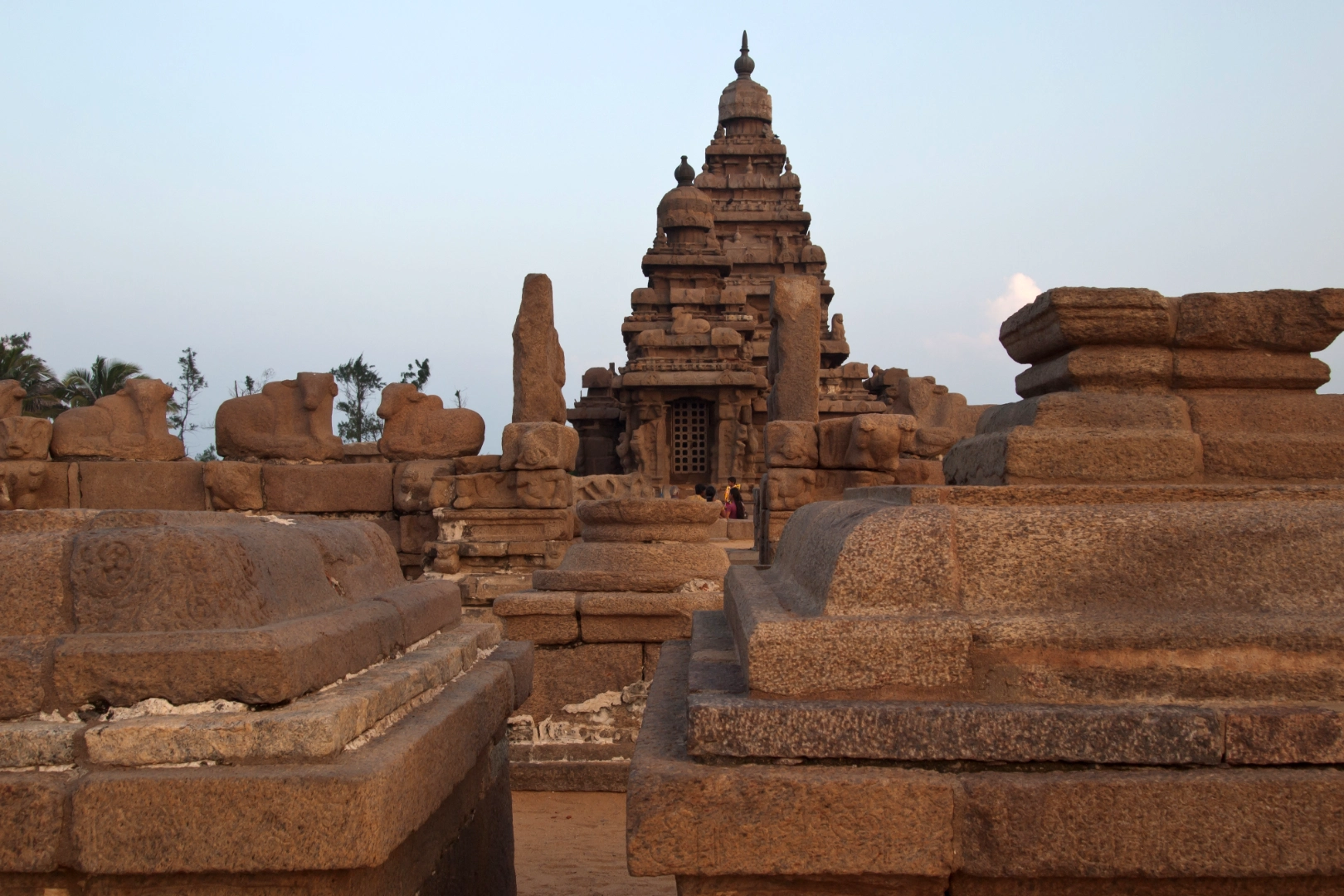
Shore Temple
One of South India's oldest stone temples, built by the Pallavas in 700 CE on the shores of the Bay of Bengal, a UNESCO World Heritage Site.
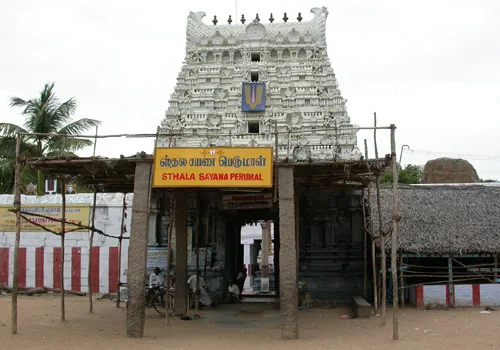
Thirukadalmallai (Sri Sthala Sayana Perumal Temple)
One of the 108 Divya Desams of the Vaishnava tradition, this ancient temple in Mahabalipuram is dedicated to Lord Vishnu, worshipped here as Sthalasayana Perumal, with Goddess Lakshmi as Nilamangai Thayar. Celebrated in the Naalayira Divya Prabandham by the Alvar saints, the temple was originally built by the Pallavas and later expanded by the Cholas, Vijayanagara kings, and Madurai Nayaks. It is also revered as the birthplace of Bhoothathalvar, one of the twelve Alvar saints of the Vaishnavite tradition. A serene and spiritually charged stop near the Bay of Bengal.
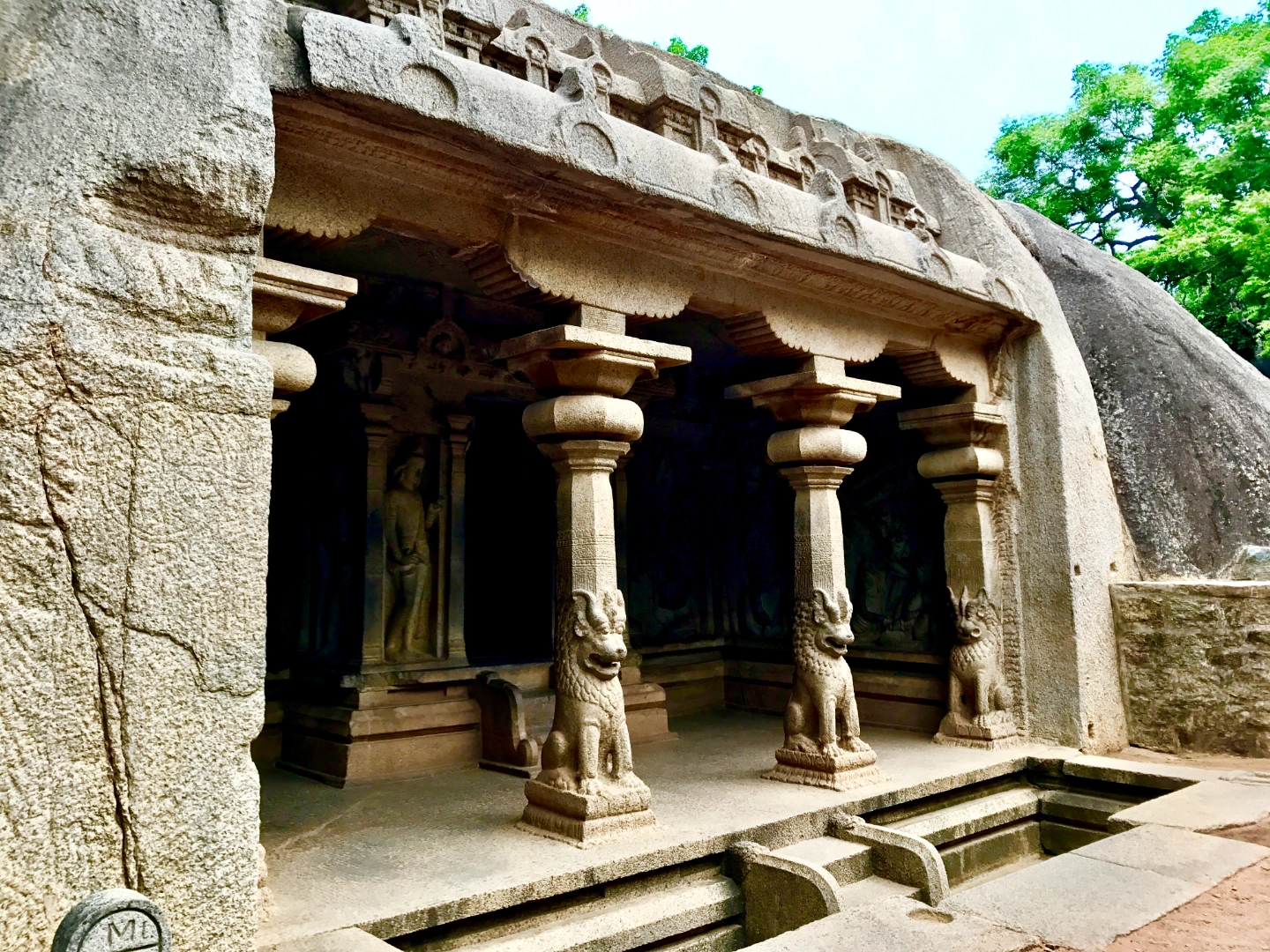
Varaha Cave Temple
A 7th-century Pallava rock-cut cave at Mahabalipuram with masterpiece bas-reliefs of Vishnu as Varaha, part of the UNESCO Heritage site.
No places found for ""
Try a different search term or switch to All.
No places match your current filter
Try a different search term or switch to All.