Ladakh Snow Leopard Safari: India's First High-Altitude Wildlife Safari and How to Plan It
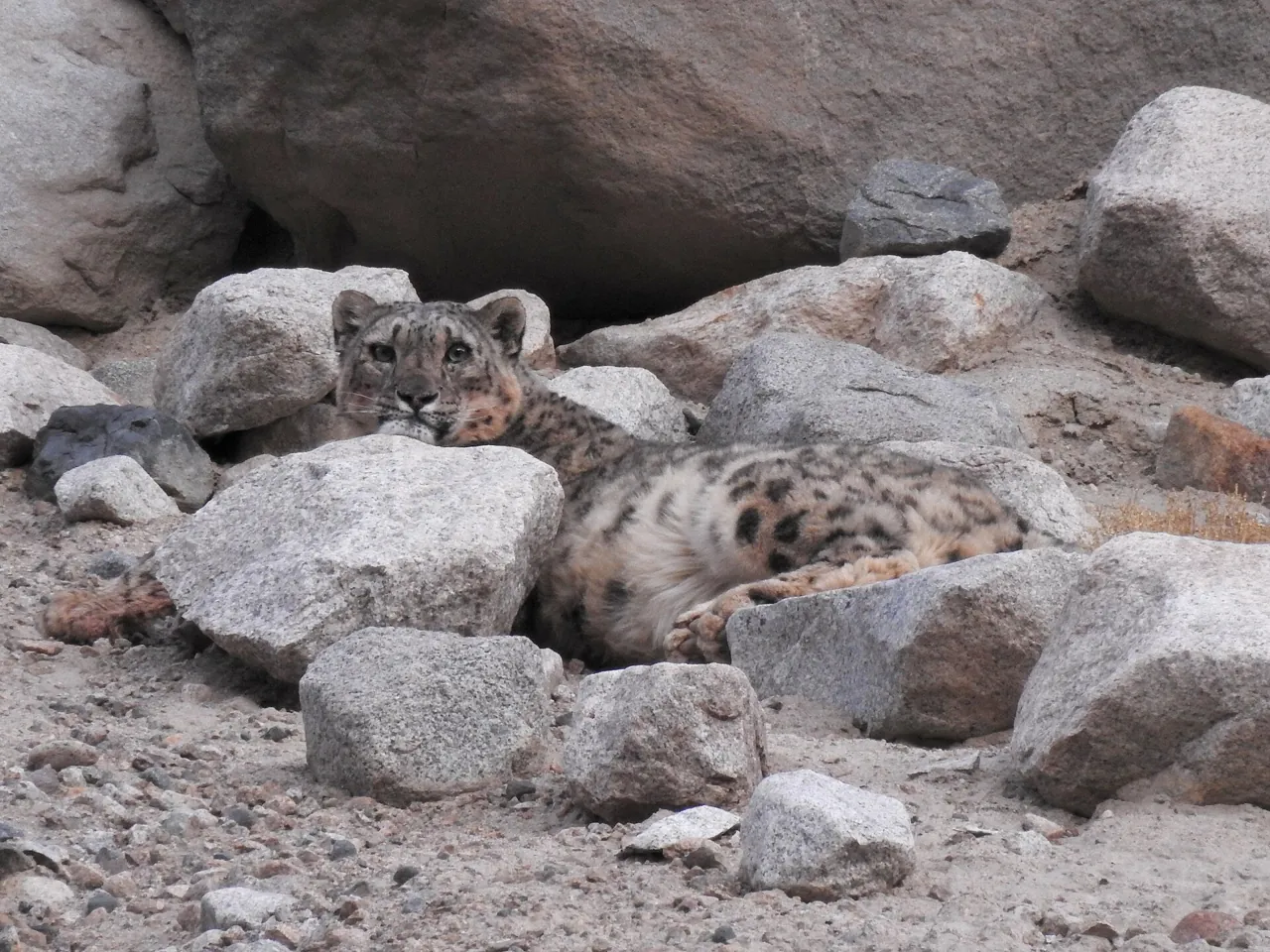
Ladakh launched what the government calls India's first high-altitude wildlife safari on 7 October 2026, starting in Rumbak, Shang and Ulley. What we know about it so far, plus where and when to see snow leopards, kiang and black-necked cranes, permits, acclimatisation and how to watch responsibly.
On 7 October 2026, Ladakh's Lieutenant Governor Vinai Kumar Saxena flagged off six open-back safari vehicles at the Choglamsar Protected Forest in Leh, launching what the UT administration calls India's first high-altitude wildlife safari. The Ladakh Snow Leopard Safari starts in three villages where snow leopards are often seen in winter: Rumbak, Shang and Ulley (spelt Uley in official releases). Trained local drivers and wildlife guides go with every vehicle.
That makes this a good winter to plan a Ladakh wildlife trip, but it helps to know how the region works. Ladakh has never been a jeep safari destination in the way Ranthambore or Kanha are. Most wildlife trips here still mean early starts, long hours behind a spotting scope, nights in village homestays and a lot of patience. In return you get some of the rarest animals in Asia: the snow leopard, the Tibetan wolf, the Pallas's cat, herds of kiang on open plains and the only breeding black-necked cranes in India.
Ladakh is also where most of India's snow leopards live. The first national Snow Leopard Population Assessment, carried out between 2019 and 2023 and released in January 2024, estimated 718 snow leopards in India, and 477 of them in Ladakh.
The Ladakh Snow Leopard Safari: what we know so far
What it is. Guided wildlife drives in specially designed open-back vehicles on approved routes, run by trained local drivers and guides. When the Lieutenant Governor approved the idea in early August 2026, the administration said it would follow the pattern of jeep safaris in national parks such as Kaziranga and Ranthambore. Six vehicles were flagged off at the launch.
Who runs it. The Snow Leopard and High-Altitude Nature Conservation (SHAN) Society, which the Lieutenant Governor set up on 16 June 2026, together with UT Ladakh's Department of Forest, Ecology and Environment. The aim is a community-led model in which local people earn from wildlife as drivers, guides and nature interpreters.
Where it runs. To begin with, in Rumbak and Shang in the Hemis area and in Ulley in the Sham region. The administration says suitable routes are being identified across Hemis National Park, the Changthang and Karakoram wildlife sanctuaries, and the Nubra, Zanskar, Sham, Kargil and Drass areas.
Why now. One stated aim is to stop illegal off-roading and the disturbance of wildlife by private vehicles. The administration talks of regulated visitor numbers, approved routes and trained local staff. Alongside the safari, 20 local young people are being trained as bird guides and given binoculars, and 10 bird-watching hides are planned at major birding spots.
How it differs from a homestay trip. A classic snow leopard trip puts you in one valley for a week or more, walking out each day with spotters who follow fresh tracks and the latest sightings. The official safari runs in vehicles, sticks to fixed routes and comes with a trained guide. It could suit travellers with less time, or those who would rather not walk for hours at altitude, though the length of each outing has not been announced. Conservationists have also pointed out that more vehicles in snow leopard habitat bring their own pressure, so how the routes and numbers are managed will matter.
What is still unknown. As of 23 October 2026, fares, a booking channel, daily timings and the full operating calendar have not been published. The SHAN Society released a brochure of wildlife tourism packages at the launch, but no prices or public booking link have appeared on any official channel we could find. Don't pay anyone for an "official" safari seat until the Ladakh administration or the SHAN Society publishes rates. And as everywhere in Ladakh, the safari gives you access to snow leopard country, not a guaranteed sighting.
Ladakh wildlife at a glance
- Official safari: launched 7 October 2026 in Rumbak, Shang and Ulley; fares and booking not yet published.
- Snow leopard: January to March, in the Rumbak valley of Hemis National Park, the Shang valley and around Ulley in the Sham region.
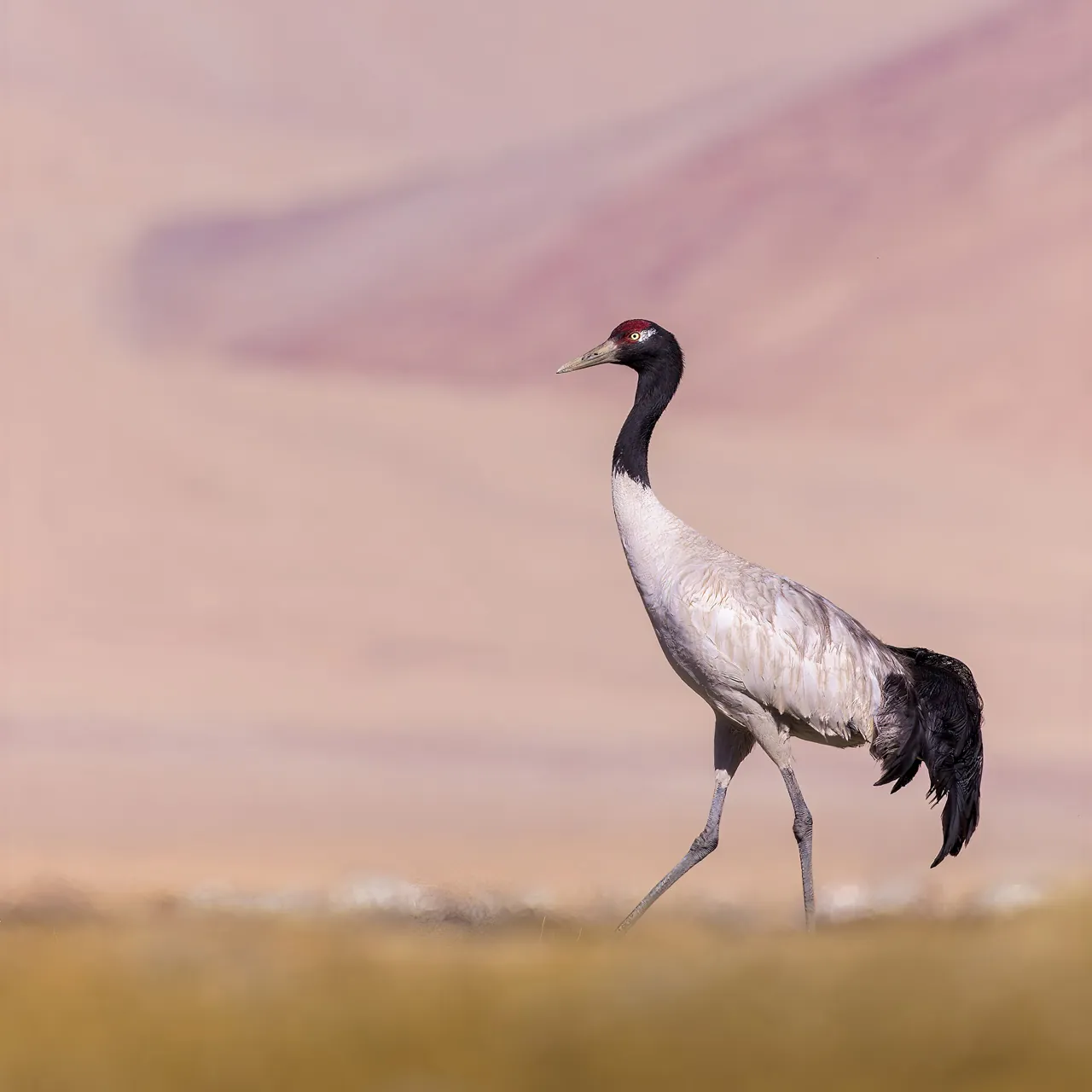
- Black-necked crane: late March or April to October, in the Changthang wetlands such as Hanle, Tso Kar and Tso Moriri.
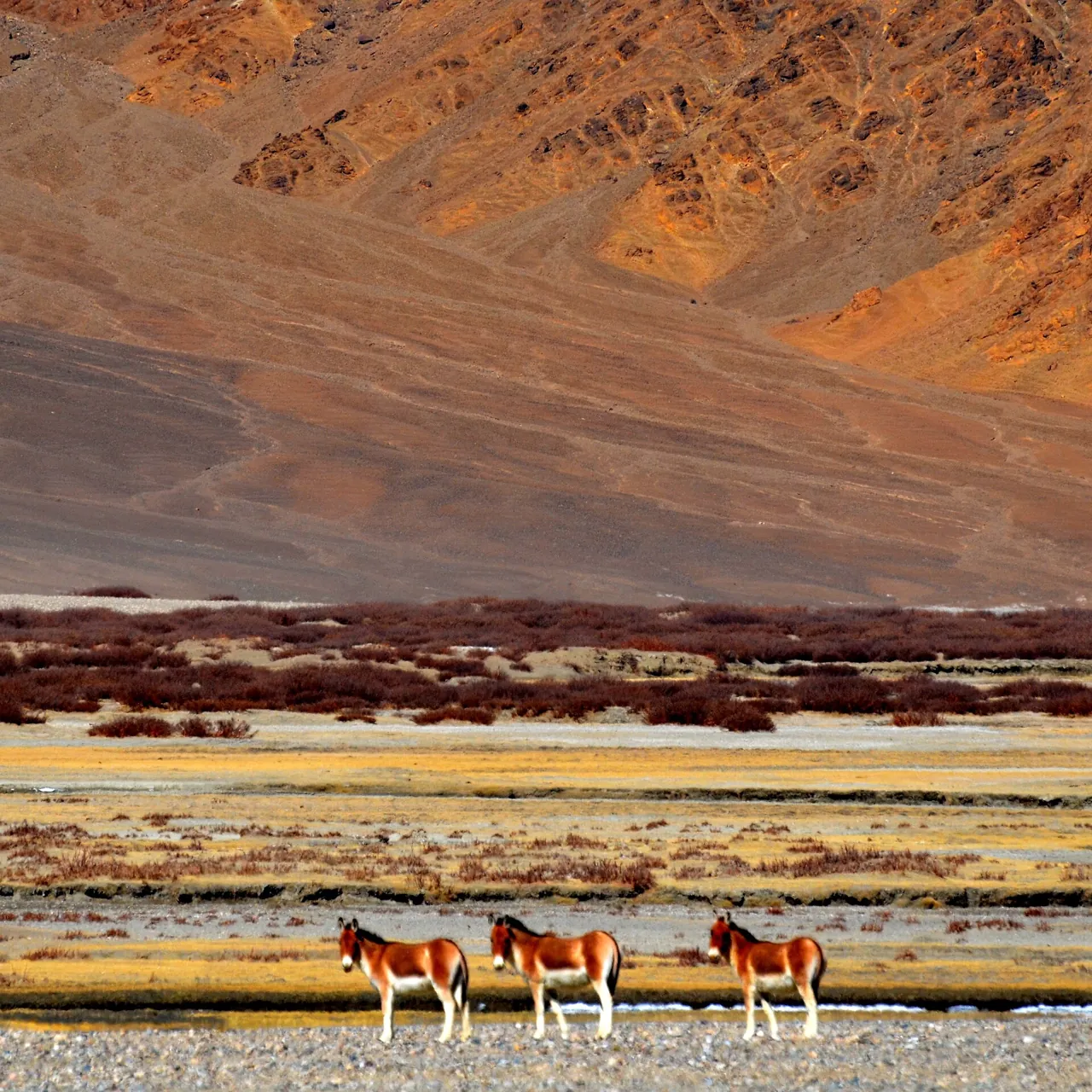
- Kiang and Tibetan argali: the open plains of Changthang, around Tso Moriri, Tso Kar and the upper Hanle valley.
- Pallas's cat: Hanle and other parts of the Changthang Wildlife Sanctuary, with patient local guides.
- Himalayan marmot: summer only, as they hibernate in winter.
- Fly into: Leh, then rest at least 48 hours before going higher.
- Paperwork for Indians: no Inner Line Permit, but the environment fee receipt from the LAHDC Leh portal.
- Snow leopard trip length: plan a minimum of 7 days in the field, plus acclimatisation days in Leh.
What you can see, and where
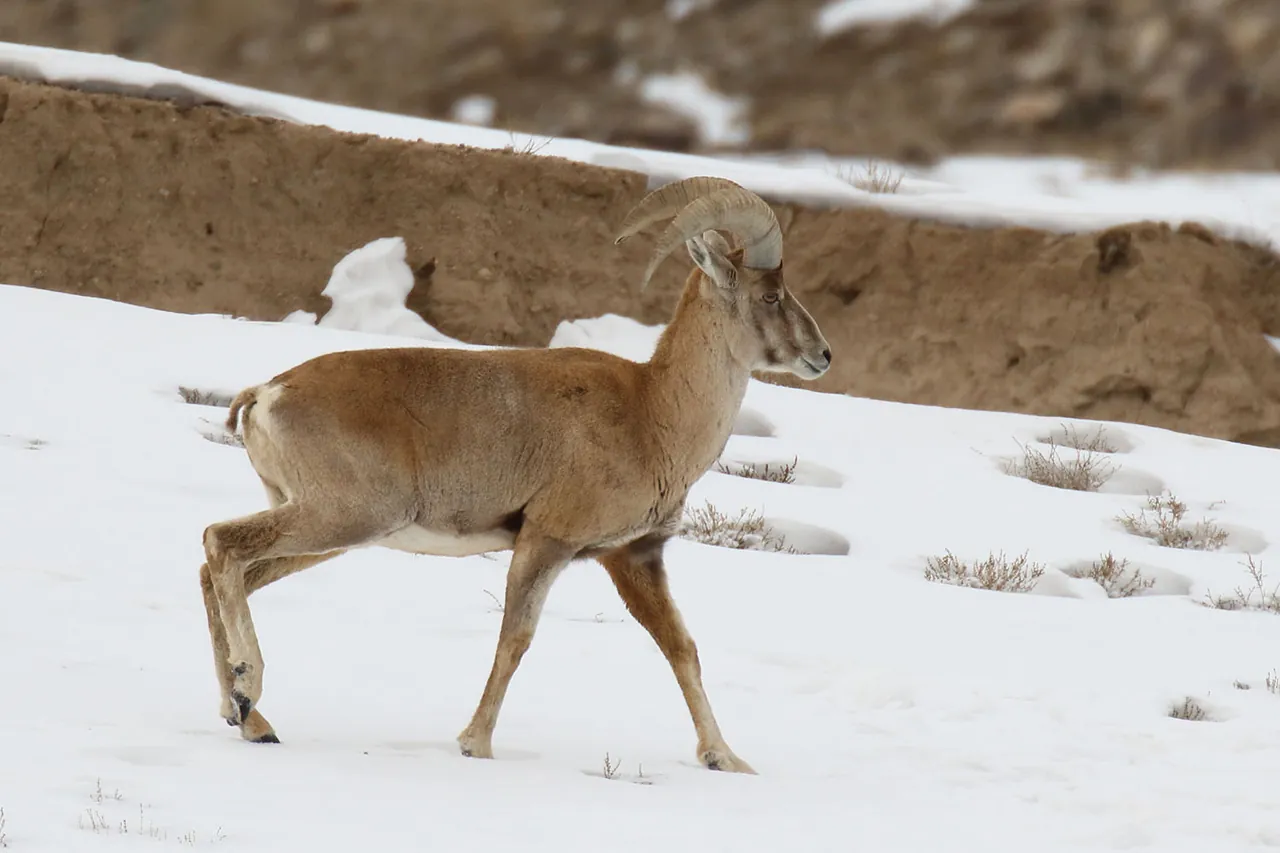
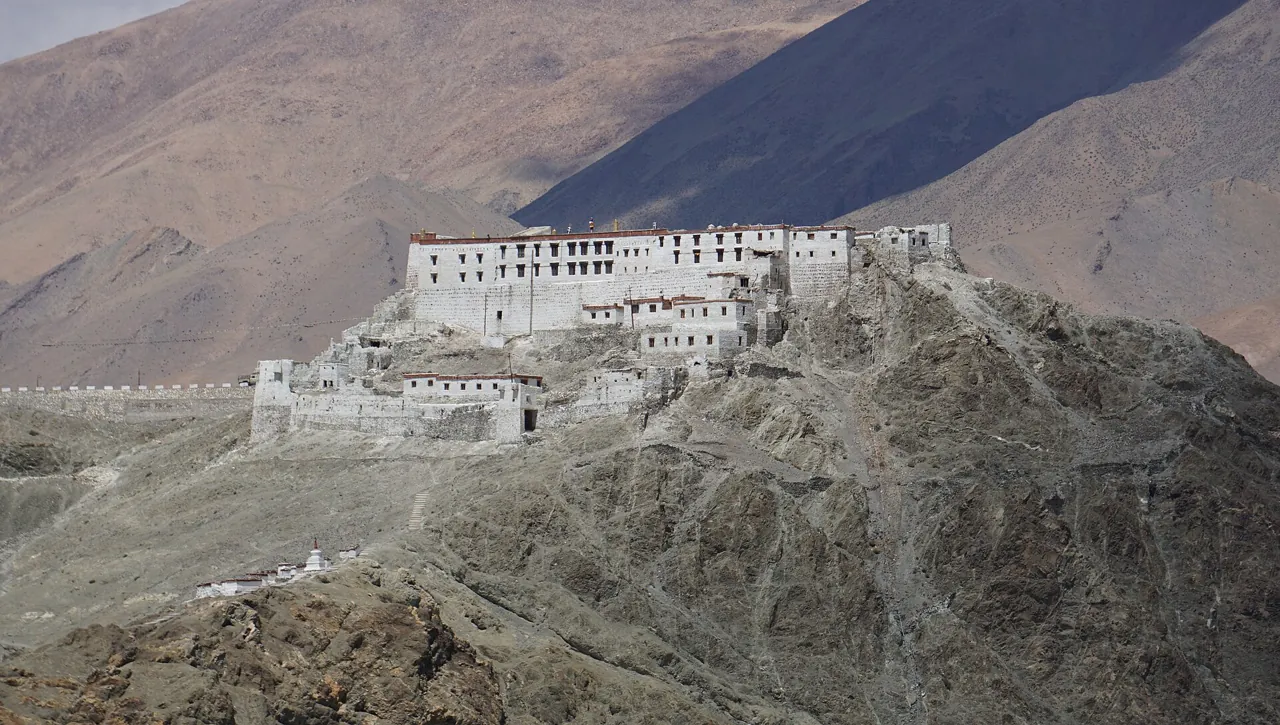
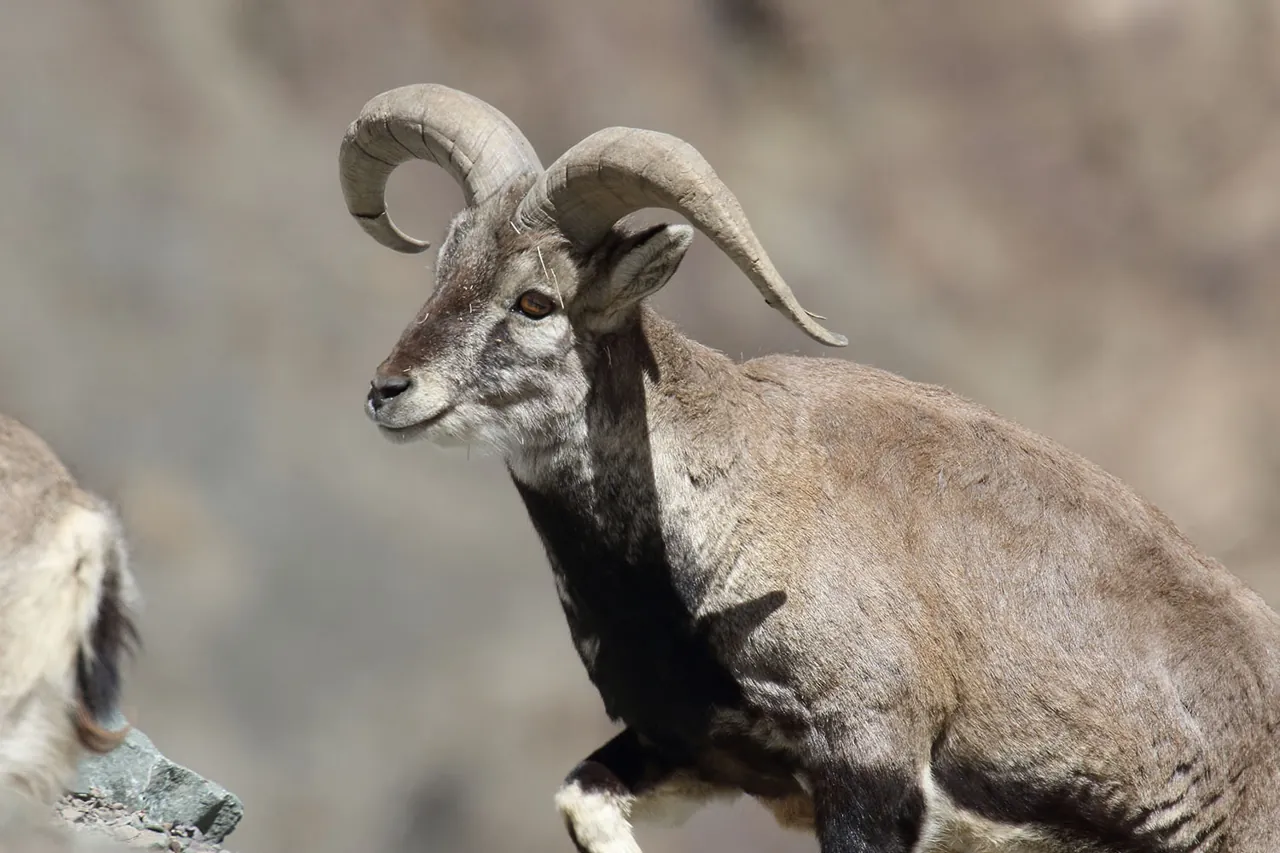
Hemis National Park. This is the best known snow leopard landscape in India. The park's valleys hold herds of bharal (Himalayan blue sheep), the cat's main prey, along with Tibetan wolf, red fox and Ladakh urial. Golden eagles and lammergeiers ride the thermals above the ridges. The Rumbak valley inside the park is where most winter snow leopard trips stay, and the Shang valley on the park's eastern side is the third area of the new official safari. The park also includes the famous Hemis Monastery, and in summer the Markha Valley Trek passes through the same country.
Ulley and the Sham region. West of Leh, the small village of Ulley (also spelt Uley) sits high above the Indus valley. It is a good alternative to Rumbak for snow leopard tracking, and the cliffs around it are known for Asiatic ibex. Ladakh urial graze the lower slopes of the valleys nearby.
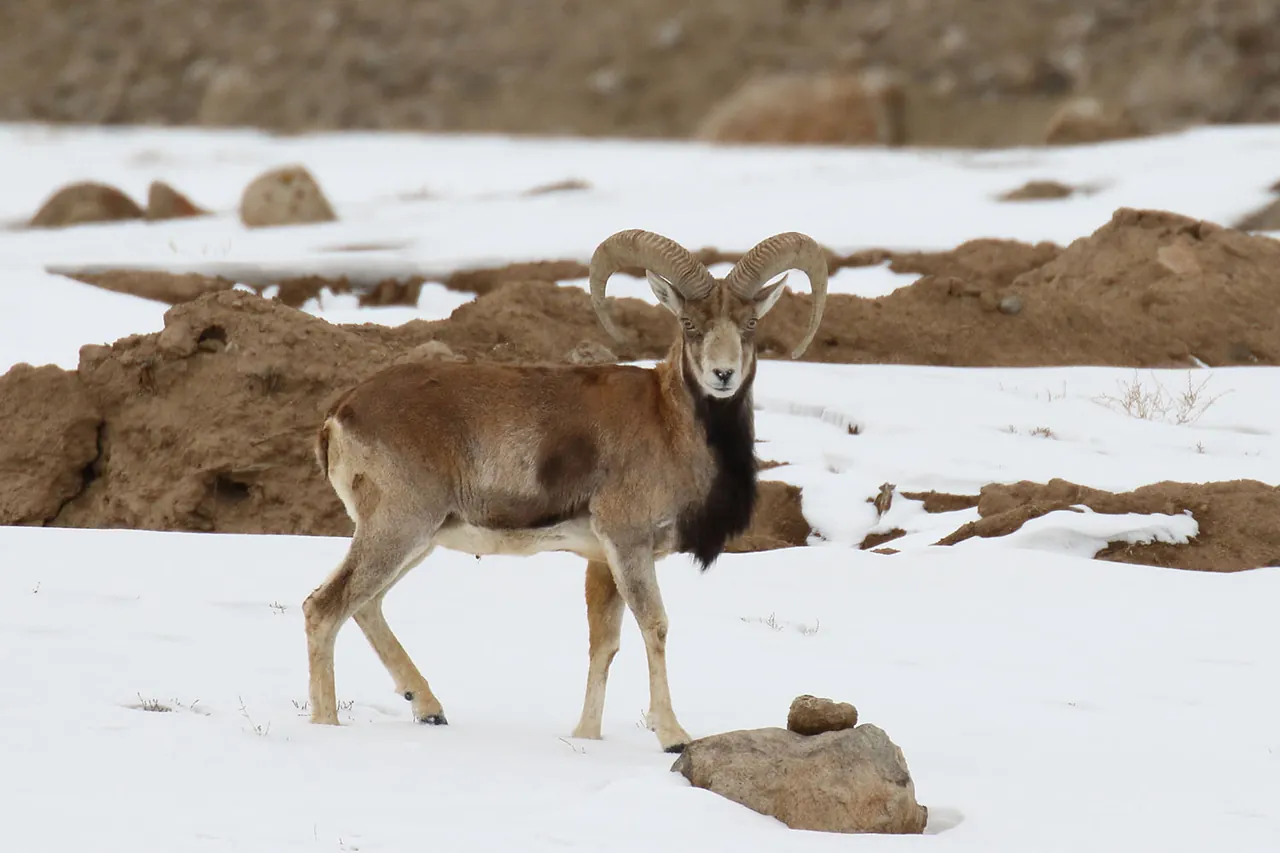
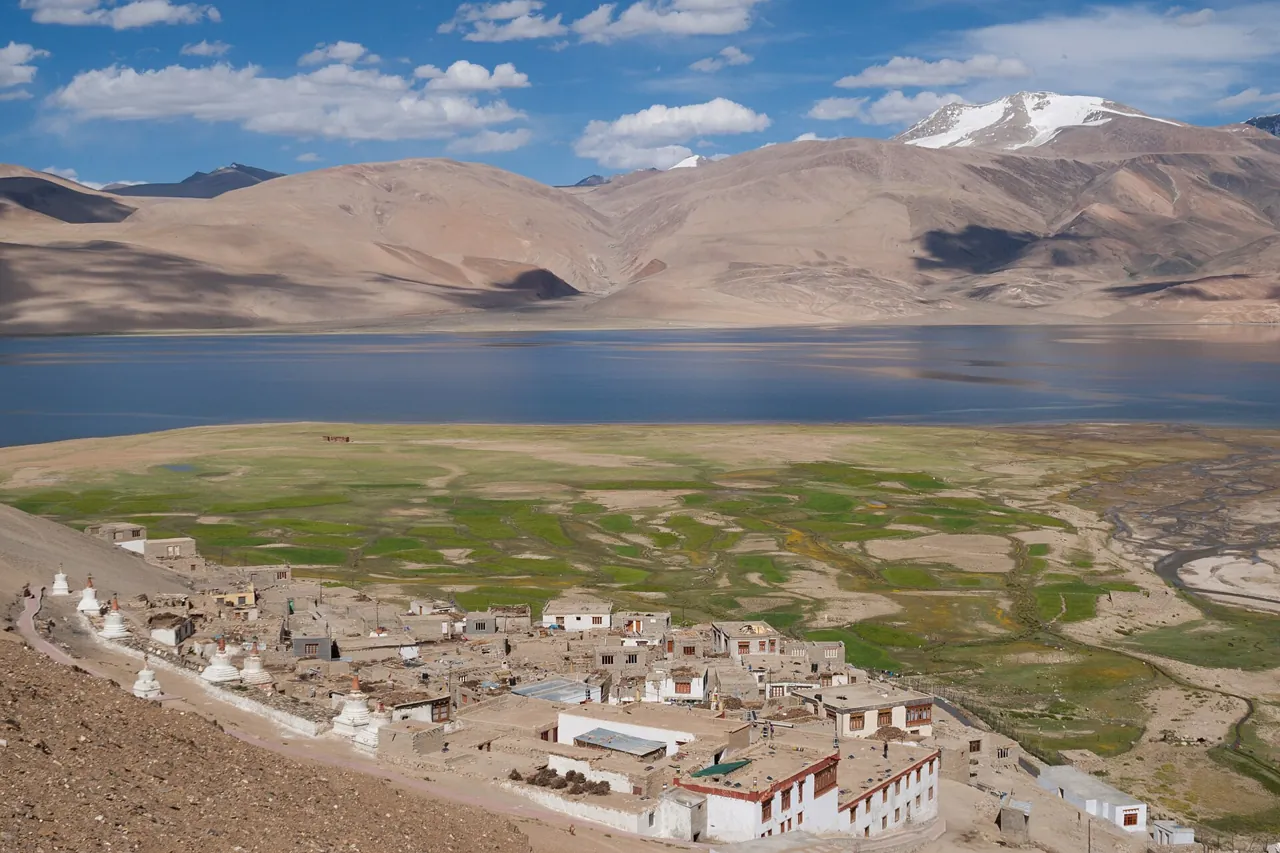
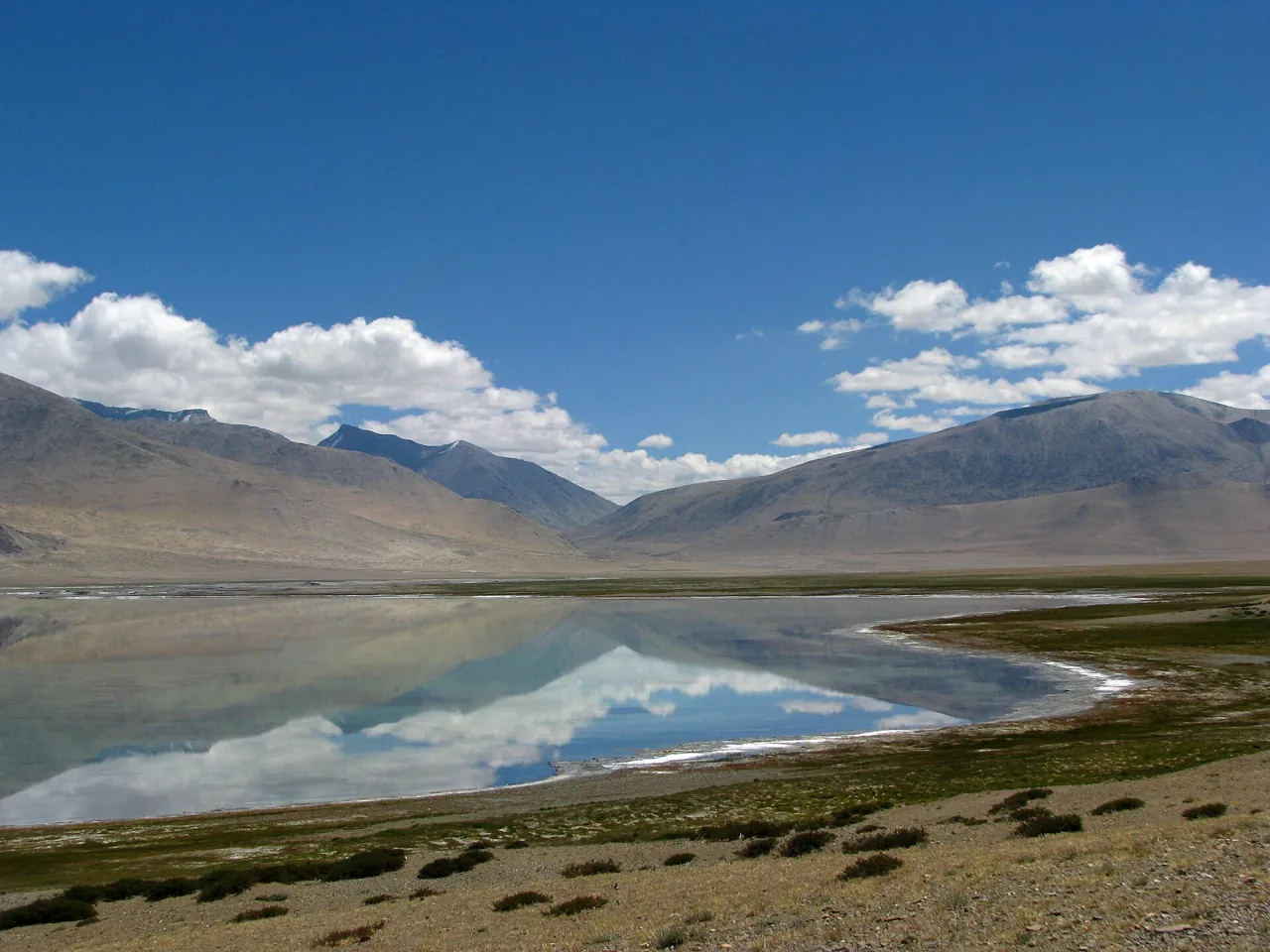
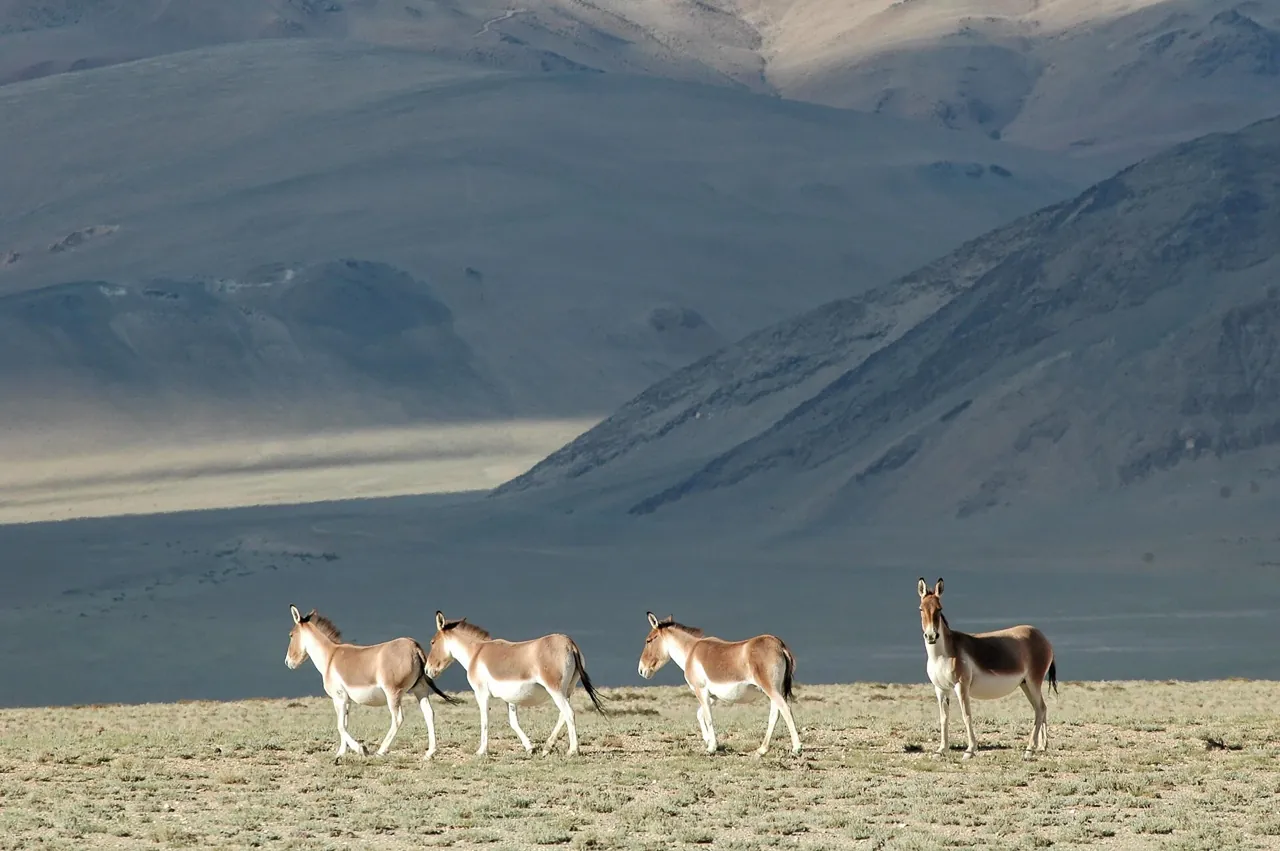
Changthang: Tso Moriri, Tso Kar and Hanle. The high plateau of eastern Ladakh feels completely different from the gorges of Hemis. It is wide, open and windswept, and the animals are easier to see from a distance. Kiang, the Tibetan wild ass, graze in loose groups on the plains around Tso Moriri and Tso Kar. Tso Moriri is a Ramsar wetland inside the Changthang Cold Desert Wildlife Sanctuary, and its marshes are a breeding ground for bar-headed geese and black-necked cranes. Tibetan argali, a subspecies of the argali, the largest wild sheep in the world, live in parts of Changthang including the upper Hanle valley, though they are shy and hard to find.
Hanle has become the best known place in India to look for Pallas's cat, a small, woolly, flat-faced cat that lives among rocks and old marmot burrows. Wildlife officials say sightings in Hanle have become more frequent in recent years, partly because more people are looking. The species has also been found by camera traps in Hemis National Park, so it is more widespread than once thought.
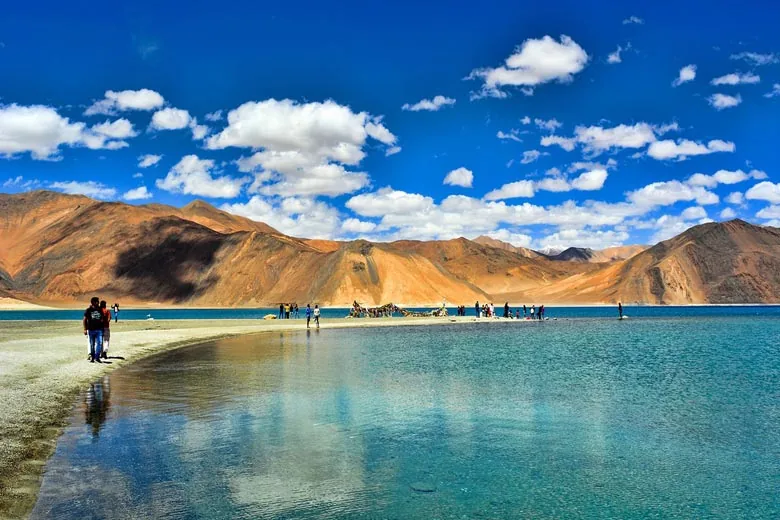
Marmots and the summer roads. Himalayan marmots are the easiest Ladakh mammals to see. In summer they sit outside their burrows on grassy slopes in Changthang and along the road to Pangong Tso. They hibernate through winter, so don't expect them on a snow leopard trip.
When to go
Ladakh's wildlife calendar splits neatly in two.
Winter, January to March, is snow leopard season. As snow covers the high ground, the bharal come down into the lower valleys and the cats follow them. The Snow Leopard Conservancy India Trust (SLC-IT) names January to March as the best time for sightings. It is also the snow leopard mating season. Expect temperatures that SLC-IT says can drop to between minus 16 and minus 25 degrees Celsius.
Summer, roughly May to September, is the season for Changthang. Black-necked cranes start arriving from the last week of March, with most in by mid April, according to a long term study of the Changthang population. Courtship peaks in April and May, eggs are laid between May and July, and the birds leave from late October. A visit between June and August gives you a chance of crane chicks, active marmots and open roads to Tso Moriri, Tso Kar and Hanle.
How a homestay and spotter trip works
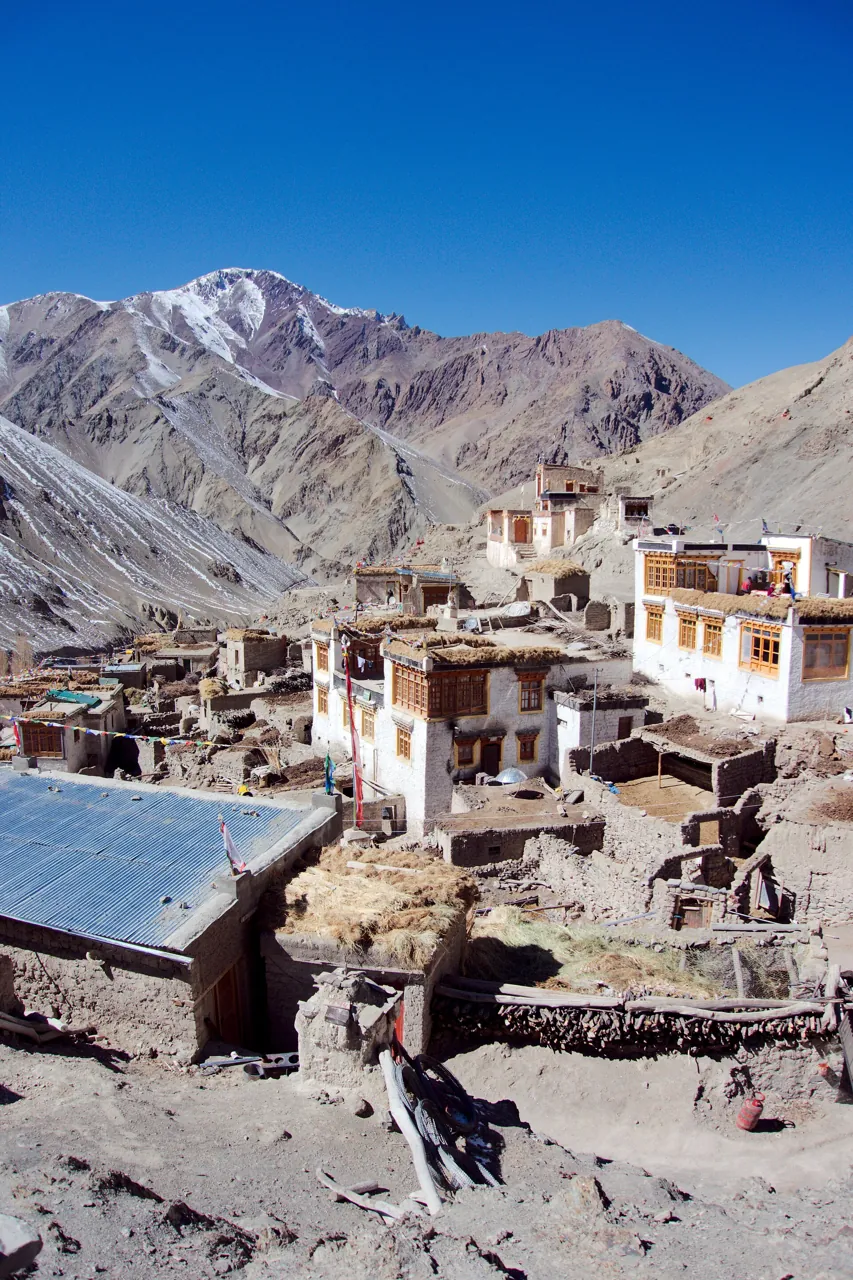
Most private snow leopard trips start in Leh and move to a village homestay in Rumbak or Ulley. From Leh, the drive to Jingchen, the roadhead for Rumbak, takes about an hour and a half, and Rumbak village sits at around 3,870 m.
Days follow the light. You set out early with a guide and local spotters, climb to a vantage point and scan the slopes with a spotting scope. You rest at the homestay around midday and go out again in the late afternoon, when the animals are most active. Spotters share news of fresh tracks, kills and recent sightings, so plans change daily. A sighting is often a distant cat on a ridge seen through a scope, though some are much closer.
Nobody can promise you a snow leopard. Operators that run these trips say clearly that sightings are not guaranteed, and that staying longer improves your chances. Seven days in the field is a sensible minimum; serious photographers often stay ten days or more. Even without the cat, you will almost certainly see bharal, and probably foxes, eagles and lammergeiers.
Homestays are simple. Expect a stove-heated room, home-cooked Ladakhi meals with packed lunches, no running water in winter and dry compost toilets. SLC-IT started its Himalayan Homestays programme in Hemis National Park in 2002, so that villagers could earn from the snow leopards that sometimes kill their livestock. Ten percent of the income goes into a village conservation fund.
Costs. Fares for the official safari have not been announced yet. For private trips, prices vary a lot depending on group size, the length of the trip, and whether you stay in a homestay or a lodge. Ask operators for an all-inclusive quote per person that covers guide, spotters, homestay meals, transport from Leh and park fees, and check how many field days you actually get. For reference, The Hindu reported in 2017 that licensed homestays in Hemis charged ₹1,000 a day for a room, breakfast, packed lunch, dinner, tea and filtered water. Rates have risen since, so confirm current prices directly.
Permits and fees
Indian citizens no longer need an Inner Line Permit for Ladakh. The UT administration removed the permit requirement for domestic tourists in August 2021, though a few pockets along the LAC and LoC stay closed for security reasons. What you do need is the fee receipt from the official LAHDC Leh portal, lahdclehpermit.in. The fee includes the ₹400 environmental fee (green fee), a Red Cross Fund contribution and a wildlife fee, and the portal calculates the total for your dates. The portal also asks you to carry your Leh arrival boarding pass with the permit. Carry the receipt and a valid photo ID, as both are checked at police posts.
Foreign nationals still need a Protected Area Permit for restricted areas such as Tso Moriri, Tso Kar and the areas east of Upshi, arranged through a registered travel agent in Leh. Park entry and camera charges for Hemis National Park are usually included in organised trips; if you travel independently, check current charges with your guide or the wildlife department, as rates change.
Getting there and staying well at altitude
In winter, flying into Leh is the practical way in, as the high road routes into Ladakh are usually closed by snow. Leh itself sits at 3,524 m.
Take acclimatisation seriously. The Leh district administration requires all tourists to spend at least 48 hours acclimatising before heading to higher areas such as Khardung La or Pangong, though you can visit places near Leh town. For a snow leopard trip, many operators recommend more time in Leh before moving to Rumbak. Drink plenty of water, avoid alcohol for the first few days, and don't push yourself. If you develop a persistent headache, nausea, breathlessness, a cough or confusion, get medical help immediately; SLC-IT points visitors to the Sonam Norbu Memorial Hospital in Leh.
What to pack for a winter trip
- A down jacket rated for well below freezing, plus a fleece layer
- Thermal inner layers for top and bottom, and warm trekking trousers
- Insulated waterproof boots with good grip, and thick woollen socks
- Inner and outer gloves, a woollen cap, a buff and a balaclava
- A warm sleeping bag, even if the homestay provides blankets
- Sunglasses and high-SPF sunscreen, as the winter sun on snow is harsh
- Binoculars, a camera with a long lens and spare batteries (cold drains them fast)
- A refillable bottle, a personal first-aid kit and any regular medicines
- Hand warmers, lip balm and moisturiser
Watching wildlife responsibly
Ladakh's snow leopard tourism works because local families gain more from a living cat than a dead one. Keep it that way.
- No baiting or calling animals in. It changes their behaviour and can draw cats towards livestock.
- Keep your distance. Watch through a scope or a long lens, stay with your guide and back off if an animal looks disturbed.
- Don't fly drones. They stress wildlife, and using them in protected areas needs official permission.
- Stay in community homestays and use local guides, spotters and safari drivers, so the money stays in the villages that live alongside the cats.
- Carry your rubbish back to Leh, keep noise down and ask before photographing people or homes.
- Respect homestay customs. The SLC-IT code of conduct, written by the women who run the homestays, asks guests to dress modestly, not bargain over homestay rates and ask before taking photos.
Plan a winter trip for the snow leopard, or a summer one for the cranes, kiang and marmots of Changthang. Either way, go slowly, give yourself time to acclimatise, and let the people who know the mountains show you where to look.
Cover photo: a wild snow leopard resting in Ladakh. Photo: T. R. Shankar Raman, CC BY-SA 4.0, via Wikimedia Commons
Have a travel story to share? Write for us