Ayurveda in Kerala: How to Choose a Centre, When to Go and What to Expect
Last updated
Kerala has century-old Ayurveda hospitals, a government classification scheme for treatment centres and a monsoon season that local tradition sets aside for healing. This guide goes deeper than the Ayurveda section of our wellness travel in India guide: the main treatments, how to tell a real centre from a spa menu, when to go, where to stay and what to sort out before you fly.
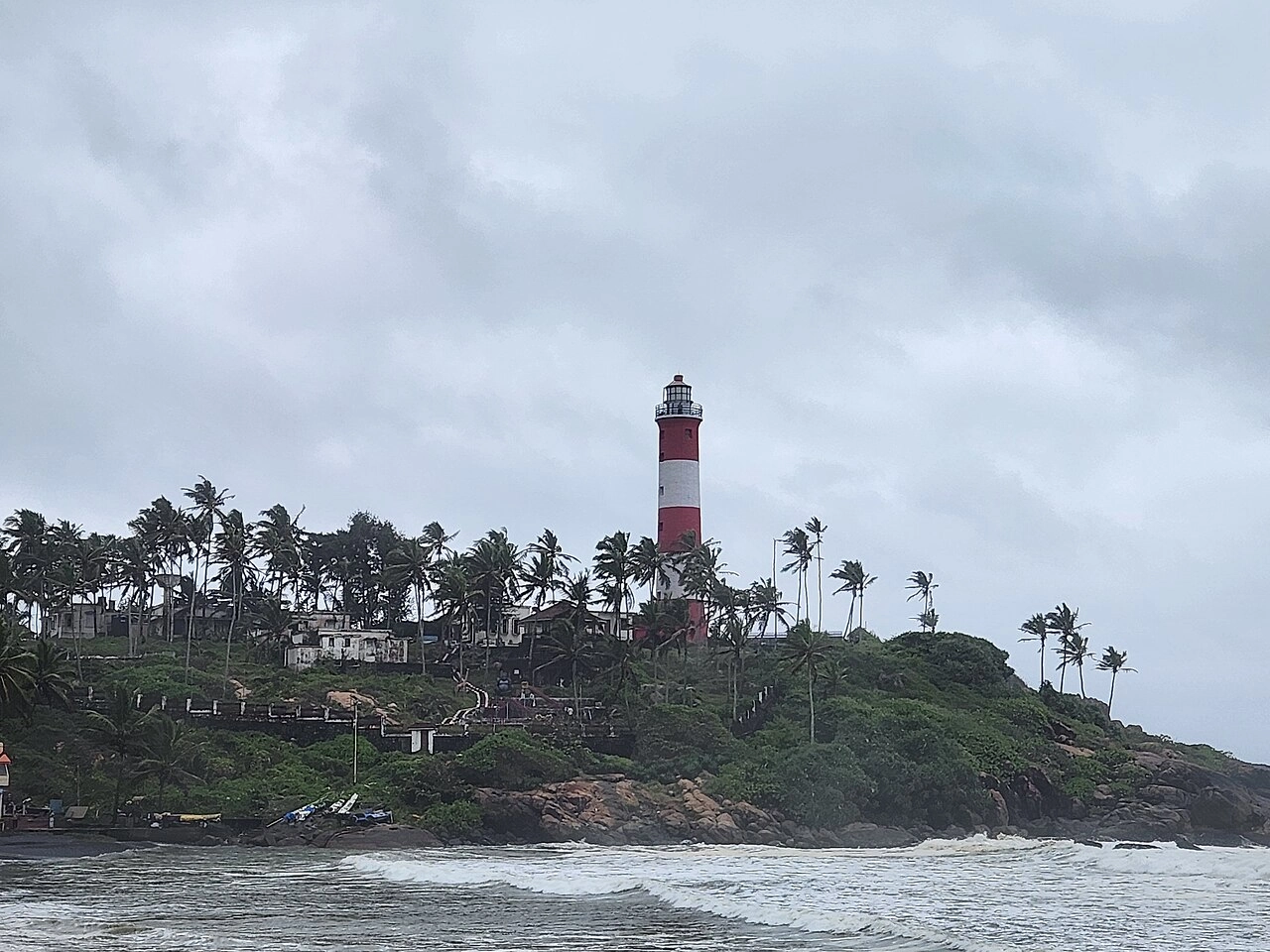
The lighthouse at Kovalam on a monsoon morning. Photo: Amitbalani, CC0, via Wikimedia Commons
What Kerala Ayurveda is
Ayurveda is India's traditional system of medicine. Kerala Tourism describes it as a way of life as much as a medical system, built on balance, prevention and personalised care that depends on each person's constitution and lifestyle. In practice, a stay at a Kerala centre starts with a consultation with an Ayurvedic doctor, who then sets your treatments, your medicines and your diet.
Kerala also has its own traditions within Ayurveda. The Ashtavaidyas were physician families known for mastering all eight branches of Ayurveda, and some of their lineages still run pharmacies and treatment centres in Thrissur. Some therapies, such as Pizhichil, developed in Kerala, and Kerala hospitals group them with Dhara and Njavarakizhi as Kerala special treatments.
The treatments you will hear about
Panchakarma
Panchakarma means "five actions". Kerala Tourism lists the five therapies set out by the Charaka school as Vamana (therapeutic vomiting), Virechana (purgation), Nasya (nasal therapy) and two kinds of Vasti (medicated enema, one with oil and one with a herbal decoction). The Sushruta school later combined the two Vastis and added Raktamokshana, or bloodletting.
A Panchakarma course runs in three stages:
- Purvakarma (preparation). This lasts three to seven days. Pachana (digestion therapy), Snehana (oiling the body inside and out) and Swedana (sweating therapy) loosen toxins so they can be removed.
- Pradhanakarma (main treatment). The doctor times the cleansing therapies to your condition, and you follow a set diet for the whole stage.
- Paschatkarma (aftercare). Rest, a gentle diet, herbal medicines and lifestyle advice to help the results last. Kerala Tourism stresses that this stage is as important as the others.
Many of the oil treatments below are used within Panchakarma, and some are also offered on their own.
Abhyanga
Abhyanga is a full-body application of warm medicated oil, washed off afterwards with a herbal powder in a bath. Kerala Tourism notes that it is a daily routine in many Kerala households and is used to improve circulation and reduce stress.
Shirodhara
For Shirodhara you lie face up on a wooden treatment table with a band tied around your forehead. A vessel with a small hole in the bottom hangs six to eight inches above your head, and medicated oil flows in a slow, steady stream onto your forehead. The band protects your eyes. A variation called Takradhara uses buttermilk with the oil. Kerala Tourism describes Shirodhara as a treatment for stress and Vata-related disorders.
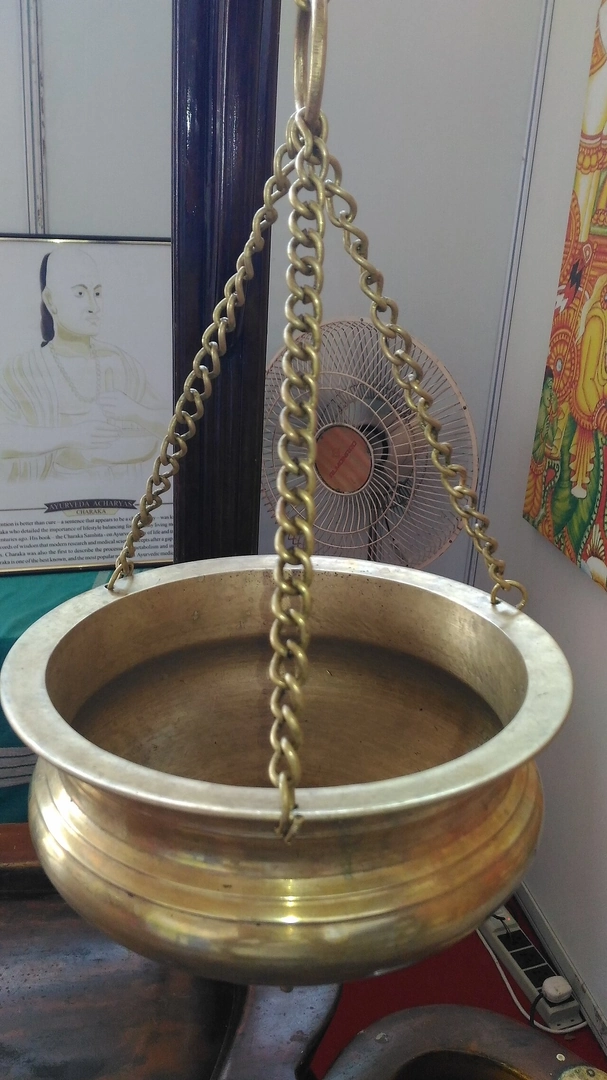
A dhara vessel, used to pour a steady stream of medicated oil during treatment. Photo: Vijayanrajapuram, CC BY-SA 4.0, via Wikimedia Commons
Njavarakizhi
Njavarakizhi (also spelt Navarakizhi, and called Pinda Sweda in Sanskrit) is a sweating therapy. Navara or Shashtika rice is cooked in milk with herbs, tied into fist-sized cloth bundles, dipped in warm medicated oil and massaged over the whole body. Ideally four therapists work together, two on each side, and you move through seven or more positions. Afterwards the oil is scraped off with palm leaves and you bathe with herbal powders.
Pizhichil
Pizhichil means "squeezing". Therapists dip a linen cloth in warm medicated oil and squeeze it over your body while massaging at the same time, so it combines oiling and sweating therapy in one session. Kerala Tourism calls it a therapy that developed in Kerala and lists it for complaints such as arthritis, rheumatism and muscle cramps.
How long to stay
The honest answer is that your doctor decides. These are the benchmarks from reliable sources:
- The preparation stage alone takes three to seven days, according to Kerala Tourism, so a real Panchakarma cannot fit into a long weekend.
- Arya Vaidya Sala gives 14 to 28 days as the normal course of inpatient treatment at its Delhi hospital.
- Kerala centres commonly sell programmes of 7, 14 or 21 nights. Several established centres say they only start a full Panchakarma for stays of 14 nights or more, treat seven nights as a rejuvenation stay rather than Panchakarma, and suggest 21 nights or longer for long-standing conditions.
With only a week, book a rejuvenation programme. For treatment of a specific condition, plan for at least two weeks.
How to choose a centre
Kerala Tourism's classification
Kerala's Department of Tourism inspects and classifies Ayurveda centres that apply. Centres are graded Ayur Diamond, Ayur Gold or Ayur Silver, a scheme that replaced the older Green Leaf and Olive Leaf grades. Centres classified under the old scheme can keep their Green Leaf or Olive Leaf status until their certificate runs out, so you will still see both names.
What the classification means for you:
- Classification is valid for three years.
- Centres classified under the new scheme have to use the words "Kerala Tourism Ayurveda Centre" in their name on brochures, signs and communications.
- The Department of Tourism can inspect a classified centre at any time without notice and can withdraw approval if the conditions are broken.
- Classification does not replace the licences a centre needs from other authorities.
To check a centre, use the Ayurveda centre search on the Kerala Tourism website. You can filter by district, destination and classification, and download the full list of approved centres.
NABH accreditation for Ayurveda hospitals
The National Accreditation Board for Hospitals and Healthcare Providers (NABH) runs an accreditation programme for Ayush hospitals, which covers Ayurveda. For Ayurveda hospitals, NABH asks for at least six months of operation and ten or more sanctioned beds, so it applies to hospitals rather than small clinics or resort spas. Arya Vaidya Sala's hospitals at Kottakkal and Kochi, for example, list themselves as NABH accredited. If a hospital claims accreditation, ask to see the certificate.
Red flags
- No doctor before treatment. Kerala Tourism advises choosing a centre led by qualified Ayurvedic physicians, where your programme follows a consultation.
- A full Panchakarma in a few days. The stages above make that impossible.
- Massage only. A real programme includes medicines and a prescribed diet.
- A spa menu with "Ayurvedic" in the name. A hotel spa massage can be pleasant, but it is not a treatment centre.
- Vague answers. Before you pay, ask who the doctor is and what the price includes: consultation, medicines, meals and treatments.
When to go
Karkidakam, the monsoon season
Karkidakam is the last month of the Malayalam calendar and falls roughly from mid July to mid August, after the monsoon reaches Kerala in June. Kerala Tourism calls it Ayurveda's season of renewal. It notes that Ayurvedic texts hold Karkidakam, with little dust in the air, to be the ideal time for rejuvenation and especially Panchakarma. Many centres run special monsoon programmes in these weeks.
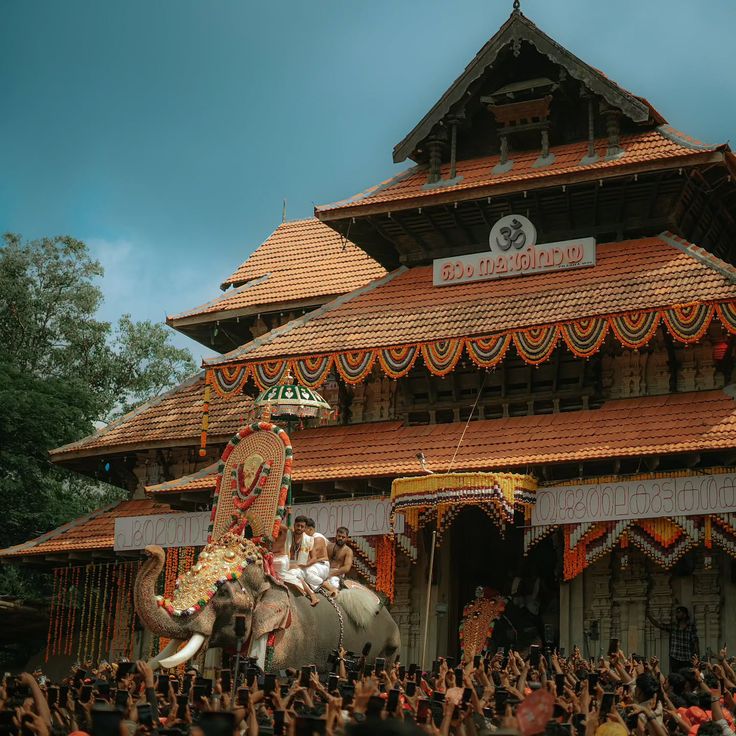
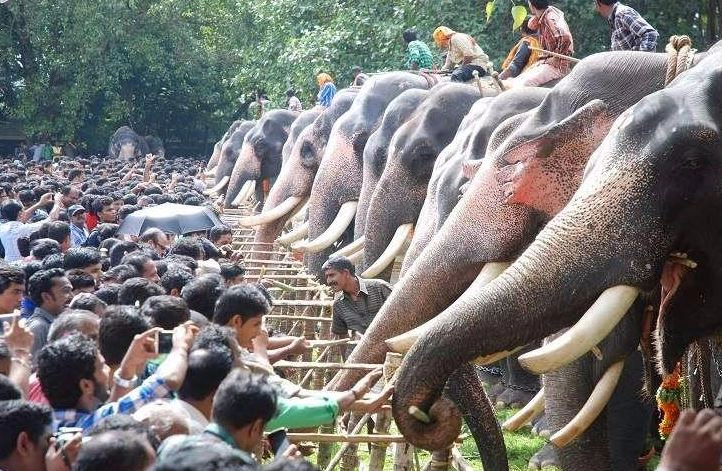
Food is part of the season. Karkidaka kanji, a porridge made with medicinal herbs, spices and local rice varieties, is cooked in homes and Ayurvedic centres across the state. In Thrissur, the season opens with Aanayoottu at Vadakkumnathan Temple, where temple elephants are fed a special nourishing diet on the first day of Karkidakam.
Expect rain most days. The season suits travellers who plan to stay at their centre and rest, which is the point of a treatment course anyway.
The rest of the year
October to March is drier and more comfortable, and it is the better choice if you want to combine treatment with sightseeing, the backwaters or the beach. Centres treat patients all year, and the doctor will adjust your programme to the season.
Where to go
Kovalam and Thiruvananthapuram
Kovalam is a beach town a few kilometres south of Thiruvananthapuram, with three crescent beaches separated by rocky headlands. Kerala Tourism notes that it has offered Ayurvedic massage and rejuvenation treatment for decades, and many of Kerala's older Ayurveda resorts are on this stretch of coast. Several classified centres are listed here, so it is easy to compare options.
Getting there: Trivandrum International Airport is about 10 km away and Thiruvananthapuram Central railway station about 16 km, according to Kerala Tourism.
Varkala
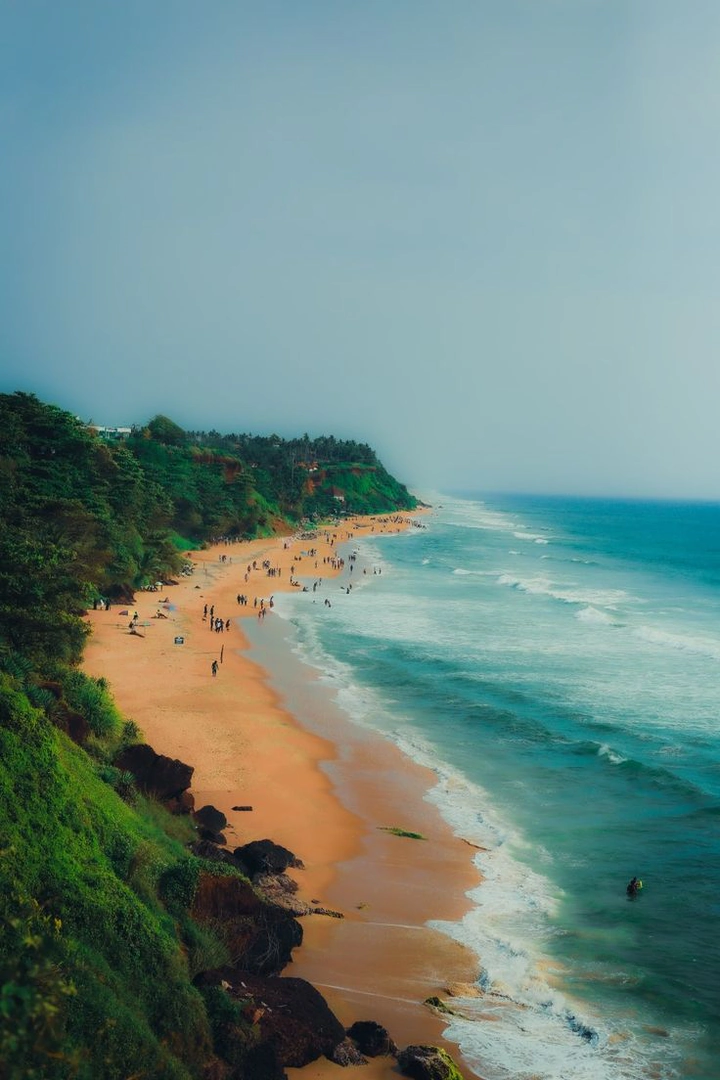
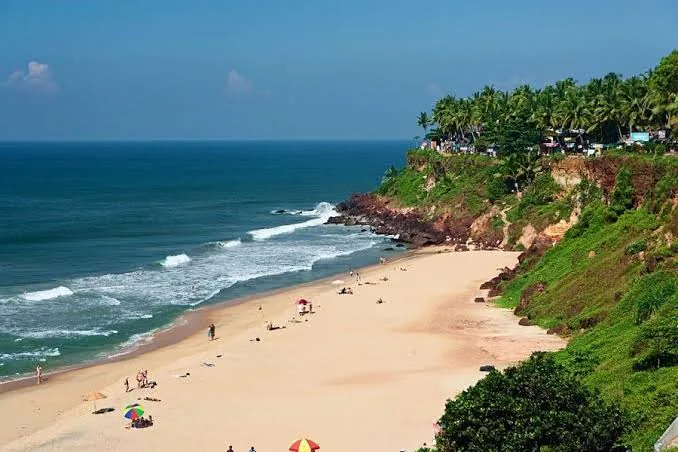
Varkala sits on red cliffs above Papanasam Beach, a beach where Hindus perform last rites for their ancestors. The cliff top is lined with cafes, homestays, small Ayurveda centres and yoga classes. It is more relaxed than Kovalam and suits a first, shorter rejuvenation stay, though it gets busy at weekends.
Getting there: Trivandrum International Airport is about 41 km away. Varkala has its own railway station on the line from Thiruvananthapuram.
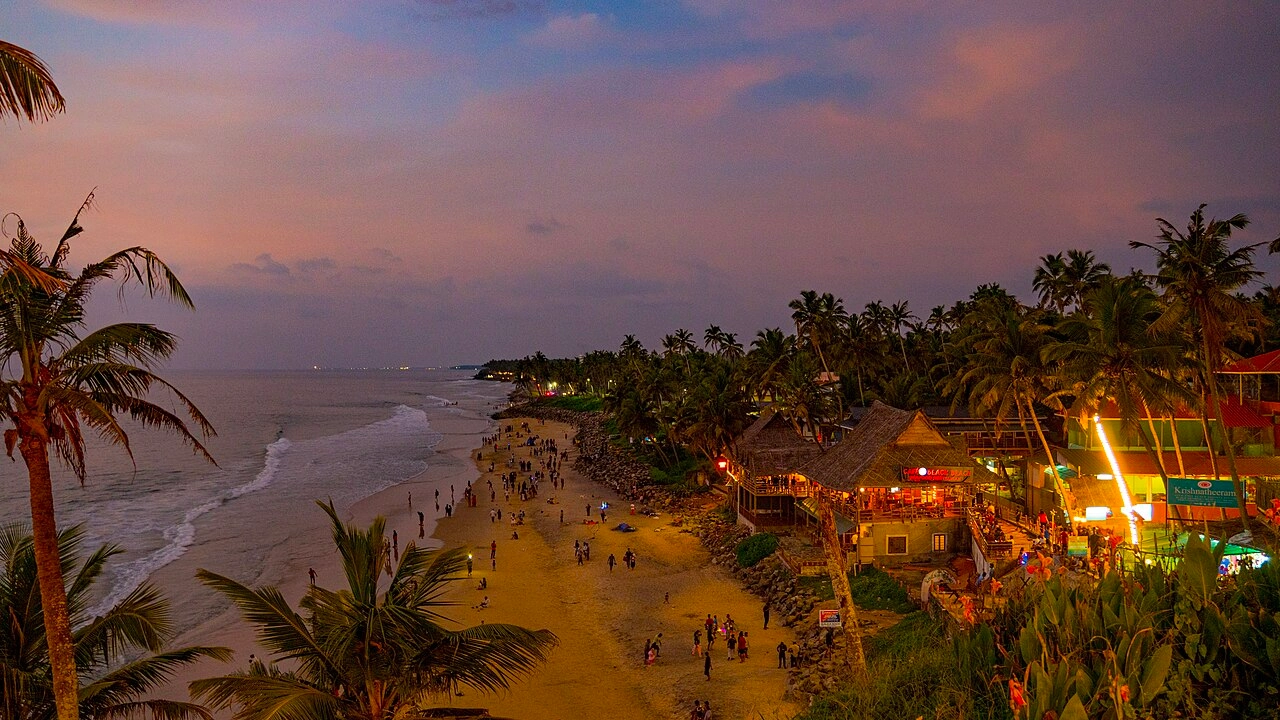
Varkala beach and the cliff at dusk. Photo: Krissubh, CC BY-SA 4.0, via Wikimedia Commons
Kottakkal (Arya Vaidya Sala)
Kottakkal, a town in Malappuram district, is home to Vaidyaratnam P S Varier's Arya Vaidya Sala, founded in 1902 and still run as a charitable institution. This is the choice if you want a hospital rather than a resort. Its Ayurvedic Hospital and Research Centre opened in 1954.
What to know before you go, from the hospital's own pages:
- It has 204 rooms and can take up to 300 inpatients, with around 40 Ayurvedic physicians and around 350 trained therapists. About 30 percent of patients come from abroad.
- A doctor's consultation is required before admission, either in person at an outpatient department or through its e-consultation service.
- Foreign patients need a medical visa, and one attendant must stay with each patient for the whole admission.
- The canteens serve vegetarian food only, and smoking, alcohol and non-vegetarian food are not allowed on the premises.
Getting there: the nearest railway station is Tirur, 16 km away, and the nearest airport is Calicut International Airport at Karipur, 28 km away.
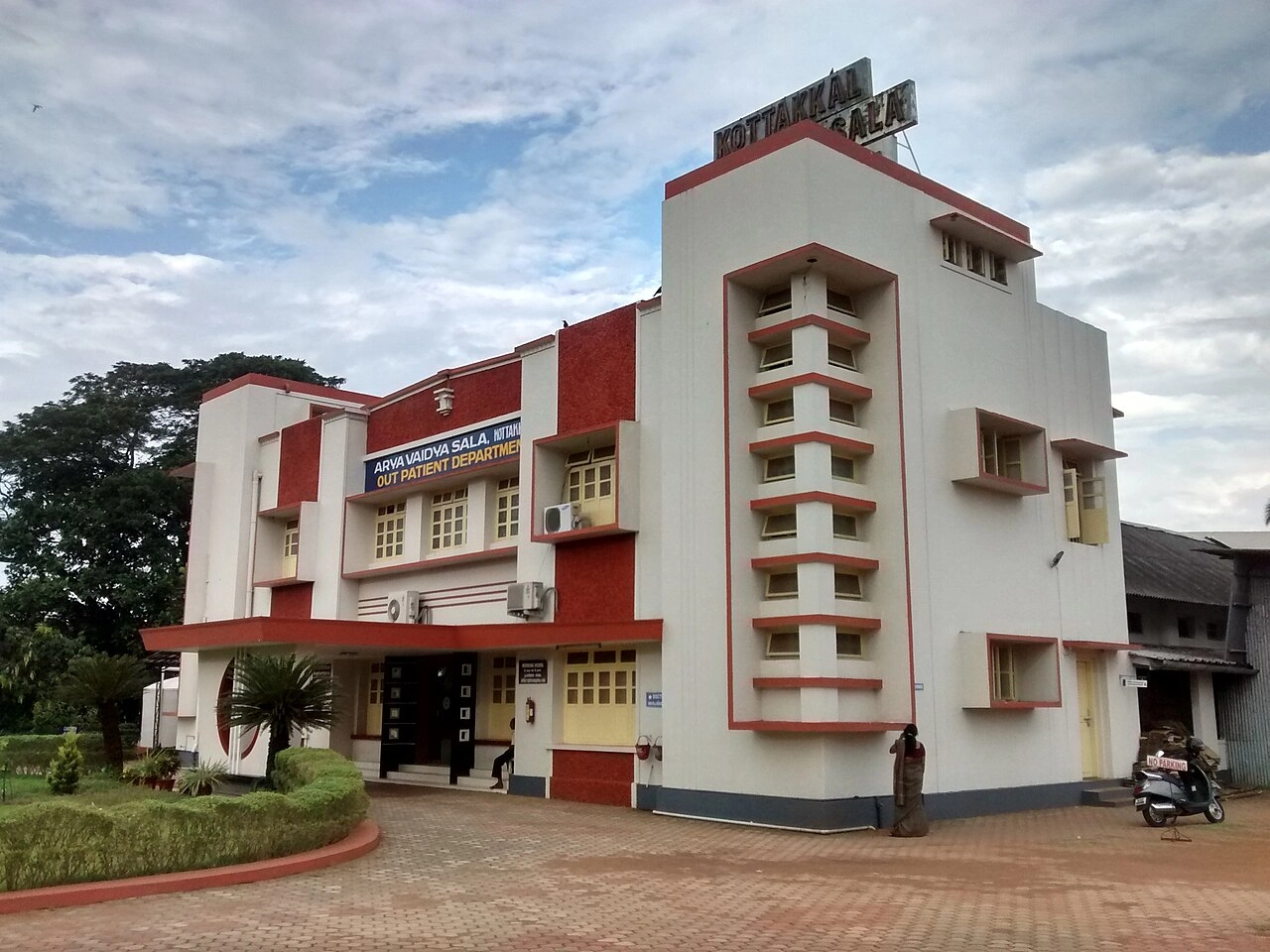
The outpatient block of Arya Vaidya Sala, Kottakkal. Photo: Balasankar C, CC BY-SA 4.0, via Wikimedia Commons
Kochi
Kochi is well connected by air and rail. Arya Vaidya Sala opened a 43-bed hospital at Thrikkakara, Kochi, in 2008, offering Panchakarma and Kerala treatments such as Dhara, Pizhichil and Navarakizhi. It is about 15 to 25 km from Cochin International Airport and from Aluva and Ernakulam railway stations. After treatment, the backwaters of Alappuzha are within easy reach, and resorts around Kumarakom also appear on Kerala Tourism's list of classified Ayurveda centres.
Thrissur
Thrissur is one of the old centres of Kerala Ayurveda, linked with Ashtavaidya families such as the Thaikkattu Mooss. The Vaidyaratnam Ayurveda Museum at Thaikkattussery, near Ollur, opened in 2013 and is described by Kerala Tourism as the country's first Ayurveda museum. It uses sculptures, portraits and multimedia to tell the story of Ayurveda.
Getting there: Cochin International Airport is about 50 km away, and Thrissur has its own railway station.
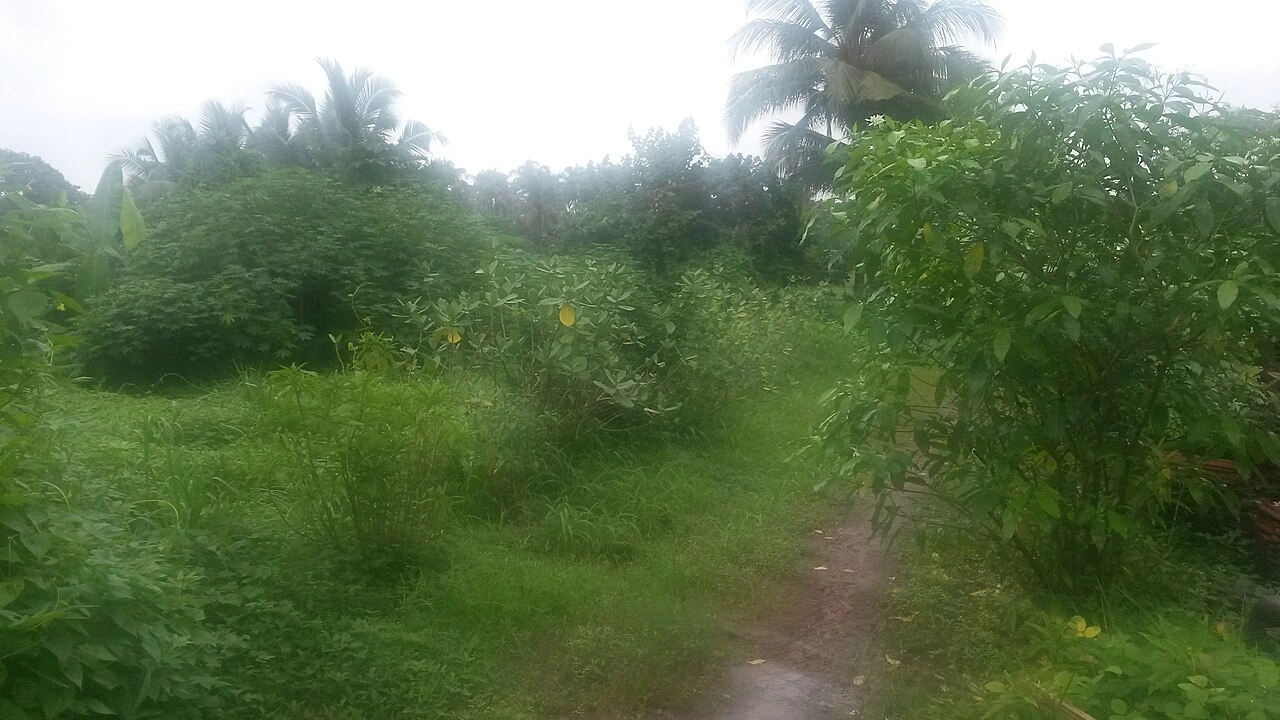
The herbal garden at Vaidyaratnam Oushadhasala in the rains. Photo: Tachs, CC BY-SA 4.0, via Wikimedia Commons
Wayanad
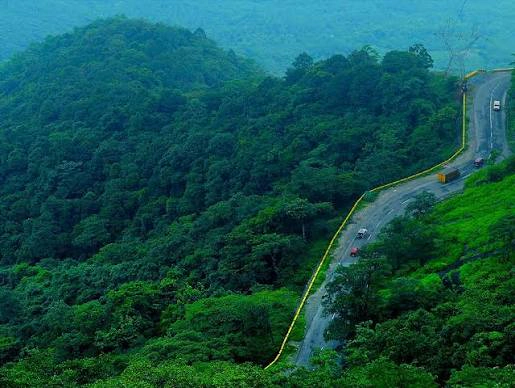
Wayanad is a hill district of forests, plantations and cooler air in the north of Kerala, and Kerala Tourism's list includes a classified Ayurveda centre here. Check road and weather advisories in the monsoon, when heavy rain can disrupt travel in the hills.
Getting there: Kozhikode, with its airport and railway station, is the usual gateway, followed by a drive up into the hills.
Other options
Kerala Tourism's classified list also covers Alappuzha, Kumarakom, Thekkady, Kollam and the Guruvayur area, so use its district filter to find centres along your route.
The Ayush visa for treatment
If the main purpose of your trip is Ayurvedic treatment, use India's medical visa for Ayush treatment rather than a tourist visa. India's Ministry of Home Affairs keeps separate categories for conventional medical treatment (M-1) and treatment under Ayush systems such as Ayurveda (M-3), with matching attendant visas (M-2 and M-4).
- e-Visa option: the official e-Visa portal lists the e-Medical Visa (e-M3) and its attendant visa (e-M4), each valid for one year from your date of arrival in India, with multiple entries.
- Recent changes: in November 2026 the government announced a simpler visa framework that keeps M-3 and M-4 and grants them for one year with multiple entries by default. Its IT systems are being updated, so check the portal when you apply.
- What hospitals ask for: Arya Vaidya Sala, for example, says a medical visa is compulsory for foreign patients being admitted.
Apply only through the official Indian e-Visa portal.
Practical tips
Diet and daily routine
- Expect vegetarian meals set by your doctor. Kerala Tourism notes that you follow a specific diet for the whole of the main treatment stage.
- Leave room for rest after the course. Kerala Tourism's aftercare advice includes plenty of rest and avoiding rich meals, so don't plan a hectic sightseeing tour for the day you finish.
- Alcohol and smoking are not allowed in hospital-style centres such as Arya Vaidya Sala.
What to pack
- Old, loose clothes you don't mind ruining with oil.
- Your medical records, a list of current medicines and your ID.
- A light rain jacket or umbrella and quick-drying sandals in the monsoon.
- Mosquito repellent and something to read.
Booking ahead
- Book early for Karkidakam and the winter months. Arya Vaidya Sala opened its newer hospitals partly because demand at Kottakkal created long waits for admission.
- Use a pre-arrival consultation where it is offered, such as Arya Vaidya Sala's e-consultation, so the doctor can plan your programme and suggest a length of stay.
- Get the inclusions in writing, and confirm whether a "14-day" package means 14 days or 14 nights.
Frequently asked questions
What is the best time for Ayurveda in Kerala?
Karkidakam, roughly mid July to mid August, is the traditional season, and many centres run monsoon programmes then. October to March is drier and better if you want to combine treatment with travel.
How long should an Ayurveda stay in Kerala be?
At least 14 nights for a full Panchakarma. Seven nights works for a rejuvenation programme. Arya Vaidya Sala gives 14 to 28 days as a normal inpatient course, and your doctor will set the final length.
How do I know if a centre is genuine?
Check whether it holds Kerala Tourism's Ayur Diamond, Ayur Gold or Ayur Silver classification (or an older Green Leaf or Olive Leaf certificate) on the Kerala Tourism website, make sure a qualified Ayurvedic doctor sees you before treatment, and ask about medicines and diet as well as massages. For hospitals, NABH accreditation is another check.
Do I need a special visa for Ayurveda treatment?
If treatment is the main purpose of your trip, yes. Apply for the medical visa for Ayush treatment (M-3, or e-M3 on the e-Visa portal), which is valid for one year with multiple entries. An attendant can apply for the matching M-4 visa.
Is Kottakkal or a beach resort better?
It depends on why you are going. Arya Vaidya Sala in Kottakkal is a hospital, best if you want treatment for a specific condition. Kovalam and Varkala suit a gentler rejuvenation stay with the beach nearby.
Sources
- Classification of Kerala Tourism Ayurveda Centres: Regulatory Conditions
- Approved Ayurveda centres search, Kerala Tourism
- Discover Ayurveda's Season of Renewal in Kerala, Kerala Tourism
- Time for Ayurvedic Rejuvenation Programmes, Kerala Tourism
- Kerala Tourism Ayurveda pages on Pentads of Panchakarma, the Panchakarma procedure, Purvakarma, Pradhanakarma, Paschatkarma, Abhyanga Snehana, Shirodhara, Navarakkizhi and Pizhichil
- About Arya Vaidya Sala, Kottakkal
- Ayurvedic Hospital and Research Centre, Kottakkal
- Ayurvedic Hospital and Research Centre, Kochi
- Ayurvedic Hospital and Research Centre, Delhi
- Ayush Hospitals Accreditation Programme, NABH
- Government of India rationalises Indian visa regime, Press Information Bureau
- Indian e-Visa portal, Ministry of Home Affairs
- Vaidyaratnam Ayurveda Museum, Kerala Tourism
- Life of Ashtavaidyan Thaikat Narayanan Mooss, Journal of Research in Ayurvedic Sciences
- Kovalam, Kerala Tourism
- Thiruvananthapuram and Kollam brochure, Kerala Tourism (Varkala connectivity)
- How to reach Thrissur, District Thrissur
- Panchakarma treatments in Kerala, Softouch Ayurveda and Panchakarma, Athreya Ayurvedic Resort (programme lengths)