Guide
Chadar Trek: Frozen Zanskar River, Status and Best Time
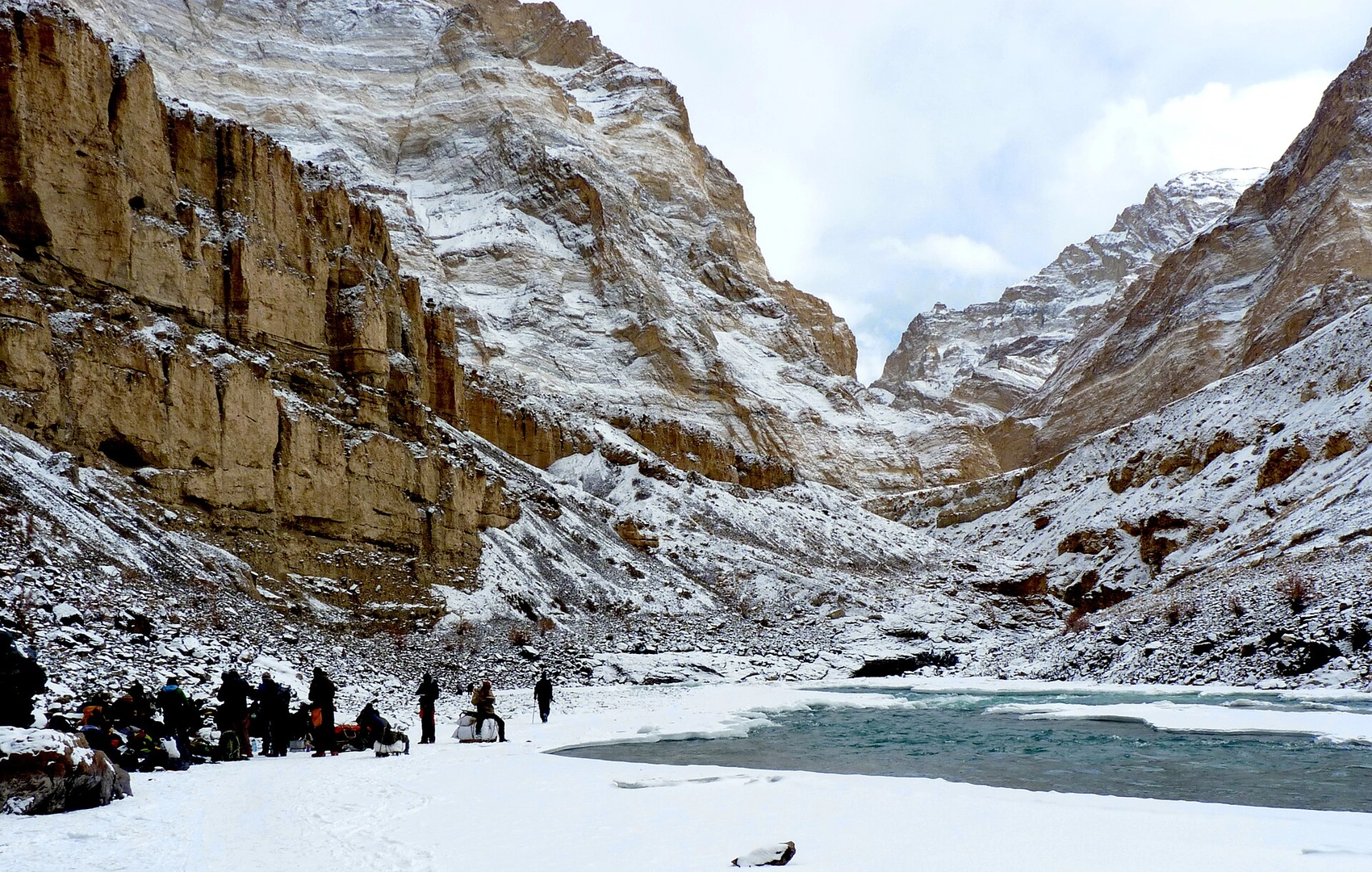
The Chadar trek is a winter walk on the frozen Zanskar river in Ladakh. For generations the ice sheet between Chilling and the Zanskar valley was the only winter route in and out of Zanskar, and trekkers started walking it in the early 2000s. It runs in January and February, in temperatures that fall to about minus 15 to minus 25 degrees C at night.
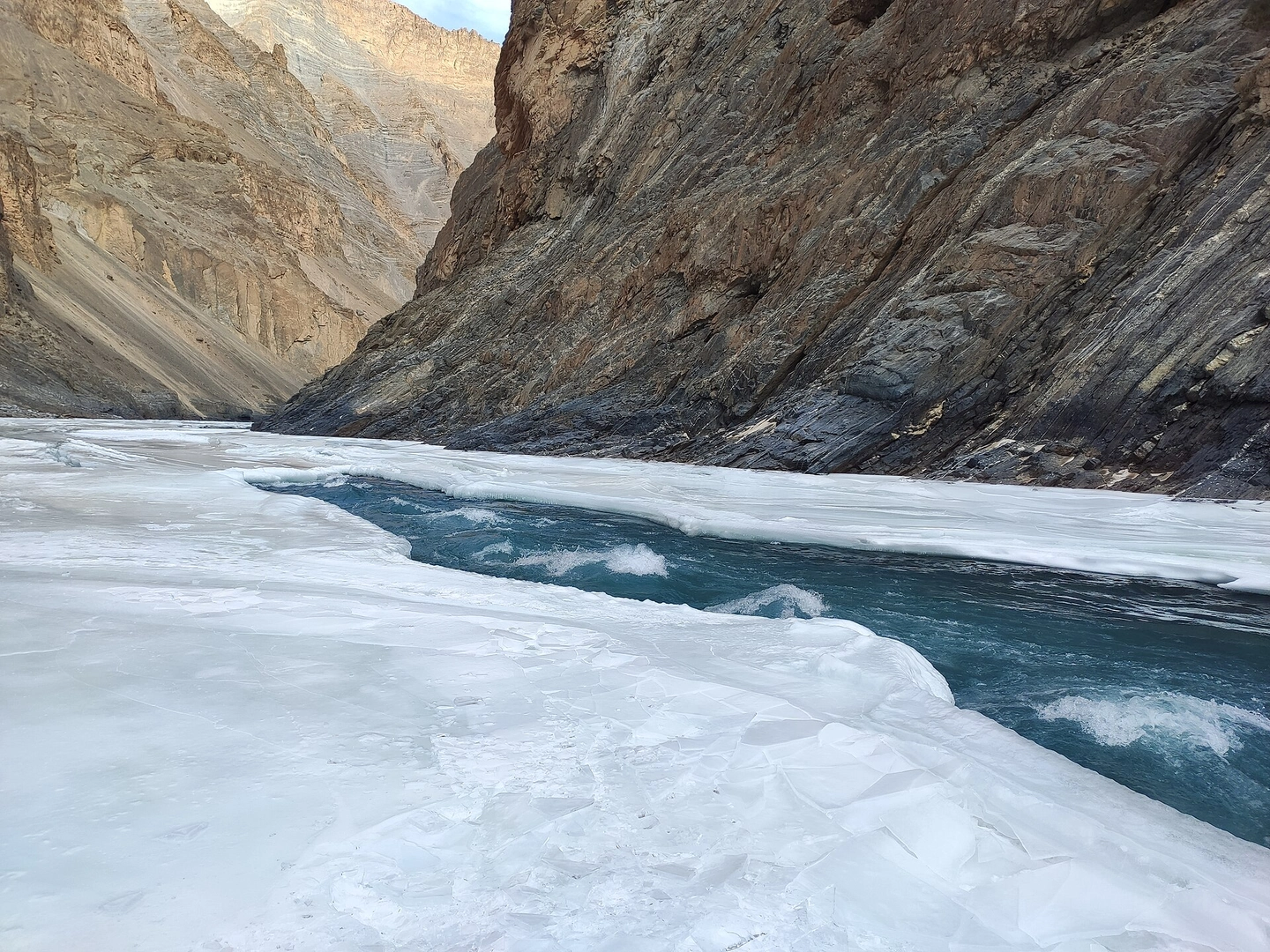
Season status (19 November 2026): the 2026 trek was suspended in January. On 12 January 2026 the Ladakh administration suspended it after a recce team found the Zanskar river largely unfrozen and the route unsafe, and said no trekking or allied activity would be permitted during the suspension. The order was to be reviewed on 20 January. I found no report of what that review decided, so I cannot say whether any 2026 batches ran afterwards. The 2027 season depends on the ice. Operators cannot guarantee conditions months ahead, so a route is confirmed close to departure. Check with a Leh operator within a week of your dates that the section you plan to walk is safe.
Chadar trek quick facts
| Region | Zanskar river gorge, Ladakh |
| Base | Leh, about 3,500 m |
| Roadhead | Chilling or Tilat Sumdo, 2 to 3 hours from Leh by road |
| Distance | Roughly 60 to 70 km round trip |
| Duration | 6 to 9 days, with 4 to 7 hours of walking a day |
| Season | January to February |
| Level | Difficult, mostly because of the cold |
When the ice forms
In most winters the river freezes along much of its course from mid or late December through February, and January has the thickest and most reliable ice. Warm spells can break sections that refreeze days later, and local organisers change the route day by day on reports from porters and villagers.
What the road changed
The Zanskar road has taken over most winter travel for locals when it is open. The Chadar is increasingly a trek for visitors, and fewer parties walk it than in the early 2010s. More than 500 tourists walked it in the 2025 season, and over 300 had registered for 2026 before the suspension.
Route
Most organised treks start from Chilling or Tilat Sumdo, cutting out the old walk from Leh. Chilling to Nerak is the most common reliable section. Camps are in riverside caves or tents. Ask whether any part will be replaced by a road transfer if the ice breaks.
Cold and acclimatisation
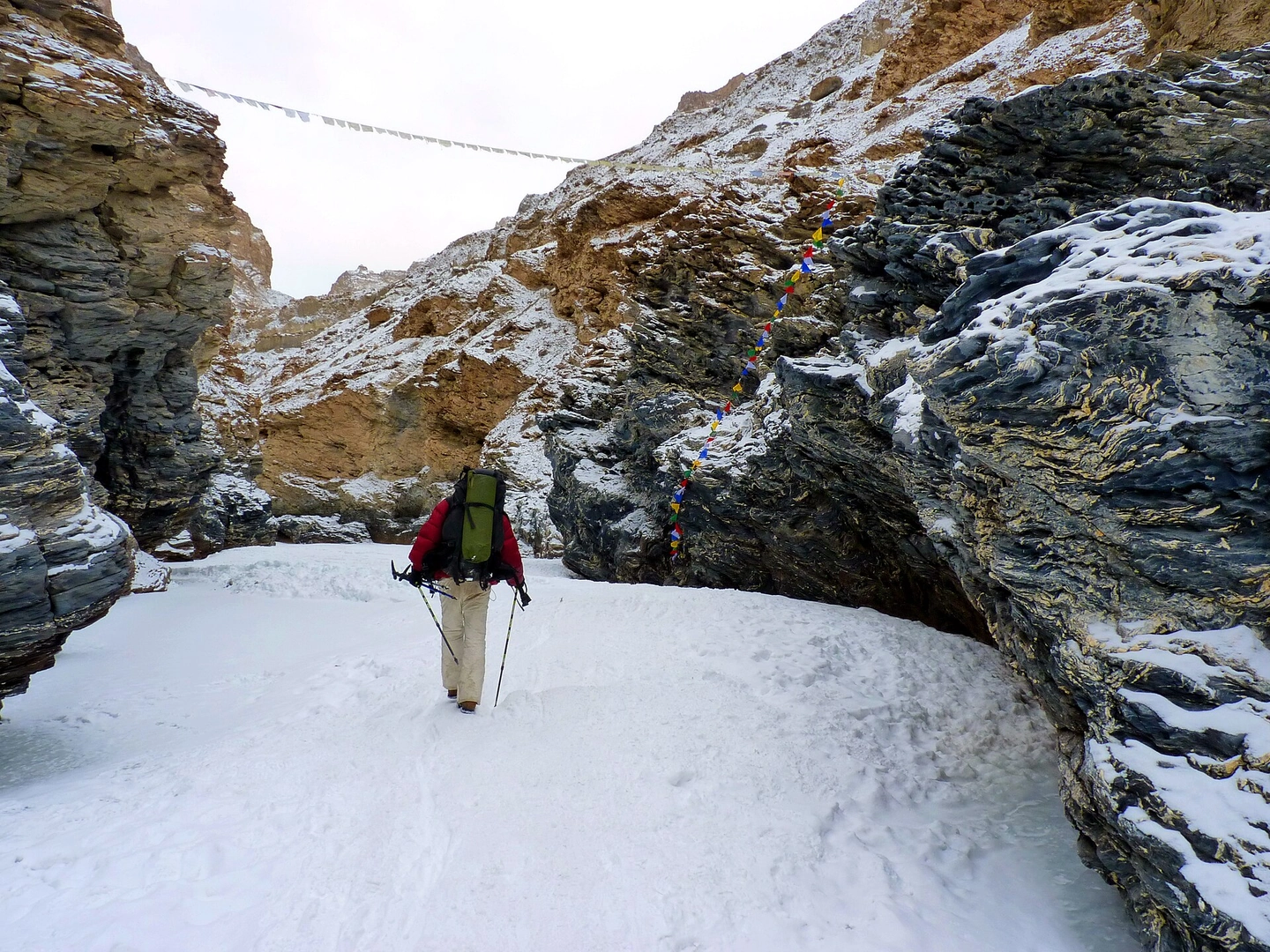
Leh sits at roughly 3,500 m and the gorge is at similar height. The real risk is cold combined with exertion at altitude. Spend two full days in Leh before the trek, move slowly on the ice and treat any headache or breathlessness as a reason to stop. It is unsuitable for anyone with heart or lung conditions. The administration says no one is allowed on the trek without medical clearance.
Permits and cost
Inner Line Permits are mandatory and the operator usually arranges them. Groups are limited by Leh district administration permits. Independent travel without a registered guide is restricted and difficult. Leh operators quote roughly USD 500 to 900 per person for a seven to nine day package including permits, food, camping gear and guides. Porters, many of them Zanskari villagers, are a key winter income, so budget for them if they are not included.
Respect
The Chadar is not a novelty ice walk. Walk where guides direct, avoid loud behaviour near villagers using the route, and ask before photographing porters or locals.
FAQ
Was the Chadar trek open in 2026?
It was suspended on 12 January 2026 because the river had started unfreezing, with a review set for 20 January. I did not find the outcome of that review.
When is the best time?
January, when the ice is thickest, but only if operators confirm the route is safe.
Last checked: 19 November 2026.
Sources
- The Chadar Now: The Ice Walk in the Road Era, Reference, Zanskar Valley, 23 October 2026, ice season, route, permits, cost and acclimatisation
- Chadar trek route on Zanskar unsafe, hazardous: Recce report, News, The Tribune, 13 January 2026, the suspension order and 20 January review
- Ladakh suspends Chaddar trek as Zanskar river starts unfreezing, News, Times of India, 14 January 2026, no trekking permitted during suspension, registration numbers