The Quiet Magnetism of Manali

Beautiful things do not always ask for attention, they just exist as their value speaks for themselves
The Himalayas are the prime epitome of one of these beautiful things, sitting quietly at their throne at the hilltop between peaceful clouds, they stay and create an impact that doesn’t come from force but through peace and calmness. The magnetism of Himalayas is magnificent, people from different spheres around the world come to witness its beauty, India or any other regions in the world, any kind of distance feels irrelevant in front of the path to Himalayas, a pull that cannot be explained.
Thus, followed by such magnetism, began the journey to a Himalayan beauty "Manali", between serene and beautiful mountains unfolded a travel experience to witness the peaks on which the snow shimmer like a jewel over a crown, and the people who live under this shimmering jewel.
The roads of Delhi provided a pathway to Himalayas, the smell of grasslands, flowers, and the embrace of clean air on my skin was an unforgettable welcome to Himachal, this welcome was enough to make me curious to explore this beautiful place and to know the ultimate wonders this beauty contains just like a pearl in a shell.
First Stop: Kullu
My first halt was in Kullu, which acts like a companion to most of the travellers as they mostly take a stay at Kullu before resuming their journey further, thus I too stayed for a night in a hotel in Kullu. The view of mountains from the hotel window was just like the film trailer that does not leave your mind and makes you curious and excited to watch the full film.
The journey continued to the views of exotic frames of nature, the star-spangled coverlet of the snow, the natural beauty of Manali. The pathways were rocky, the tunnels welcomed me like a long-awaiting gateway to all the premium paths and views.
The wait was long, the longer the journey the more it made me excited to watch the mountains that always seemed to call me despite the distance it holds.
There were stops, tired eyes, lunch and brunch, but after the crossways of a few more tunnels the long wait was over. The car door opened as I stepped outside and found myself amid pure beauty, like still frames from a film. Some imperfections in the shapes but they outshine, as imperfections are part of Himalayas and that makes it more natural and closer to its people and tourists.
Climbing onto the abode and as I looked down I could already see the locals walking uphill, doing everyday work, I sensed that safety in their every move knowing they have got Himalayas by their side, it’s the magic of Himalayas, the way they ripple out peace, that even knowing their presence near one feels safe and smiles, that day that smile came over my lips and I knew it’s not going to fade, nevertheless it’s going to be bigger and bigger.
Hadimba Devi Temple
In the evening I moved to my first destination which was near the hotel. "The Hadimba Devi Temple". With the entrance I could see the mighty giant trees watching over me yet safe. Under the giants I saw the first wonder, a dog and what made him special was that he is the oldest dog of Manali, according to the locals he is about 14 years old, he was sleeping peacefully like he knew that he is sleeping in a divine sphere and he is protected.
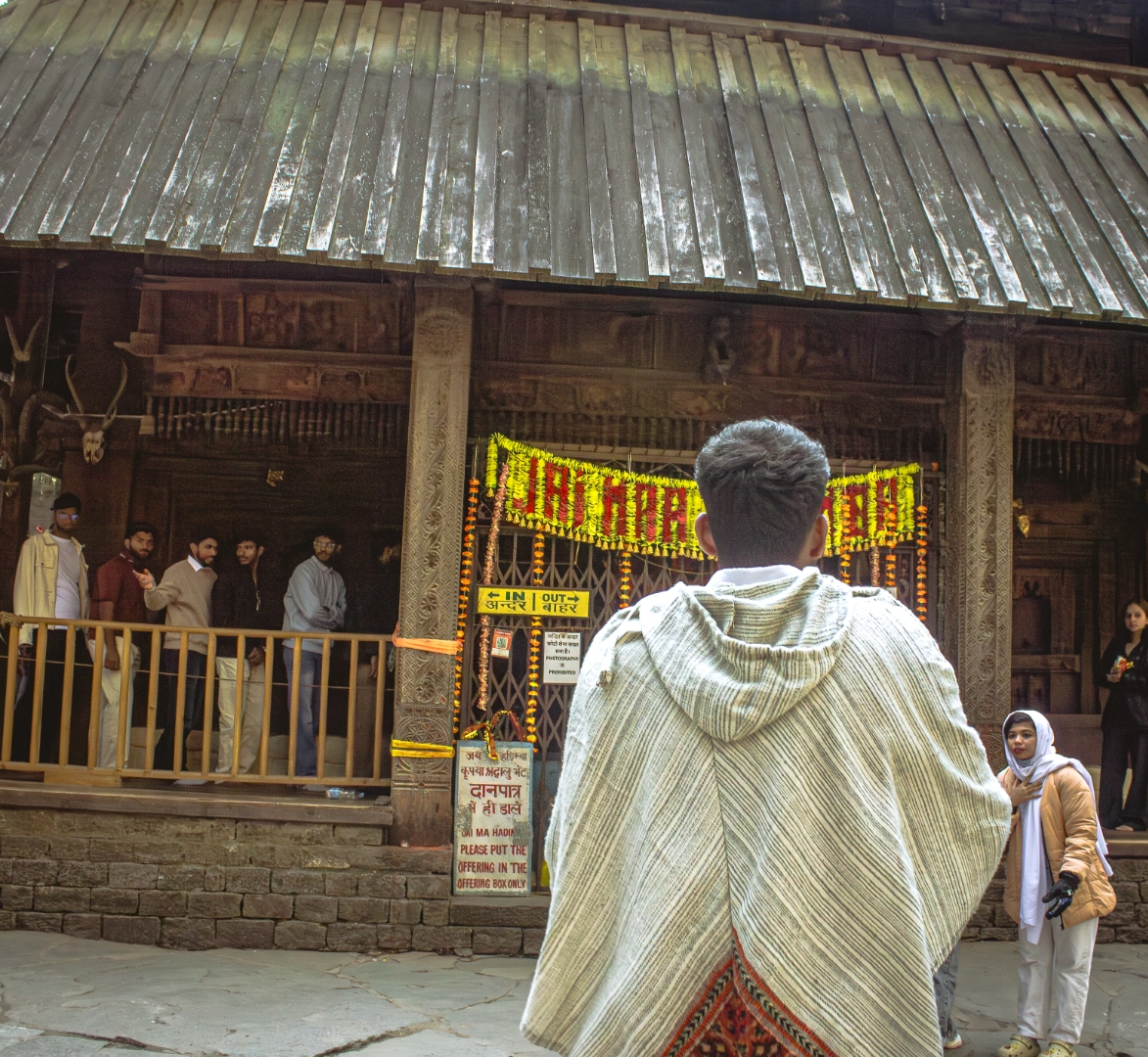
I proceeded by following the pathway that made me witness the Hadimba temple surrounded by lush, queues of people were in queue, in amid of the long queue I found myself standing between the railing and most interesting walls made up of wood, mud, and hay and had Ibex horns as well as an Ibex skull, Ibex is mostly found in higher altitudes of Himalayas and was a part of decoration on Hadimba temple’s walls.
The decoration of bones and skulls are dedicated to deity Hidamba who was a Raksasi (monster) and wife of Bheem according to the historic tale of Mahabharata.
As to maintain respect for the divine place, taking photographs was prohibited following which I took the blessings of divine and stepped out of the temple.
As I stepped out of the temple, I was surrounded by locals, men and women with traditional dresses of Himachal for photo shoots. I looked around, small kids were wearing bright colorful dresses, the equal amount of happiness on their faces was shared among newly married couples, old couples, middle-aged couples and all of them shared a common emotion that was of pure joy and love of Himachal, traditional dresses embraced them with warmth despite the region they come from.
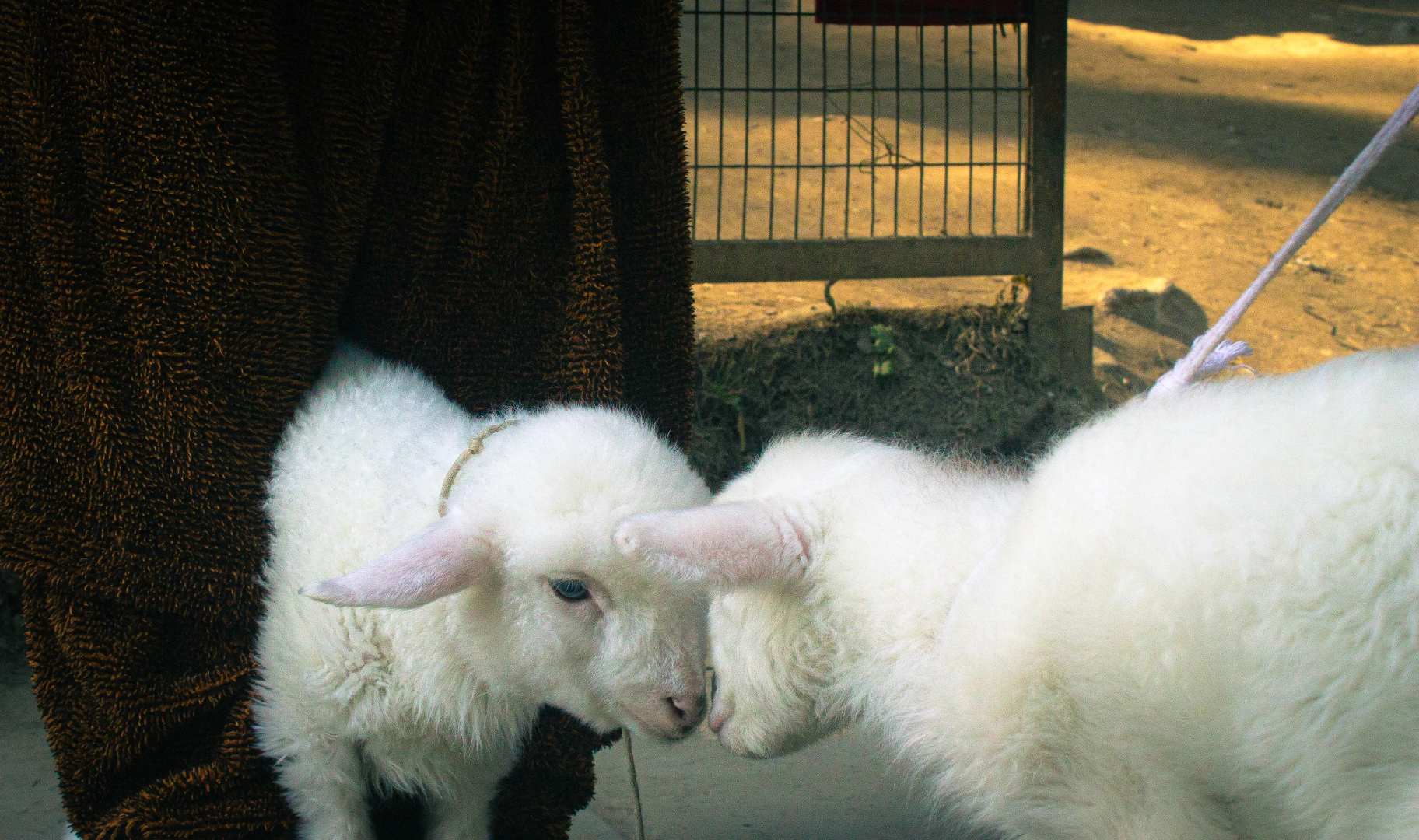
Hadimba was full of divinity, vibrant clothes, domesticated sheep and rabbits of locals that were ready to be part of photoshoots of tourists as pretty props.
Hadimba felt like two lives of Manali, one the spiritual energy isolated and surrounded in lush away from the other outer world which is full of markets, rush, materialistic life shaping its everyday life. Perhaps this highlights the essence of Manali, a balance between two contrasting lives yet deeply grounded.
Mall Road
The saga of market continued in a much wider form as on my way to the hotel I went to Mall Road which is like a market that holds everything Manali has to offer to tourists from souvenirs to clothes made from wool of Yak to street food making the place constantly thriving in motion.
The day finally ended by taking rest in the hotel to gather energy for the next day’s journey.
Sissu: A Snow-Covered Paradise
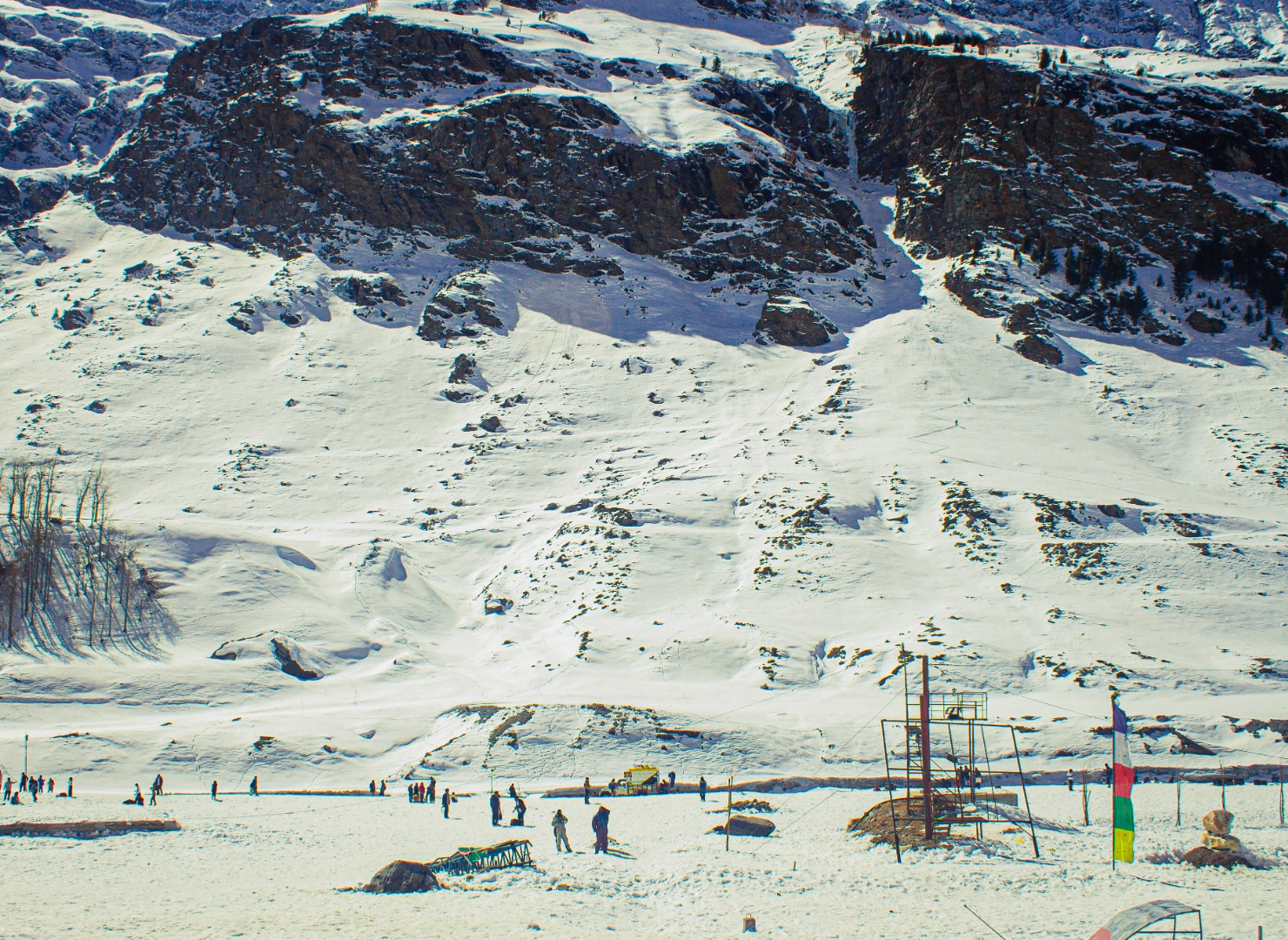
The next day stepping out of the car felt like I was under the canopy of a huge white sheet, because the destination was "Sissu", which was located in the Lahaul valley around 40 km from Manali, this distance and height was the proof of these giant amounts of magnificent snow peaks all around.
As a ritual of mountain regions before stepping in Sissu, I covered myself with a rubber jacket and wore gum boots from one of the many rental shops.
As the car was crossing the tunnels one by one, I could sense the diminishing level of oxygen as the altitude was rising, following the curvy turns of the tunnels I reached Sissu.
Leaving the grassy mountains behind, now I was surrounded by the ice peaks of Sissu. Making my way in the snow trotting like a penguin to see the amazing views, I came across a photographer who was taking portraits of a couple as we both were standing in front of a shimmering river, I would have called it just a river but the photographer introduced me to its whole identity and history, the river is "Chandra" which originates from the melting glacier of Samudra Tapu plateau.
The confluence of Chandra and Bagha river leads to river Chandratal which continues its journey from Jammu Kashmir to changing its nationality by passing through the Punjab region of Pakistan and eventually joining the Satluj river to form Panjnad which empties in Indus river.
After thanking the photographer for telling the history and transformation journey of the shimmering pearl Chandra, I proceeded to cover roughly 14 km of distance to reach "Solang Valley".
Solang Valley: Adventure in the Snow
Solang felt like a vibrant hub of joy, enjoyment, adventurous activities, and amazing views. There were beautifully carved igloos, snowmen, smiling faces of families and friends posing for photographs captured by locals.
I looked around and saw people struggling to stand and take a step on skiing boards. I soon realized I’m on the same page as I stepped on one of the skiing boards, each time I took a good speed I used to lose my balance and most of the times was on the verge of falling but the skiing guide like a savior used to provide me support from the back each time I lost my balance.
"It is always difficult for people to do skiing for the first time especially people who are not from hilly regions."
These wise words of the guide helped me to gulp down my embarrassment and I felt a little relieved, while handling his skiing tools the guide pointed to a small wooden structure.
"That is our skiing institute."
With this insightful information I walked towards that institute.
It was not a fancy institute, it was just a simple space made of wood with posters about skiing and skiing costumes hanging around, which also made me realize the power of when there is a will there is a way, although the weather of hilly areas makes it difficult for them to have a cemented and huge institute they still created a medium of learning, an institute which is standing strong since a long time.
Following the snowy trails, I asked a local the reason about the usual crowd conditions to which he replied:
"The crowd that is here right now would soon increase as more people will come here, returning from Sissu."
Adding to which he said:
"Solang Valley is mostly clogged with crowd, as here are mostly the fun and adventurous activities that kids and adults love to do and spend quality time with each other on their trip."
Taking a perfect combination of information and adrenaline rush from fun activities, I made my way back from Solang.
Stories Over Maggie
On my way back from Solang, I stopped at a roadside Maggie stall, soon a woman who was on a rugged uphill collecting wood soon came and sat beside me having a plate of Maggie. I was very curious of the language she was speaking, on my curiosity she replied:
"We call this language 'Kulvi' which is birthed from region of Kullu."
Adding to this chain of local languages a local sitting beside the lady said:
"Another local language is called Mandeali which is birthed from Mandi region of Manali."
I added up my few more curious questions between slurps of Maggie, both the locals were calm and happy to share their thoughts.
Amazed by her impressive strength to collect wood on such a rocky uphill, I asked her about any difficulties she faces in these daily chores, to which she replied:
"Sometimes some wild animals like bear, leopard, tiger etc. come out in the jungles in the hills we have to be careful but they mostly come out at night so we are not much afraid, just aware while going home during evening sometimes we take a lift in tourists’ or locals’ vehicles."
After these thoughtful conversations, I bid a warm goodbye to both locals, I not only took the taste of Maggie that day but also the taste of bravery people of Himalaya carry.
Tea, Mountains and Peace
Before reaching the way to the hotel, I took one more halt at a local tea shop run by a local. Minimal lights, few benches but calmness and rawness, peacefulness embraced me as I sat on the bench and saw mountains looking back at me with the glint of shimmering snow on them.
I no longer felt as a tourist, but like part of Manali, it was just me and Himalayas with realness and peace between us which I rarely witness in city life.
In this quiet conversation of peace slowly the raw scent of tea entered and to enhance this experience the owner gave me the tea in a steel glass, which soon became a habit as after coming back from Manali, I found myself stretching my hand to a steel glass rather than a fancy cup to have tea just to get that flashback of calm environment, rawness, and view of mountains from that shop.
Old Manali and Mannu Temple
In Manali the journey was still unfolding as I moved to the next location, the Mannu Temple based in Old Manali.
Old Manali is the epitome of what tourists miss but travelers stay to witness. Old Manali is a place that has the essence of Manali years back, when it was not much developed, I didn’t spot many hotels, motels just raw houses made with mud, locals with small stalls with handmade pieces of woolen clothes, and some shops selling local street food called "Siddu."
A local handling a pile of handmade blankets, two locals teasing each other in their local language, local women stopping me to try their street food, it all felt like a process that made the urban side of Manali, materials that made markets and cities possible with the notable rawness before making an urban life in Manali.
The Mannu temple was structured with wood and was cold within. I was looking at the view while muffled sounds of bhajans made the view much more soulful. An old local soon entered the temple chiming the bell of the temple. Slowly the temple started to fill with devotees, soon I took the blessings of divine and greeted goodbye to Old Manali.
Vashisht Temple and the Hot Springs
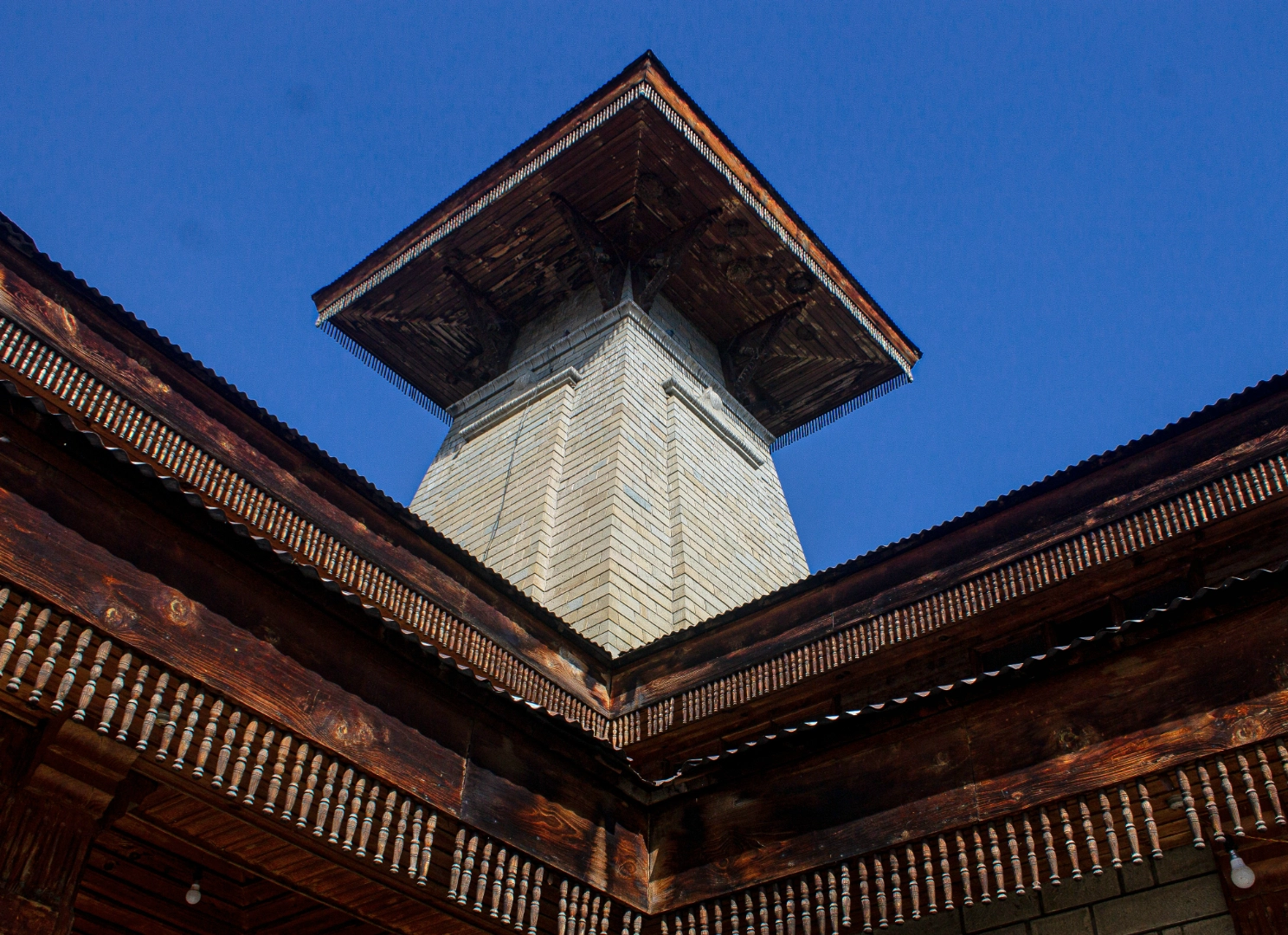
After a few more kilometers, I moved to one more path of divinity that is "Vashisht temple", Vashisht temple holds the tales of sage Vashisht’s trials. Beautifully carved, Vashisht temple holds splendid and captivating architecture.
Additionally, Vashisht temple holds its significance with the presence of bathing kunds. The present water in the kund comes from natural geothermal hot springs deep within the earth, it is considered to be therapeutic towards any kind of skin disease, thus tourists come here especially to take bath in the kund. There are two separate bathing kunds for men and women with strict prohibition of photography.
As I walked away from the temple and was on my way back to the hotel, I accepted the fact that today was my last day at Manali.
The Lesson of the Himalayas
As the trails of mountains were leaving behind, it made me realize how slow the journey felt as I was entering Manali and how fast it is as I am leaving Manali. All this beauty of Himalayas, its popularity is because it knows the value of slow life, people from rapid city lives feel safe and a feeling of home embraces them and this feeling is not often found in the rush of cities.
City life demands a rapid and fast-paced life in every sphere of life, this fast-paced life makes people forget to take time for things they like and the people they love. The people who come to cities for work or any other opportunities never get to know that city or travel to some beautiful spots of that city.
City life outshines with modernity within which large crowds find their ways to live; whereas, like a diamond was once just a carbon piece in its raw form, the Himalayas outshine diamond-like quality which is evolved from rawness.
Have a travel story to share? Write for us