Thailand and the Ramayana: Following the Ramakien from Ayutthaya to Bangkok
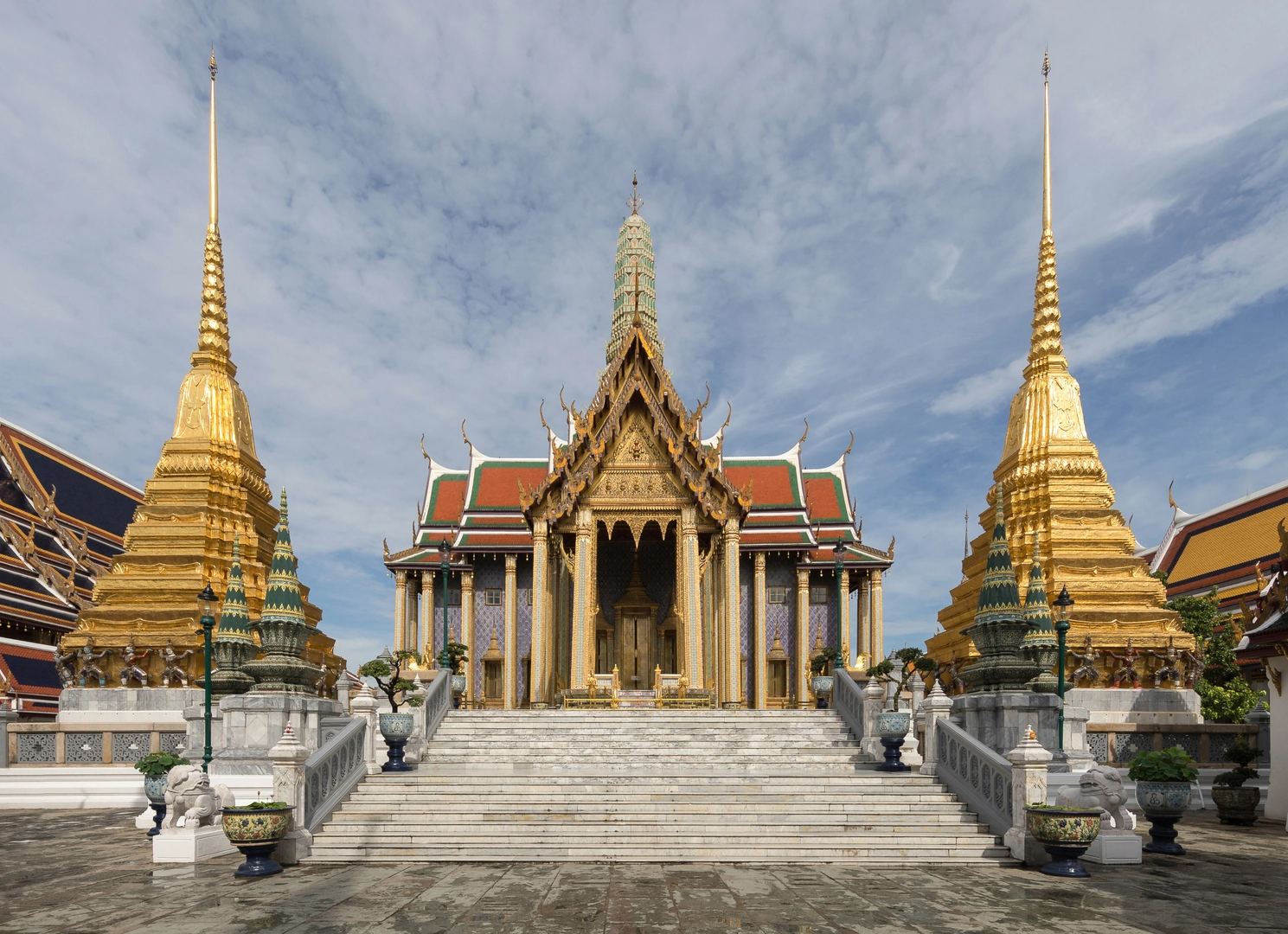
Photo: Basile Morin, CC BY-SA 4.0, Wikimedia Commons
A travel story about Thailand's Ramakien, from Ayutthaya's name and the murals at Wat Phra Kaew to Khon dance and Wat Pho's reliefs, with names, differences and places you can still visit.
Indian travellers who know the Ramayana often arrive in Thailand with a sense of recognition. The names are slightly different, the costumes and colours follow Thai court tradition, and the telling has its own humour and moral emphasis. Yet the story of Rama, Sita, Lakshmana, Hanuman and Ravana is still there, rewritten in Thai as the Ramakien.
This is not a second circuit of Ramayana places in India. It is a travel story about how that epic took root in Thailand, and where you can still see it in cities, temples and performance halls today.
The Ramakien, Thailand's telling of the Rama story
The Ramakien is a Thai retelling of the Rama story, not a word-for-word translation of Valmiki's Sanskrit Ramayana. It shares the central frame of exile, abduction and war, while drawing on more than one South and Southeast Asian tradition and adding its own episodes, characterisations and courtly style. [1][2]
Versions of the story were already performed and written in the Ayutthaya period. After Ayutthaya fell to Burmese forces in 1767, earlier texts were lost or left incomplete. King Taksin of Thonburi still composed some Ramakien episodes. In the early Bangkok, or Rattanakosin, period, several royal versions followed. [2][3]
The most important complete written version was commanded by King Phutthayotfa Chulalok, later known as King Rama I, founder of the Chakri dynasty. A Ministry of Culture account, citing original books in the National Library of Thailand, dates that complete text to 1797 and notes that it was marked with melodies for use as a standard Khon script. King Rama II later wrote dramatic episodes that are generally used for the stage. King Rama VI also composed Ramakien work that stays closer, in places, to Valmiki. [2][3]
Familiar heroes, Thai names and a different Hanuman
In the Ramakien, Rama is Phra Ram, Sita is Nang Sida, and Lakshmana is Phra Lak. Ravana is Thotsakan, also spelled Thosakan, a name that refers to his ten necks or heads. Lanka appears as Longka. Hanuman keeps his name. [1][4]
Some differences matter when you look at a mural or sit down for a Khon performance. In many Indian tellings, Hanuman is a celibate devotee. In the Thai Ramakien he remains loyal to Phra Ram, but he is also playful, funny and often flirtatious, a favourite of audiences as well as a formidable warrior. [1][5]
Another distinctive Thai tradition concerns Sida's origins. In official retellings used for royal Khon, Sida is born as Thotsakan's daughter, set aside after an omen, and later raised by King Janaka. That is not the account in Valmiki, and it is best read as part of the Thai story rather than as a correction of the Indian one. Later episodes also give Thotsakan a hidden heart, kept in a box, which has to be destroyed before he can be killed. [1][6]
These variations are the point of a Thailand visit, not a problem to be smoothed away. Listen for the Thai names, and you will follow the story more easily on the walls and on the stage.
Ayutthaya, a capital named from Ayodhya
The name Ayutthaya comes from Ayodhya, the Sanskrit name of Rama's city in the Ramayana, a city whose living traditions travellers can still encounter in Ayodhya in India. UNESCO, describing the later rebuilding of the Thai capital at Bangkok, notes that cities in this tradition sought to emulate the mythical city of Ayodhaya, and that Bangkok's official ceremonial name still retains Ayutthaya as part of its formal title. [7]
UNESCO lists the Historic City of Ayutthaya as a World Heritage site. It was founded in 1350 as the second Siamese capital after Sukhothai, grew into a major centre of diplomacy and trade, and was attacked and burned by the Burmese army in 1767. The old city stood on an island at the meeting of three rivers, the Chao Phraya, the Pa Sak and the Lopburi. What remains today are the prang towers, monastery ruins and urban plan of that capital, now protected as a historical park. [7][8]
The Tourism Authority of Thailand places Phra Nakhon Si Ayutthaya about 86 kilometres north of Bangkok, close enough for a careful day visit or a slower overnight stay. Begin with the historical park rather than trying to collect every temple. Wat Chaiwatthanaram, Wat Phra Si Sanphet and Wat Mahathat are among the monuments that give the clearest sense of the former city's scale. Confirm current park hours and ticket arrangements locally or through official tourism information before you go. [8]
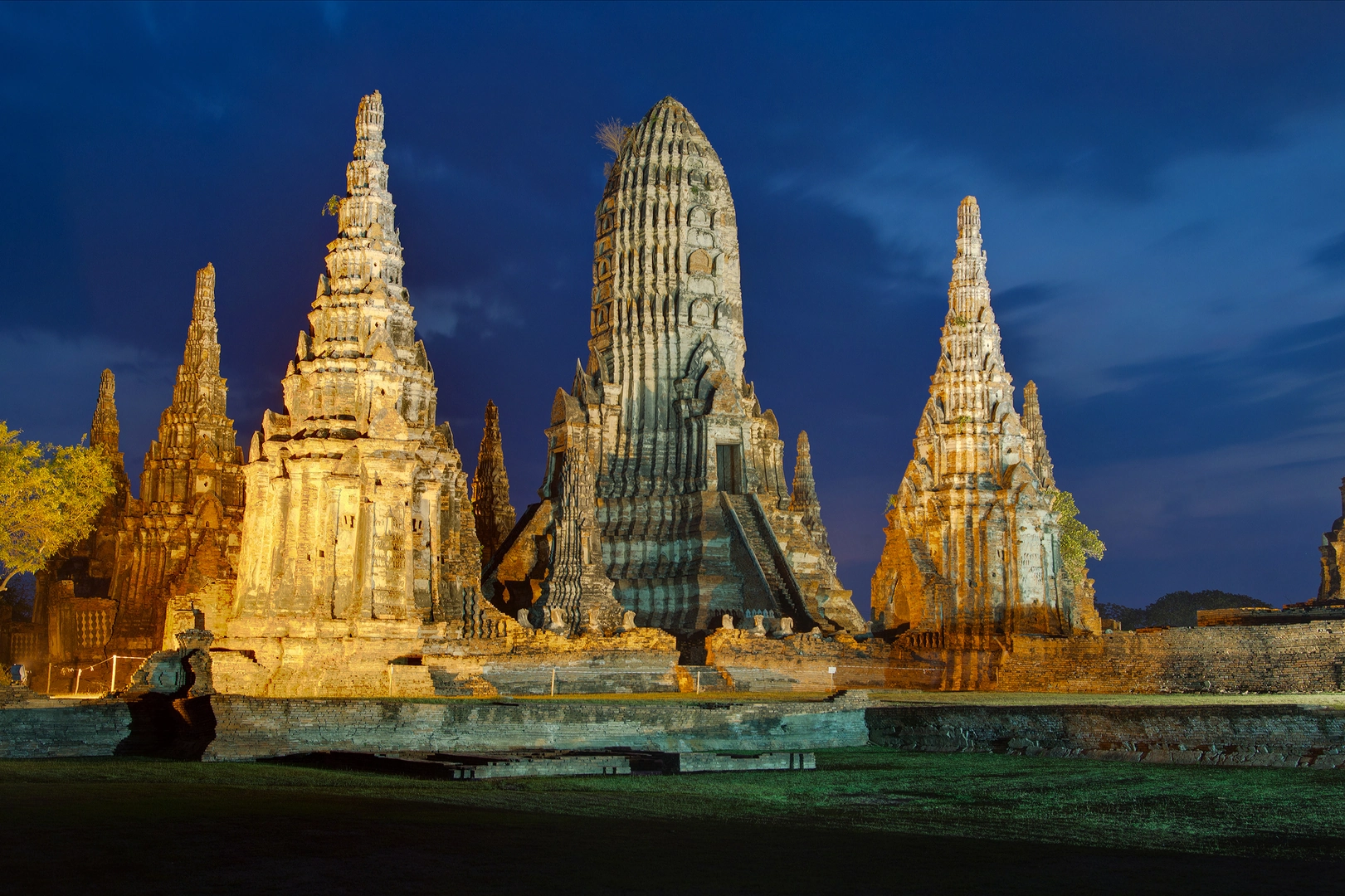
Credit: Wat Chai Watthanaram, Ayutthaya by JJ Harrison, CC BY-SA 3.0.
The fall of Ayutthaya also belongs to the Ramakien story you will meet in Bangkok. Earlier performance scripts were lost with the city, which is one reason King Rama I's complete written version, compiled a generation later, became so important. [2][3]
A royal line called Rama
The Chakri dynasty, which has ruled since 1782, is closely associated with the Rama story, but the familiar English numbering needs a careful explanation. The sixth Chakri king, King Vajiravudh, began the practice of calling himself Rama VI. The earlier kings of the dynasty then came to be known as Rama I, Rama II and so on. The present king, King Maha Vajiralongkorn, is Rama X. [3][9]
The title points to an ideal of righteous kingship associated with Rama, not to a claim that the Thai court is a continuation of the epic's Ayodhya. For a traveller, it helps explain why the Ramakien was rewritten under royal patronage, and why it still appears in palaces, temples and state-supported performance.
Walking the story at Wat Phra Kaew
In Bangkok, the clearest place to see the Ramakien as a complete visual narrative is the Temple of the Emerald Buddha, Wat Phra Kaew, inside the Grand Palace. King Rama I founded the new capital here in 1782 and built the palace and its chapel royal, formally called Wat Phra Sri Rattanasasadaram. The temple has a surrounding cloister, and the gallery walls of that cloister are painted with the Ramakien story. [1][10]
Give yourself time to walk the galleries slowly. The murals use Thai palaces, costumes and landscape even when they tell an originally Indian story. One recurring visual cue is colour: Phra Ram is conventionally shown with green skin. A close look at a chariot scene, surrounded by monkey warriors, makes the Thai painting tradition as vivid as the plot itself.
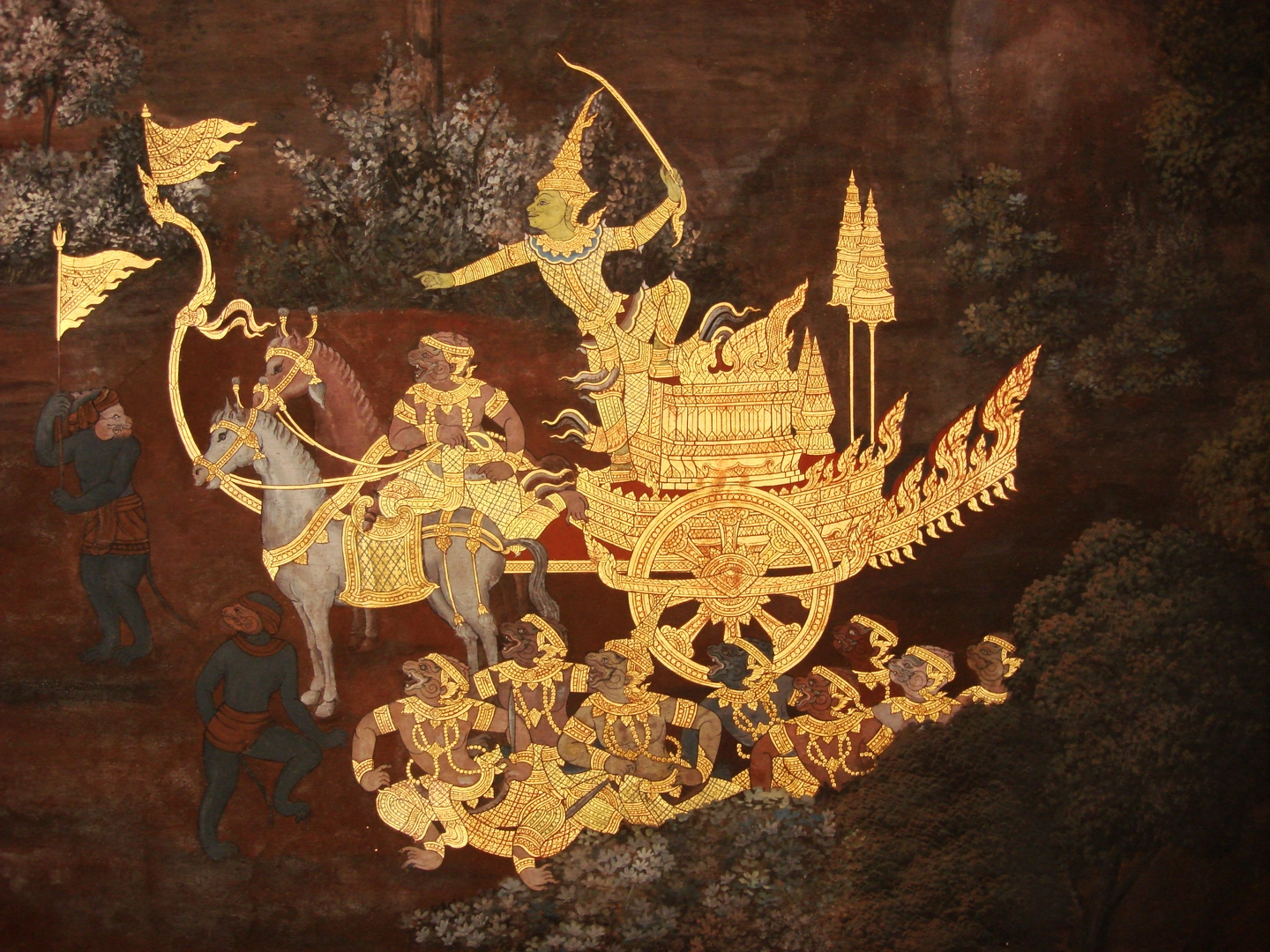
Credit: Detail of one of the Ramakien murals, Wat Phra Kaew by Jorge Láscar, CC BY 2.0.
The Grand Palace complex is a royal site, so dress modestly and follow the posted rules. The official palace website lists current opening hours and ticket information. At the time of writing it records daily opening from 8:30 a.m. to 4:30 p.m., with tickets sold until 3:30 p.m.; always recheck before you travel, because hours and prices can change. [10][11]
Khon, the masked dance of the Ramakien
Khon is Thailand's classical masked dance-drama. In 2018, UNESCO inscribed "Khon, masked dance drama in Thailand" on the Representative List of the Intangible Cultural Heritage of Humanity. Performances combine dance, music, chant, costume and ritual, and they depict the life of Rama, including his forest exile, his monkey army, and his battles with the army of Thosakan, king of the giants. [4]
Traditionally, Khon was taught in royal and princely courts and in dance masters' households. Today it is also taught in educational institutions, and travellers can see both short tourist performances and fuller seasonal productions. [4]
One established venue in Bangkok is Sala Chalermkrung Royal Theatre, on Charoenkrung Road in the Phra Nakhon district. The official Grand Palace website describes a short Khon performance there for visitors, with English and Chinese subtitles, and an arrangement that allows foreign tourists who have bought Grand Palace tickets to attend on weekdays, with a shuttle from the palace. Separate tickets are also sold at the theatre. Showtimes, closures and prices change, so confirm the current details on the Grand Palace Khon page or at Sala Chalermkrung before you plan the day. [12]
Larger, seasonally staged productions are another way to see the art at full length. The SUPPORT Foundation of Queen Sirikit The Queen Mother presents Ramakien episodes in Khon at the Thailand Cultural Centre in Bangkok. The Government Public Relations Department announced that the 2026 production, "Sida," would run at the Main Hall from 5 November to 10 December 2026. If you are in the city during a run, check remaining dates and official ticket channels rather than assuming the same production will be available year-round. [6]
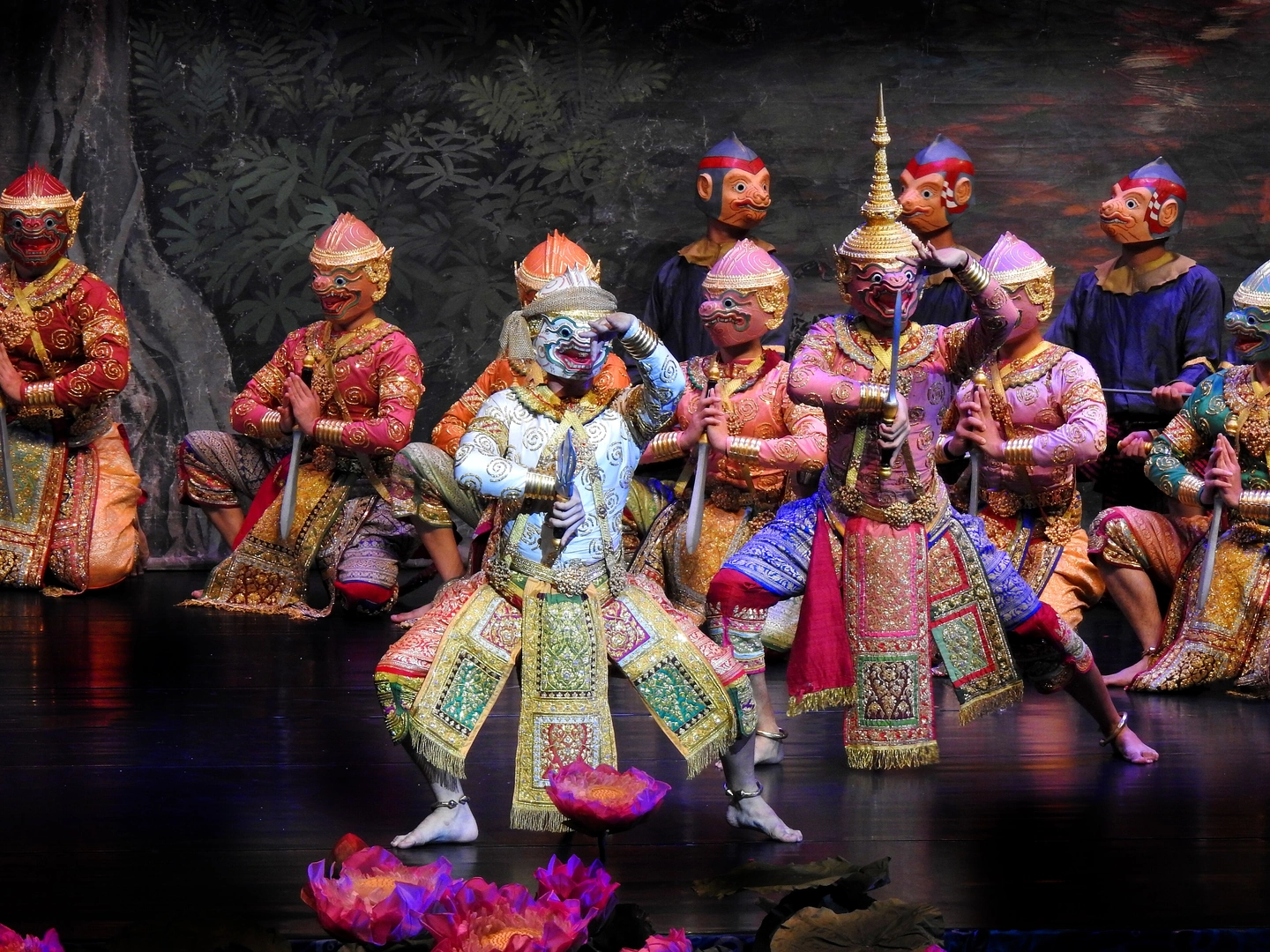
Credit: Khon performance by Peak Hora, CC BY-SA 4.0.
Wat Pho's marble Ramakien reliefs
A short walk from the Grand Palace, Wat Pho (Wat Phra Chetuphon) offers a different way of reading the same story. The official temple site records 152 marble bas-reliefs on the outer side of the Kampaengkaew, the boundary wall around the main chapel. They depict scenes from the Ramayana, as the temple's English page names the epic, and were commissioned under King Rama III in order to preserve the designs of Nang Yai, the grand shadow-play tradition. Rubbing the reliefs, once a popular way of copying the designs, is now prohibited because it damaged the stone. [13]
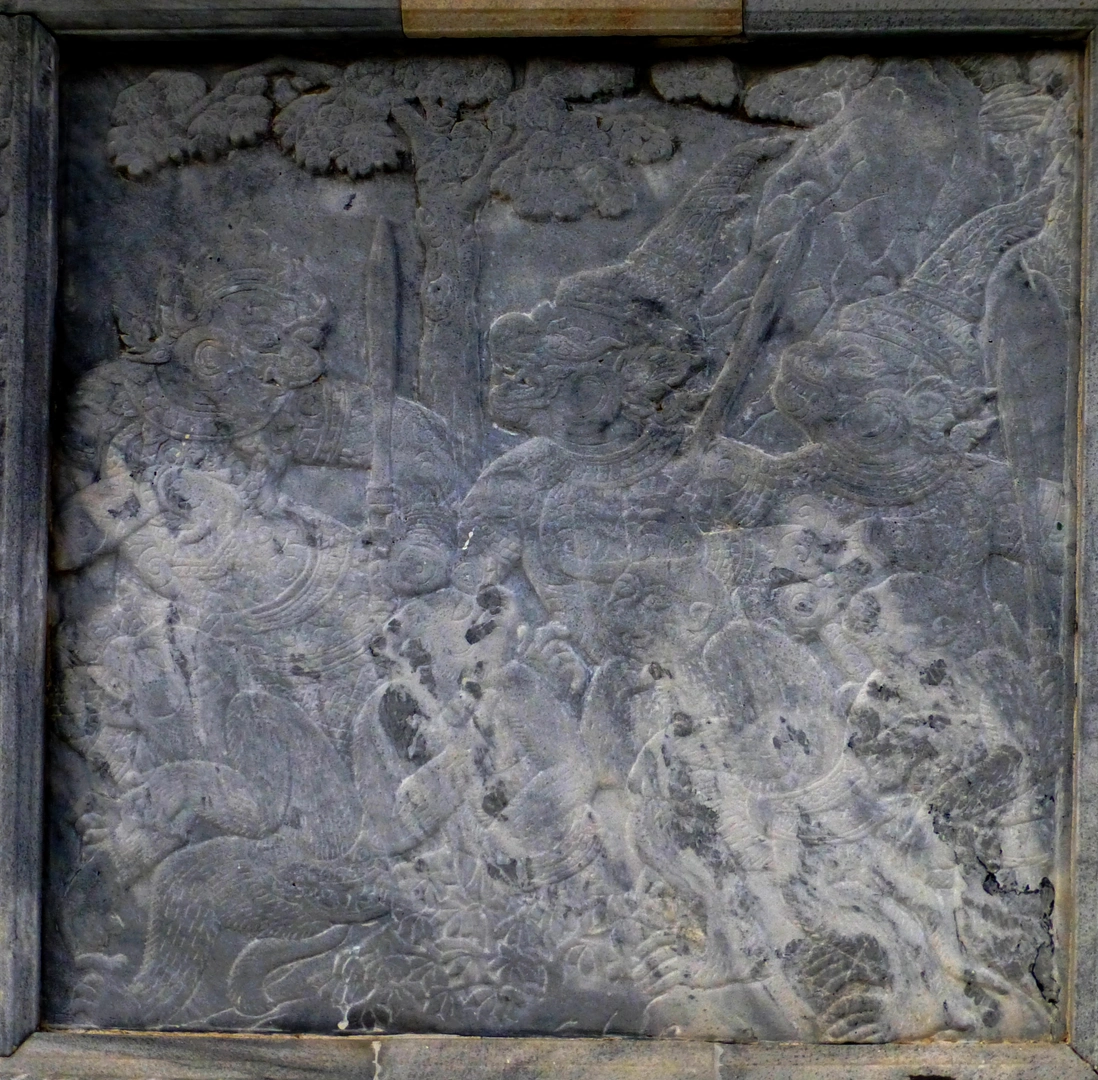
Credit: Ramakien relief, Wat Pho by Anandajoti Bhikkhu (Photo Dharma), CC BY 2.0.
Together, the Wat Phra Kaew murals, a Khon performance and the Wat Pho reliefs give a rounded first encounter with the Ramakien in Bangkok: painting, dance and carved design, all within a compact historic quarter.
Lopburi and a Hanuman folk tradition
North of Ayutthaya, Lopburi has a genuine place in Thai Ramakien folklore, though not as an excavated "site of the epic." A folk tale recorded by Srisurang Poolthupya of the Royal Institute of Thailand tells that, after the war, Phra Ram rewarded Hanuman by shooting an arrow and granting him the city where it fell. The arrow fell at Lopburi, and the heat of its impact is said to explain the white earth used there for making talcum powder. [2]
That is local tradition, not historical proof, and it should be told as such. Travellers still come for Lopburi's older monuments, including the laterite towers of Phra Prang Sam Yot, and for the city's well-known troop of monkeys. The monkeys are part of the visit's atmosphere, not evidence for the folk tale. Keep food packed away, follow local advice, and treat the animals as wild.
Practical notes for Indian travellers
The Tourism Authority of Thailand asks visitors to royal palaces to dress modestly: a shirt with sleeves, and long trousers or a skirt that covers the knees. Avoid sleeveless or see-through tops, shorts, tight or ripped trousers, and flip-flops. Some sites may offer a wrap if you arrive under-dressed, but it is better to come prepared. The same respect you would show at a major temple in India will serve you well at Wat Phra Kaew and Wat Pho. [11]
If you are vegetarian, Thai menus can be misleading because fish sauce, shrimp paste and oyster sauce often flavour vegetable dishes. Yatrigo's earlier guide, Vegetarian Food in Thailand, explains the word jay, the signs to look for, and the ingredients worth checking.
For a first trip, a practical shape is two or three days rather than a single rushed circuit: the Grand Palace, Wat Phra Kaew and Wat Pho in Bangkok, a Khon performance if a verified show is on, and a separate day in Ayutthaya. Add Lopburi only if you have the extra time and want the folk-tale landscape as well as the ruins.
The Ramakien will not replace the Ramayana you already know. It will show you how Thailand made the story its own, and how much of that making is still visible if you walk slowly, read the names as they are used here, and keep legend, literature and documented history distinct.
Sources
- Thailand Foundation, Ramakien: Thailand's National Epic
- Srisurang Poolthupya, The Influence of the Ramayana (Ramakien) on Thai Culture, Journal of the Royal Institute of Thailand
- Ministry of Culture, Khon publication, on King Rama I's 1797 Ramakien text and the National Library of Thailand
- UNESCO, Khon, masked dance drama in Thailand
- Academy of American Poets, introduction to extracts from the Ramakien
- Government Public Relations Department, SUPPORT Foundation Khon production "Sida" at the Thailand Cultural Centre
- UNESCO World Heritage Centre, Historic City of Ayutthaya
- Tourism Authority of Thailand, Phra Nakhon Si Ayutthaya
- Srisurang Poolthupya, King Rama VI's Promotion of Khon and Drama in General, Journal of the Royal Institute of Thailand
- The Grand Palace, official history
- Tourism Authority of Thailand, Dressing to Visit Royal Palaces in Thailand
- The Grand Palace, Khon performance at Sala Chalermkrung Royal Theatre
- Wat Pho, official architecture page on the Kampaengkaew Ramayana reliefs
Cover photograph: Prasat Phra Thep Bidorn and the golden chedis at Wat Phra Kaew by Basile Morin, CC BY-SA 4.0.
Have a travel story to share? Write for us