From Hanuman Ansh to a New Spiritual Trail: Following Neeb Karori Baba Across Uttar Pradesh

After Hanuman Ansh's surprise success, UP Tourism launched a Neeb Karori Baba circuit linking Akbarpur, Farrukhabad, Lucknow and Vrindavan, with packages from Delhi and Lucknow.
A ₹2 crore devotional film has unexpectedly put one of India's best-known spiritual figures back into the national conversation.
Hanuman Ansh, inspired by the life and spiritual journey of Neeb Karori Baba (also spelled Neem Karoli Baba), began its theatrical run on a remarkably small scale before growing largely through word of mouth. By September, the film had become one of 2026's surprise box-office stories, drawing attention not only to the film itself but also to the places connected with the saint whose life inspired it.
Now, travellers interested in that story have a new way to follow it beyond the cinema.
The Uttar Pradesh Tourism Department has announced a Neeb Karori Baba Spiritual Circuit, connecting important places associated with his life and legacy across the state. Five special tour packages have also been introduced, with itineraries of two, three and five days starting from Delhi and Lucknow.
The timing is particularly interesting. The announcement came around Neeb Karori Baba's Mahasamadhi Diwas and amid the extraordinary popularity of Hanuman Ansh, turning places that were already important to devotees into part of a more organised pilgrimage trail.
But this isn't simply a film-location tour. The route follows a spiritual story that began decades before Hanuman Ansh reached cinemas.
Who was Neeb Karori Baba?
Known to devotees as Maharaj-ji, Neeb Karori Baba was a 20th-century Hindu spiritual teacher whose teachings emphasised devotion, service and love. Hanuman worship occupied a particularly important place in his spiritual life, and temples and ashrams associated with him can now be found in different parts of India.
His influence eventually travelled far beyond the communities that encountered him personally. Over the decades, his name became particularly well known internationally because of Western devotees and visitors associated with his ashrams.
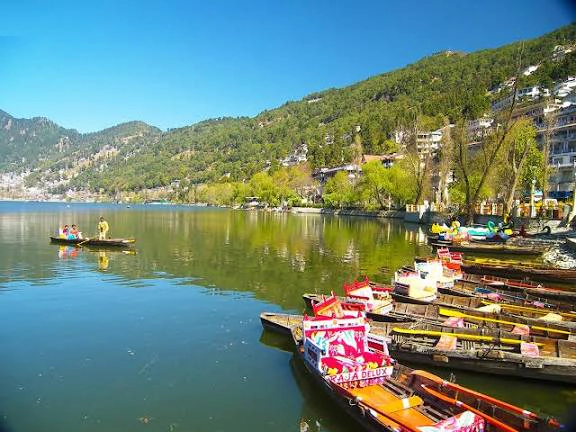
For many travellers today, the place most closely associated with him is Kainchi Dham in Uttarakhand. Set in the Kumaon hills near Nainital, the ashram has become a major pilgrimage destination and attracts large crowds, particularly during its annual celebrations.
The new circuit, however, shifts attention towards Uttar Pradesh, where several important chapters of his life unfolded.
Rather than concentrating on one famous ashram, the route connects his birthplace, places associated with his spiritual journey, temples and the place where his samadhi is located.
Where does the new spiritual circuit go?
One of the most important stops is Akbarpur in Firozabad district, associated with Neeb Karori Baba's birth and early life. He was born Lakshman Narayan Sharma, and the village remains closely connected with his family history.
The circuit then reaches Neeb Karori village in Farrukhabad district, the place from which the name by which he became famous is derived. A Hanuman temple and ashram associated with Maharaj-ji make this an especially important destination for devotees following his story. Tourism and official accounts also link the Farrukhabad ashram with a long period of meditation, often described as around 12 years in an underground cave.
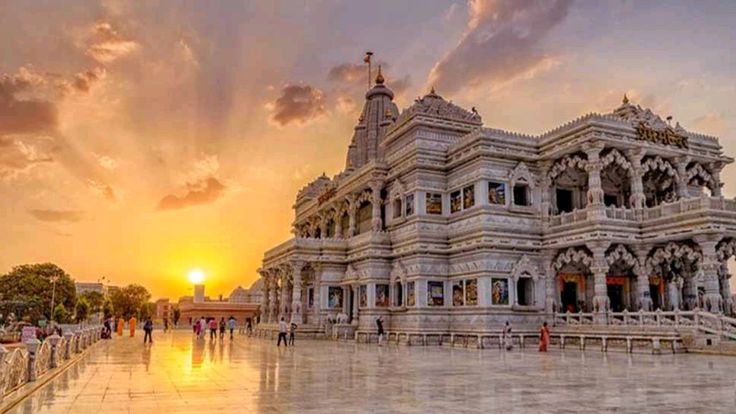
The route also includes Vrindavan, where Neeb Karori Baba's samadhi temple is located. Vrindavan hardly needs an introduction as a pilgrimage destination, but for followers of Maharaj-ji it carries another layer of significance beyond its much older association with Krishna.
Another important stop is Hanuman Setu Temple in Lucknow, a temple closely associated with Neeb Karori Baba and Hanuman devotion.
Taken together, these places turn the circuit into something more interesting than a collection of temples. A traveller can effectively follow different stages of one person's life across Uttar Pradesh, from the region of his birth to places associated with his spiritual work and eventually his samadhi.
Where does Hanuman Ansh fit into the story?
Despite its title, Hanuman Ansh isn't primarily a conventional film about Lord Hanuman.
Written and directed by Vishal Chaturvedi, the film draws from stories associated with Neeb Karori Baba's life and his devotion to Hanuman. Its story follows a young seeker whose spiritual journey eventually leads towards the figure devotees know as Neeb Karori Baba.
The filmmakers themselves describe it as a cinematic journey inspired by his life rather than a conventional historical biopic, an important distinction when separating the spiritual storytelling of the movie from documented history.
What nobody seems to have anticipated was just how strongly audiences would respond to it.
The film initially opened on a limited number of screens and with little of the marketing machinery normally associated with a major Hindi release. Word of mouth changed its trajectory dramatically, and screenings themselves sometimes began taking on a devotional atmosphere as audiences chanted and responded collectively to scenes.
By mid-September, trade trackers put the film's worldwide gross at around ₹236 crore against a reported production budget of about ₹2 crore. Later tallies continued to climb as the theatrical run stretched on.
That success has inevitably introduced Neeb Karori Baba to people who may previously have known little about him.
The connection with the new tourism circuit became even more visible when members of the Hanuman Ansh team met Uttar Pradesh Chief Minister Yogi Adityanath shortly before the circuit announcement.
The spiritual circuit should not therefore be described as something created solely because of the movie. The places and pilgrimages surrounding Neeb Karori Baba have existed for decades, and the tourism initiative has its own religious and infrastructure context. But the extraordinary success of Hanuman Ansh has clearly arrived at a moment of renewed public interest in his life.
Five new ways to follow the trail
Uttar Pradesh State Tourism Development Corporation (UPSTDC) has introduced five tour packages built around the circuit, including two-day, three-day and five-day options. These are the official government packages currently listed:
- Delhi, 2 days / 1 night: Mathura, Vrindavan, Firozabad
- Delhi, 2 days / 1 night: with Bateshwar
- Delhi, 3 days / 2 nights: with Bateshwar and Agra
- Lucknow, 3 days / 2 nights: Farrukhabad, Firozabad, Mathura, Vrindavan
- Lucknow, 5 days / 4 nights: fuller circuit including Agra
Departures are planned from Delhi and Lucknow, depending on demand, which makes the route considerably easier for travellers who want to visit several places connected with Maharaj-ji without organising every journey independently.
This matters because the Neeb Karori Baba story isn't concentrated in a single destination.
Firozabad, Farrukhabad, Lucknow and Vrindavan are spread across different parts of Uttar Pradesh. Someone trying to understand the connections between them independently would need to work out road or rail journeys, accommodation and the order in which to visit.
A structured circuit turns those scattered locations into an itinerary.
The state is also investing in infrastructure around sites associated with Maharaj-ji. Around ₹12.93 crore has been announced for development work connected with the initiative, with improvements intended to make these places more accessible to pilgrims and other visitors.
What about Kainchi Dham?
There's one important thing to understand before planning a trip: the new circuit is an Uttar Pradesh initiative, so it shouldn't be confused with a complete Neeb Karori Baba trail across India.
Kainchi Dham, arguably the place most internationally associated with Maharaj-ji today, is in Uttarakhand and therefore isn't part of the Uttar Pradesh circuit.
For someone interested in going beyond the official itinerary, however, it forms an obvious extension.
Kainchi Dham lies in the Kumaon region between Bhowali and Almora and has developed into a major pilgrimage destination. Its annual foundation-day gathering attracts enormous crowds, while devotees visit throughout the year.
This creates two quite different ways of exploring Neeb Karori Baba's legacy.
A traveller could visit Kainchi Dham as a single spiritual destination in the Himalayas, or follow the Uttar Pradesh circuit to understand more of the geographical story of his life. Someone particularly interested in Maharaj-ji could eventually combine both.
A different kind of film tourism
India is no stranger to movies influencing travel.
A beautiful valley appears in a film and suddenly people want to photograph the same viewpoint. A café becomes famous because a scene was shot there. Entire destinations have benefited from appearing on screen.
What is happening around Hanuman Ansh is slightly different.
People aren't necessarily travelling to see where the movie was filmed. Instead, the film has made them curious about the real places behind the spiritual story.
That makes Akbarpur more than a village name mentioned in a biography. Neeb Karori becomes more than the place from which Maharaj-ji acquired the name by which millions know him. Vrindavan becomes connected not only with Krishna pilgrimage but with the final chapter of another spiritual life.
For travellers who watched Hanuman Ansh and came away wanting to understand the person who inspired it, the journey doesn't have to end when the cinema lights come back on.
It can continue through Uttar Pradesh.
And unlike most movie-inspired trips, this trail existed long before the movie made people curious enough to follow it.
Have a travel story to share? Write for us