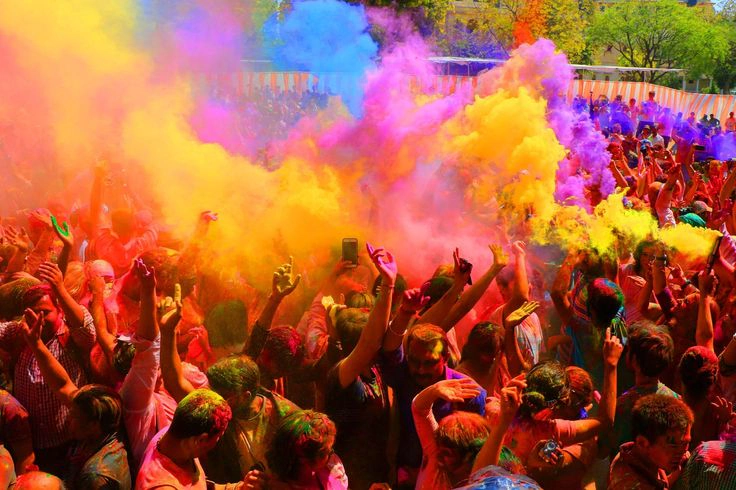
Dol Jatra West Bengal: The Devotional Holi
Discover Dol Jatra West Bengal—devotional Holi featuring flower colors, swings for Krishna idols, Rabindra Sangeet, and processions in Kolkata and Shantiniketan.
While North India erupts in clouds of colored powder, Bengal celebrates Holi with a quieter devotion—transforming streets into devotional processions featuring deities on swings, flower petals, and the soulful strains of Rabindra Sangeet.
A Different Kind of Color
Called Dol Jatra or Dol Purnima, Bengal Holi is fundamentally different from its boisterous northern cousin. While Delhi and Mathura might be drowning in water balloons and synthetic colors, Kolkata and Shantiniketan offer something gentler: a celebration where the divine romance of Krishna and Radha takes center stage, where the dominant color is not the full spectrum but a passionate red, and where the music is not Bollywood but the hauntingly beautiful compositions of Rabindranath Tagore.
This is Holi as spiritual experience rather than chaotic revelry—a festival that appeals to those seeking depth over dosage.
The Story Behind the Swings
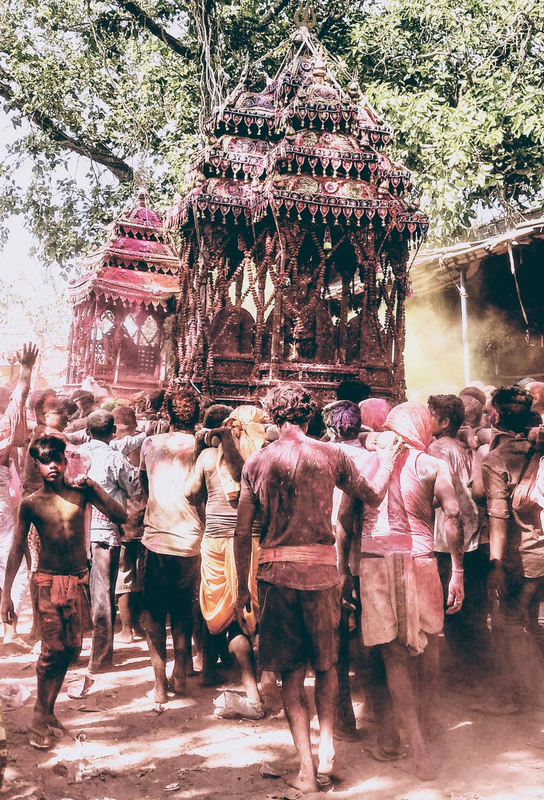
Dol Jatra finds its roots in the ancient worship of Krishna, where the deity is smeared with red powder (called dol) and placed on beautifully decorated swings. The tradition celebrates Krishna's playful nature and his divine love with Radha, connecting deeply with Vaishnavite traditions that have flourished in Bengal for centuries.
But it was Rabindranath Tagore who transformed Dol Jatra from a purely religious observance into what we now celebrate as Basant Utsav—a cultural celebration that emphasizes Bengali heritage, unity through arts, and universal love. At his university in Shantiniketan, Tagore institutionalized these celebrations in the early 20th century, giving Bengal its own distinctive way of welcoming spring.
The Heart of Bengal Celebration: Shantiniketan
Just three hours from Kolkata, the quiet town of Shantiniketan—home to Visva-Bharati University—hosts the most mesmerizing Dol Utsav celebration in all of Bengal. Students dressed in traditional saffron attire gather to recreate what Tagore envisioned over a century ago.
The morning begins with puja and aarti at the university grounds, where the air fills with the scent of incense and the sound of bells. By afternoon, a grand procession winds through the campus, featuring idols of Krishna and Radha on elaborate swings adorned with marigolds and roses. Students perform choreographed dances to Tagore's compositions, their yellow garments swaying as they tell the eternal love story through movement.
As evening approaches, the celebration transforms into a more intimate affair. Rabindra Sangeet recitals echo through the trees, and visitors—drawn from across India and beyond—join locals in applying the traditional red abir to each other's faces. The red powder, made from dried hibiscus flowers, symbolizes love and passion, and unlike the rainbow hues of northern Holi, Dol Jatra's crimson creates a unified tapestry of devotion.
Kolkata's Quiet Revelry
In the bustling capital of West Bengal, the celebration takes on a different character. Temples across the city—particularly ISKCON and Radhabinode—become the focal points of devotion. Early morning sees temple rituals where priests chant ancient bhajans while gently swaying the deity idols on their decorated swings.
College Square comes alive in the evening, with locals gathering for a more relaxed celebration that combines devotional singing with festive camaraderie. The atmosphere is mellower than what one might find in Varanasi or Mathura, but there is a warmth here—strangers become friends over shared sweets and the universal language of color.
The Food That Sweetens the Celebration
No Bengali festival is complete without an indulgence in sweets, and Dol Jatra is no exception. After a day of processions and devotional singing, families gather to indulge in Kolkata's legendary desserts. The creamy sweetness of mishti doi—sweet curd fermented to perfection—quenches the thirst after a day under the spring sun. Rasgulla and sandesh—the region's iconic cottage cheese sweets—make their appearance at every household. For those seeking something more indulgent, chanar jilapi—fried sweet noodles soaked in syrup—offers a crispy, sugary conclusion to the festivities.
Dol Jatra vs. The Rest of India
For travelers who have experienced Holi in its various forms across India, Dol Jatra offers a markedly different experience. While North Indian Holi is characterized by water balloons, thandai, and Bollywood music, Bengal's celebration is gentler—the focus on devotion rather than revelry, on red rather than rainbows, and on Tagore's compositions rather than Bhangra beats.
The key difference lies in the philosophy: Dol Jatra is about spiritual joy, about connecting with the divine through song and color. It is Holi for those who seek meaning alongside merriment.
When to Experience Dol Jatra 2026
The main celebration falls on March 3, 2026—the full moon (Purnima) that marks the peak of spring. However, many families and temples begin their celebrations a week earlier, cleaning their homes and preparing the elaborate decorations that make this festival so visually stunning.
For those planning to witness Shantiniketan's celebration, arriving early morning offers the best experience—the puja ceremonies and the initial processions are less crowded and more intimate. Kolkata's temple celebrations are best experienced in the morning, while evening brings the city together in a more relaxed, social atmosphere.
A Softer Way to Celebrate Spring
For travelers seeking refuge from the boisterous Holi celebrations that dominate much of North India, Dol Jatra offers something precious: a chance to experience devotion through song, color, and community. The gentle swaying of deities on their flower-adorned swings, the melodic strains of Tagore's timeless compositions, and the crimson hues of organic flower petals create an atmosphere of spiritual joy that remains unmatched.
Whether you find yourself in Kolkata's historic temples or walking through Shantiniketan's tree-lined pathways, Dol Jatra invites you to celebrate spring not with chaos, but with the quiet certainty that love, like spring, always returns.
Sources:
Have a travel story to share? Write for us