Beyond Mehrangarh : A One-Day Journey Through Jodhpur's Lesser-Known Temples
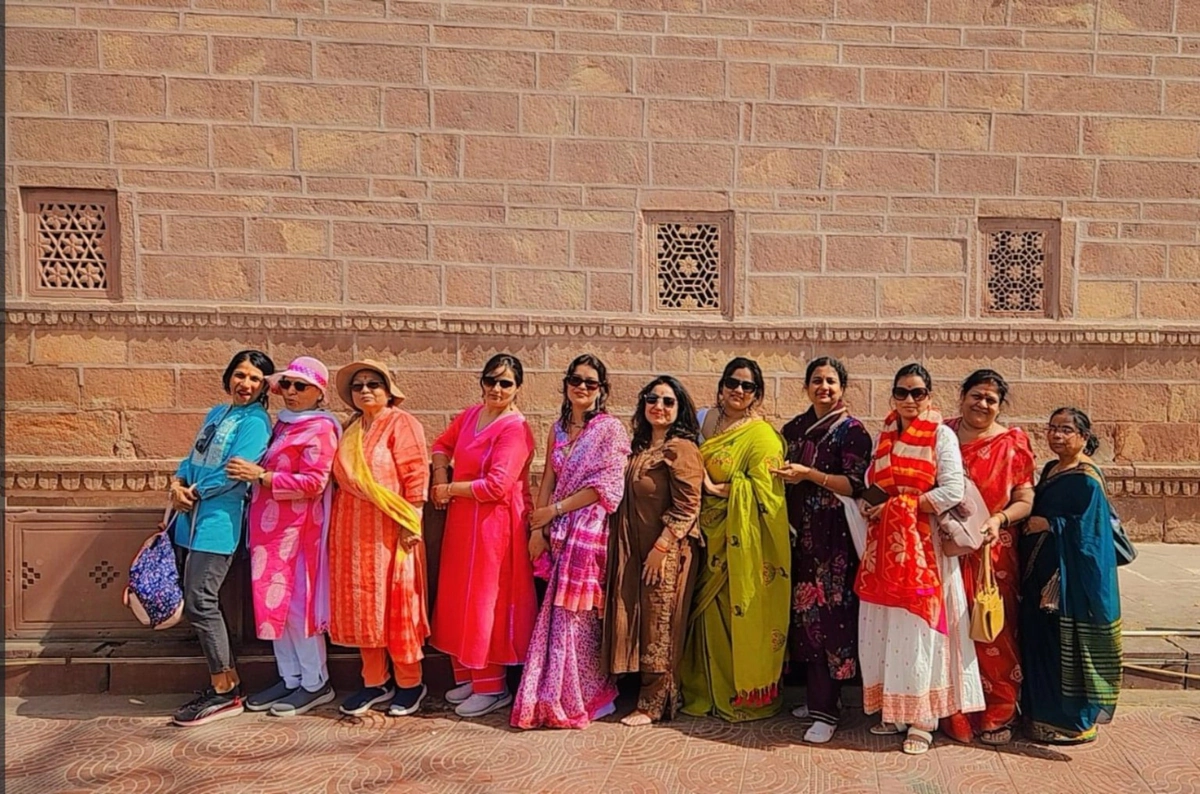
A group of 16 women trace a day-long trail through Jodhpur's lesser-known temples, from cave shrines to the new Akshardham Mandir.
Jodhpur is celebrated for the grandeur of its Mehrangarh Fort and the sapphire hues of the old city unfolding beneath it. Yet, beyond these iconic landmarks lies a network of lesser-known temples that deeply anchor the region's cultural identity. Perched on rocky hillocks, hidden within cave formations, or nestled beside historic settlements, these sacred spaces reveal how architecture, faith, and the rugged landscape of Marwar have evolved together over centuries.
Seeking to look beyond the usual tourist trails, a group of 16 women—including myself—set out at 7:00 AM on a warm morning in March 2026. What followed was a journey filled with spontaneous laughter, shared snacks, and an intimate glimpse into local spirituality.
Our first stop was the Pragat Santoshi Mata Mandir near Lal Sagar Lake. The shrine features a swayambhu (self-manifested) rock idol emerging directly from a cave-like hill formation, framed by a natural stream and a rock structure resembling the hood of the mythical Sheshnag. While modern expansions—like a pristine, white-washed compound and a massive ceremonial bell (Virat Ghant)—flank the ancient core, the air remains thick with tradition. After paying our respects in the quiet garbhagriha, we stepped out to savour the sweet gur-chana prasad and picked up handmade najar bracelets for our families.
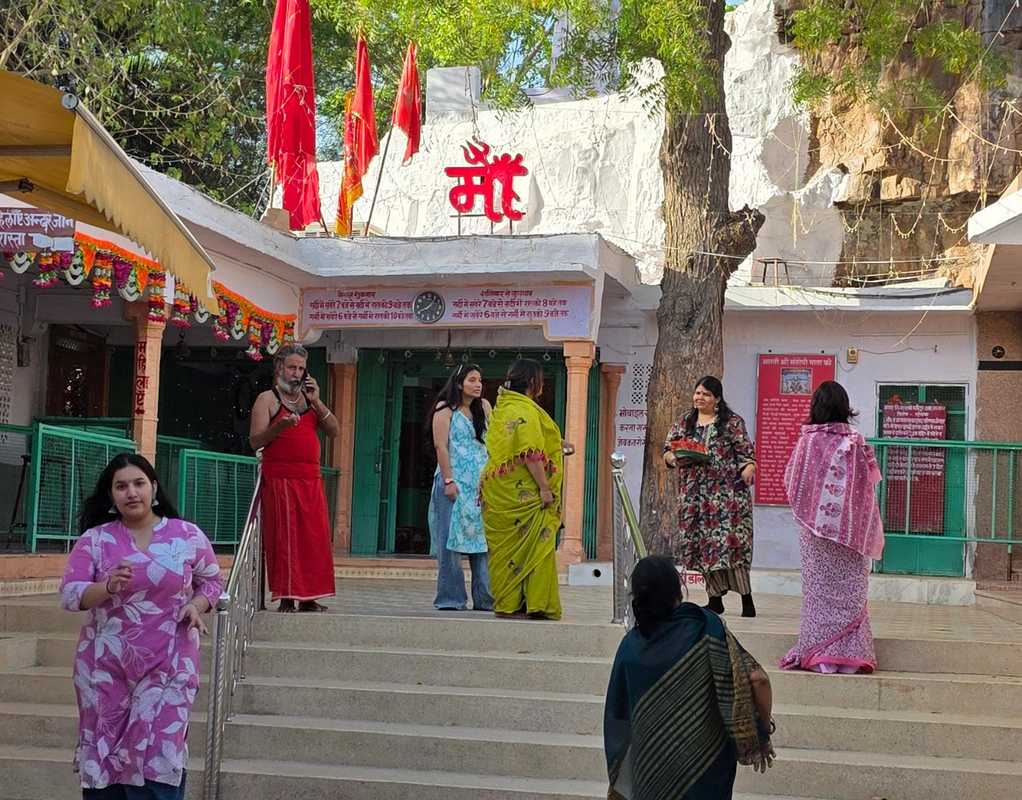
Leaving the lake behind, the road grew noticeably rougher and bumpier as we drove 20 kilometres out of Jodhpur into the secluded hills of Daijar village. The Daijar Caves Mata Mandir is an architectural marvel built directly into monolithic hill formations, its entrance framed by sprawling fields of golden wheat crop ready to harvest.
Inside the complex, the boundary between the natural world and the sacred completely blurred. We stepped out of the bright Rajasthani sun and into a labyrinth of deep, unmapped subterranean passages. The heavy darkness was alive with a large colony of bats hanging from the ceiling. As we walked, a sudden flurry of wings swooped overhead, catching us off guard. We ducked and giggled instinctively, our nervous squeals quickly dissolving into the sound of clanging bells. By sheer luck, the morning aarti for Chamunda Mata had just begun. The rhythmic hymns bouncing off the ancient cave walls made it the most mesmerising stop of the day.
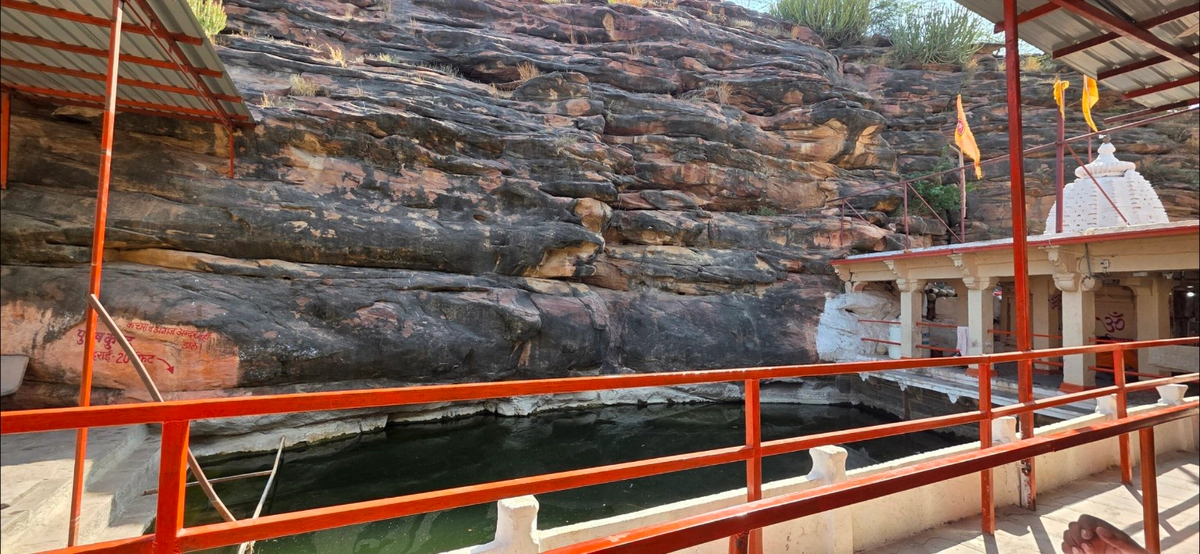
As the sun climbed higher, we proceeded to the Erneshwar Shiv Mandir, locally known as Arna Jharna. Nestled amidst small ravines and desert foliage, this open-air temple houses a revered swayambhu Shivling situated next to natural rock pools that swell into cascading waterfalls during the monsoons. Respecting local customs that restrict women from entering the innermost sanctum, we offered prayers from the threshold, enjoying the cool breeze slicing through the dry terrain.
Our route then looped back toward history at the Mandore Kala Gora Bheruji Mandir. Dedicated to Bhairava—a fierce, protective manifestation of Shiva highly revered in Rajasthan—the rustic sandstone temple houses side-by-side idols of Gora (fair) and Kala (dark) Bhairav. Here, we participated in a traditional ritual, tossing coconuts into the sacred fire to ward off negativity. Afterwards, we hopped onto a local tourist shuttle to navigate the historic Mandore Gardens, singing songs and sharing a conversational breakfast of hot tea with fellow travellers just outside the gates.
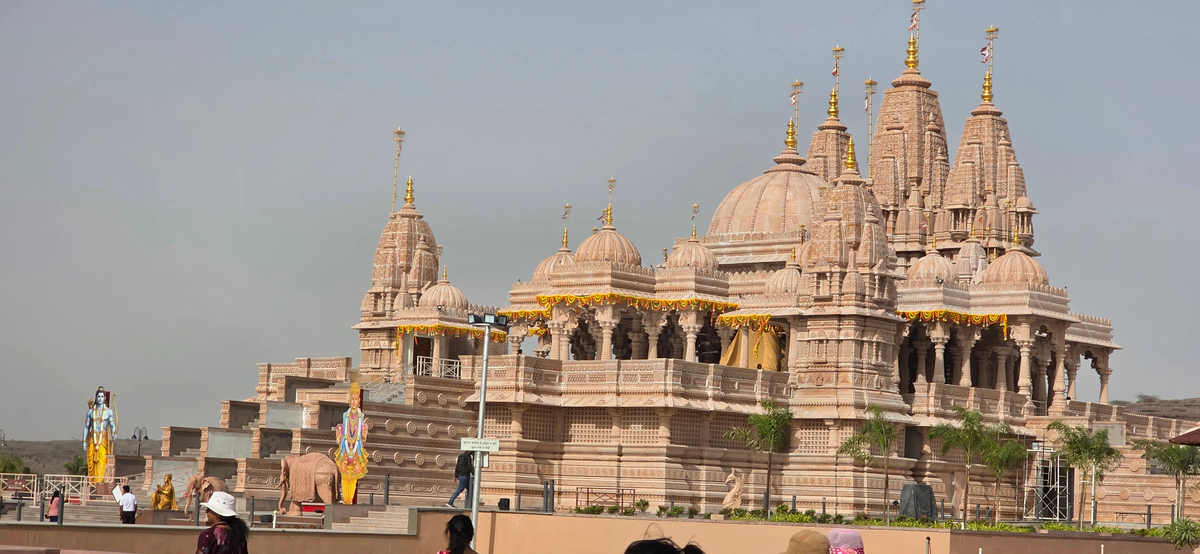
Our final destination offered a striking leap across time. The Akshardham Mandir, completed in 2025, stands as a grand new spiritual landmark. Built entirely from local Jodhpuri pink sandstone, its sprawling premises feature breathtakingly intricate hand-carved pillars and spotless courtyards dedicated to Bhagwan Swaminarayan. The monumental scale and meticulous visitor management provided a fascinating contemporary contrast to the raw, ancient cave shrines we had explored earlier.
By the time our traveller bus headed home—fuelled by shared home-cooked snacks and a spontaneous dance session in the aisle—we had traversed five distinct spiritual landscapes.
For those looking to map their own trail around Jodhpur's perimeter, an early start is vital to beat the desert heat. While most roads are well-paved, the path to Daijar demands patience and a sturdy vehicle. Above all, these active places of worship require mindfulness: dress respectfully, pack plenty of water, and always ask before photographing rituals.
Ultimately, the true magic of Marwar's temple trail doesn't lie in checking names off an itinerary. It lives in the spaces between them—the unexpected timing of a cave aarti, the flutter of bat wings in the dark, and the warmth of a journey shared.
About the Author
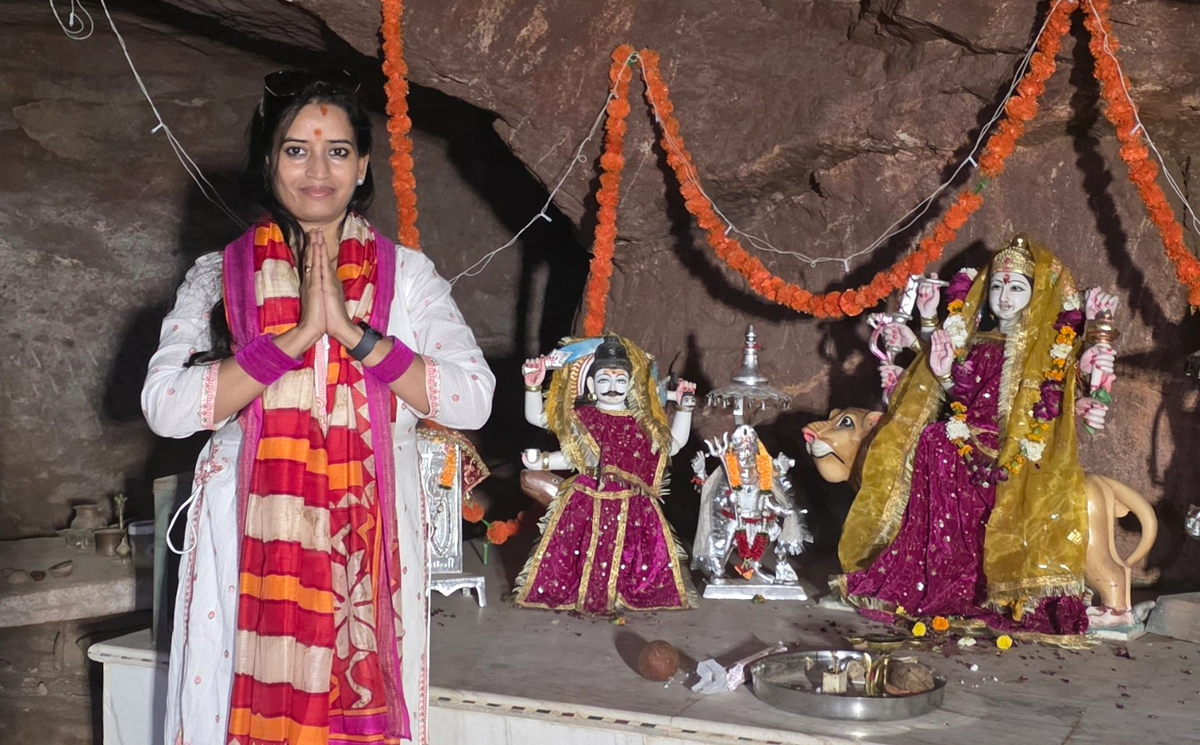
Dr. Sujata Upgupta is an environmental researcher and writer with a background in environmental science, remote sensing and GIS. Her interests span ecology, water resources, landscapes and the relationship between people, environment and cultural heritage. Based in Jodhpur, Rajasthan, she enjoys documenting the region's natural and cultural landscapes through field exploration, photography and popular science writing. Her work brings together scientific observation with an appreciation of local history, architecture and traditional knowledge.
Have a travel story to share? Write for us