Are We Planning the Surprise Out of Travel?
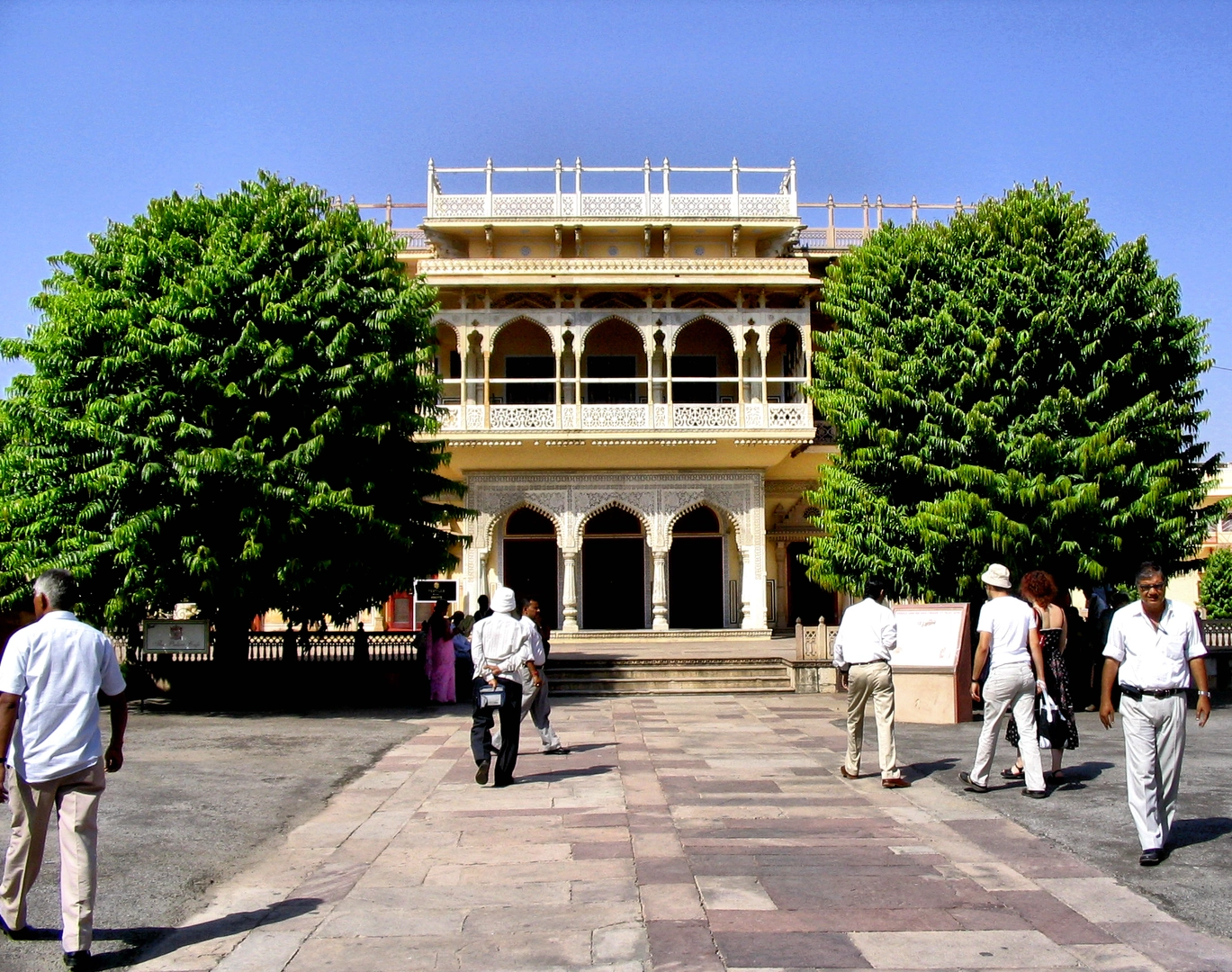
Photo: Francisco Anzola, CC BY 2.0, Wikimedia Commons
When travel planning with AI becomes so complete that nothing is left to discover, we may also plan the surprise out of the journey. A look at curiosity, memory, and a better way to use itineraries in India.
Imagine spending weeks preparing for a journey through India. You compare hotels, read hundreds of reviews, watch travel videos, and ask an AI assistant to organize your days. By the time you arrive in Jaipur, you already know which monuments to visit, where to eat, and even which streets promise the best photographs.
Then something happens that wasn't in your itinerary.
While walking between two attractions, you notice an entrance leading into a quiet courtyard. Something about the place catches your attention. You have no idea what you might find there.
Would you go inside, assuming it is appropriate and accessible to visitors? Or would you continue walking because your next scheduled activity is about to begin?
I find this an interesting question because it captures a contradiction in the way many of us travel today. We want to discover unfamiliar places, yet we increasingly try to eliminate the unfamiliar before leaving home.
Modern technology has made travel planning remarkably convenient. But I wonder whether, in our determination to avoid wasting time, we sometimes forget that discovering something unexpected can be a valuable use of that time.
The Comfort of Knowing What Comes Next
There are excellent reasons to plan a trip carefully, particularly when visiting a country with India's geographic scale and regional diversity.
A journey involving Delhi, Agra, and Jaipur requires decisions about transportation, accommodation, distances, and how much time to spend at each destination. Getting these details right matters. Nobody benefits from missing an important train connection because they decided that spontaneity was more appealing than checking the timetable.
Artificial intelligence can be genuinely helpful here. It can compare possible routes, organize information, suggest alternatives, and reduce the effort required to prepare a journey.
My concern begins somewhere else. What happens when the same technology that helps us arrange the essentials also starts deciding which experiences deserve our attention?
Consider visiting the Taj Mahal after seeing countless photographs, videos, and recommendations. You might arrive with a detailed mental picture of what the experience should look like.
Of course, knowing about a place doesn't prevent us from appreciating it. Preparation can deepen understanding, especially when we learn about its history and cultural significance.
Still, expectations influence what we look for. We may spend so much energy finding the familiar photograph or reaching the recommended viewpoint that we give less attention to details we hadn't anticipated.
There is a difference between arriving informed and arriving with an experience already scripted in your mind. The first can enrich a journey. The second may narrow the range of things we allow ourselves to notice.
What Curiosity Has to Do With Memory
Why might an unexpected discovery matter? One useful explanation comes from the psychology of curiosity.
In his influential 1994 paper, The Psychology of Curiosity: A Review and Reinterpretation, psychologist George Loewenstein explored the idea that curiosity can emerge when we recognize a gap between what we know and what we want to understand.
Think about walking through Kochi and hearing music from a cultural venue. You don't recognize the performance, and nothing about it appears in your travel plans. The uncertainty might prompt you to ask what is happening, learn more about the tradition, or consider attending an appropriate public event.
That small question is important. It creates a reason to pay attention.
A particularly interesting experiment was published in Neuron in 2014. Researchers Matthias Gruber, Bernard Gelman, and Charan Ranganath examined how curiosity influenced learning and memory. Their findings suggested that heightened curiosity could improve memory for information participants wanted to learn and, under certain conditions, for incidental information encountered during the task.
The original research was not about tourism. Participants completed experimental learning tasks rather than exploring unfamiliar cities. We should be careful about extending those findings beyond what was actually studied.
Nevertheless, the results offer a useful perspective: curiosity is not merely a pleasant feeling associated with discovery. Under some conditions, it is related to how effectively we learn and remember information. I explored a related idea in Why Unfamiliar Places Stay in Our Memory Longer.
How might travelers use that insight? During your next journey, try resisting the temptation to identify everything immediately through your phone.
If something attracts your attention, observe it for a moment. Ask yourself what you would like to understand. Then look for a reliable explanation, perhaps through a knowledgeable local guide or an authoritative source.
You may discover that the question you form yourself becomes as interesting as the answer you eventually find.
When Recommendations Become Decisions
An AI-generated itinerary can feel reassuring because it turns an overwhelming range of possibilities into a manageable sequence.
But recommendations involve selection. Some experiences are included; others never appear.
Imagine a traveler arriving in Bengaluru who usually prefers restaurants serving familiar international dishes. A personalized recommendation system may suggest establishments matching that preference.
Nothing is necessarily wrong with those suggestions. Perhaps the traveler has dietary restrictions, limited time, or simply wants a familiar meal after a long day.
Yet suppose that same traveler might enjoy discovering a regional dish through a recommendation from someone who knows the neighborhood. Would the algorithm have suggested it?
Possibly. Some recommendation systems deliberately introduce variety. Others emphasize similarity to previously expressed preferences. Much depends on their design and the information available.
The question is whether travelers realize how much their choices are being shaped before they make them.
Research on decision-making offers another relevant consideration.
In a widely discussed 2000 study, psychologists Sheena Iyengar and Mark Lepper found that larger assortments could, in some experimental situations, make choosing less attractive rather than more satisfying. Their paper, When Choice Is Demotivating, challenged the assumption that offering more options must always improve decisions.
This doesn't mean travelers are necessarily overwhelmed by large numbers of attractions, or that AI recommendations solve every decision problem. It does suggest that selecting among possibilities requires thought.
Here is an experiment worth trying: when asking AI to recommend activities in a new destination, request two different sets of suggestions.
Ask first for experiences matching your usual interests. Then ask for culturally relevant alternatives that differ from what you normally choose.
Examine both, check the practical details, and decide for yourself.
The technology still saves time, but you retain the opportunity to question its suggestions.
India Rewards Those Who Look Beyond the Itinerary
One of the difficulties with describing travel through India is that the country cannot reasonably be reduced to a single kind of experience.
An afternoon in Old Delhi, a journey through Kerala's backwaters, and a visit to an architectural site in Tamil Nadu involve different environments, histories, and cultural contexts.
Even within the same city, two travelers may come away with entirely different memories.
Consider a hypothetical visitor spending an afternoon in Varanasi. The itinerary includes several important sites, each selected for historical or cultural interest.
During the journey, the visitor speaks with a knowledgeable local guide who explains a detail about the neighborhood that had never appeared in the original research.
That conversation might change how the visitor understands everything seen afterward.
Was it more valuable than visiting the planned attractions? There is no objective way to answer that question. The experiences serve different purposes.
What interests me is that one was selected in advance, while the other emerged through human interaction.
Research by psychologists Timothy Wilson and Daniel Gilbert provides an additional perspective on how people respond to experiences they are still trying to understand.
In their 2008 article, Explaining Away: A Model of Affective Adaptation, they discussed how events that are personally relevant but not yet fully understood can attract attention, and how emotional responses may change as people make sense of those events.
Their work does not establish that unplanned holidays are more memorable. That would require different evidence. It does, however, help explain why the process of interpreting an unfamiliar experience deserves attention.
Sometimes we remember a place not simply because of what we saw, but because of the questions it raised and the meaning we gradually attached to it.
We should also avoid romanticizing the unexpected. Unfamiliar situations are not automatically rewarding. Travelers need dependable information, respect for cultural practices, and appropriate safety precautions.
Leaving room for discovery should never mean ignoring those responsibilities.
A Different Way to Use AI When Traveling
I don't believe travelers need to choose between technology and spontaneity. That opposition is unnecessarily restrictive.
What matters is how we divide responsibilities.
Let technology handle the aspects of travel where reliable information and preparation are particularly valuable: transport arrangements, accommodation, route comparisons, accessibility requirements, and the identification of details that need confirmation.
For official requirements, schedules, and safety-critical information, consult authoritative sources rather than relying exclusively on AI-generated answers.
Then consider leaving some decisions deliberately open.
If you're visiting Jaipur, perhaps you don't need to schedule every hour between major attractions. An unscheduled period could allow you to explore a suitable area, visit a local business, or follow a recommendation from a qualified guide.
You might also reconsider the questions you ask your AI assistant.
Instead of asking it to create the perfect three-day itinerary, try asking which experiences would introduce you to aspects of the destination you know little about.
Ask what different neighborhoods reveal about local history, which cultural activities require advance arrangements, or which questions might be worth discussing with a local guide.
That changes the role of the tool. Rather than providing a definitive sequence of instructions, it helps prepare you to make more informed choices.
Another small practice is to record one discovery at the end of each day that wasn't included in your original plan.
It might be a conversation, an architectural detail, an unfamiliar flavor, or something you learned about local customs.
This is a personal reflection exercise, not a scientifically validated method for improving travel memory. Its purpose is simply to encourage closer attention to experiences that might otherwise be overlooked.
What Will You Remember When You Return?
Before a journey, we usually think about destinations. Afterward, we often tell stories about particular moments.
Some involve the places we were determined to visit. Others involve something far less predictable: a conversation, an unexpected observation, or a change in our understanding of a place.
Both kinds of experiences belong in a meaningful journey.
The challenge is that our planning tools are becoming increasingly capable of anticipating what we might want. That is useful, but our existing preferences cannot possibly describe everything we might enjoy learning.
India offers countless opportunities to encounter different histories, languages, landscapes, traditions, and ways of life. Making the most of those opportunities requires preparation, certainly, but also the willingness to pay attention when reality takes an interesting turn.
Perhaps we should stop asking technology to remove every uncertainty from our journeys. Instead, we could ask it to help us distinguish between uncertainty that deserves preparation and uncertainty that invites exploration.
Plan the journey carefully enough to travel with confidence. Leave it open enough to discover something you couldn't have planned.
And when you return home, think about the moments you find yourself describing to other people. How many were already on your itinerary?
About the Author

Prof. Alexandre Rodrigues is a professor and consultant working on neuroscience and artificial intelligence applied to business. You can find more of his work at DNA Corporativo and on Instagram at @neuroexpert.
Have a travel story to share? Write for us