Guide
Rupin Pass Trek: Route, Cost and Best Time
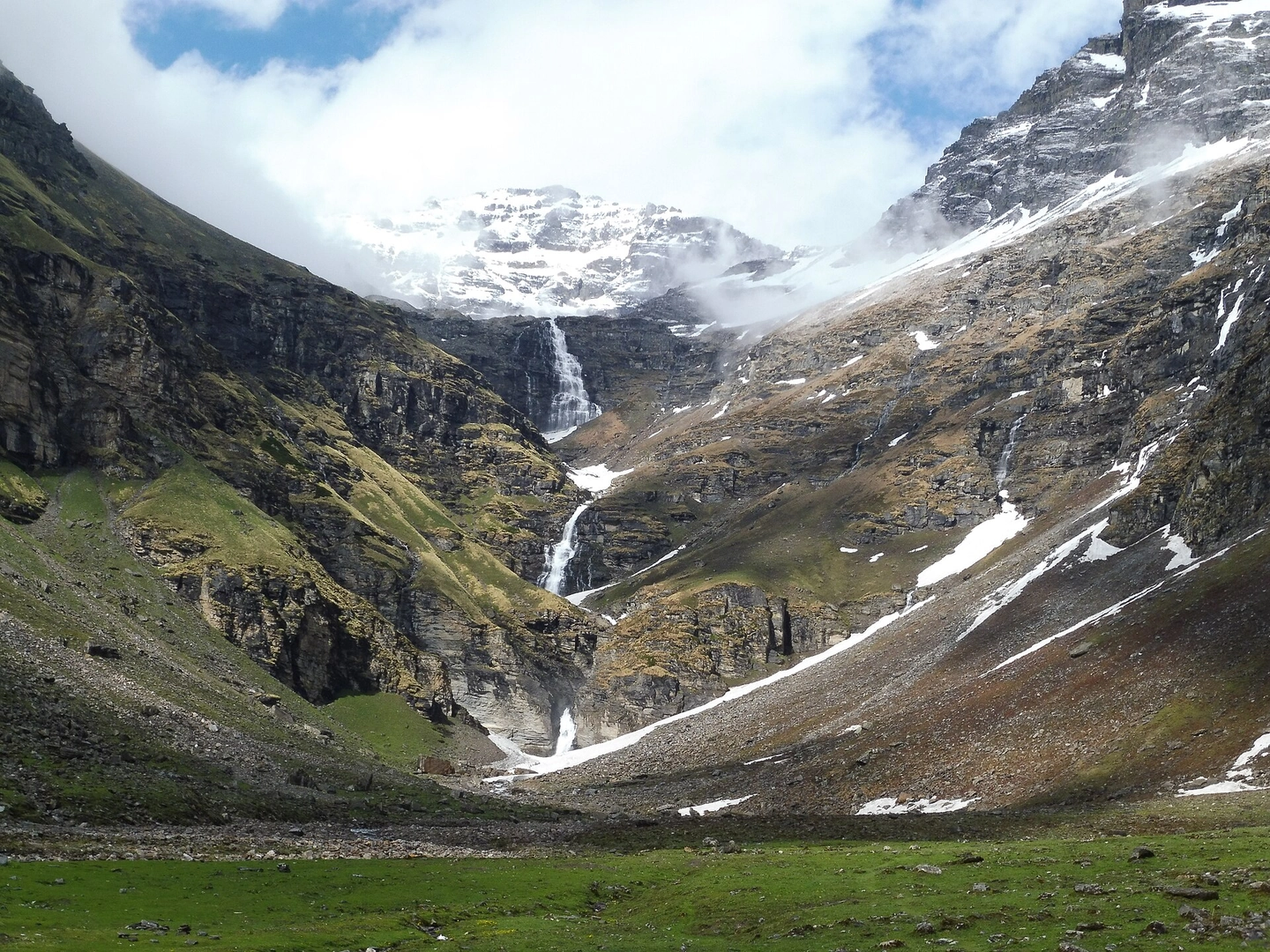
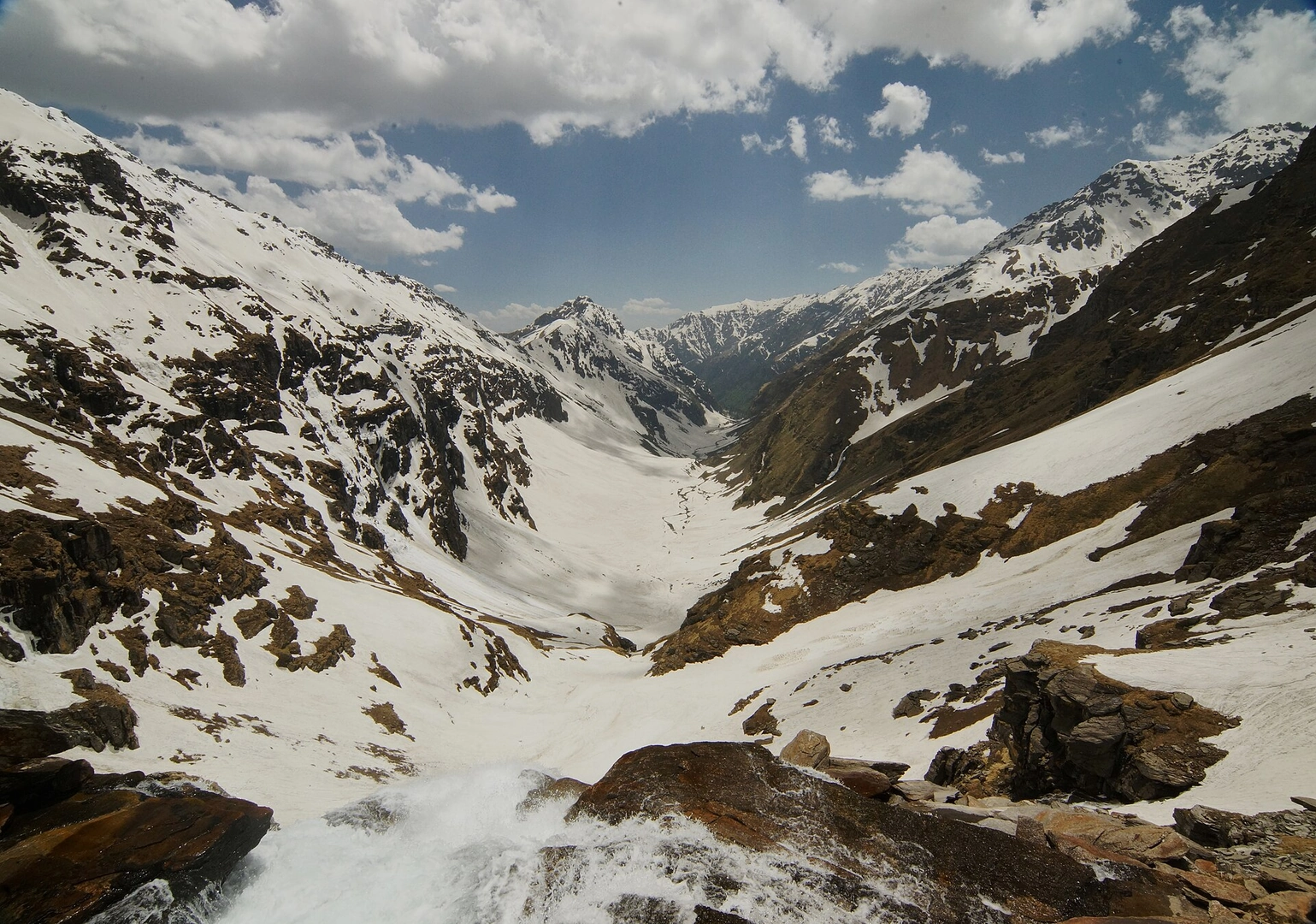
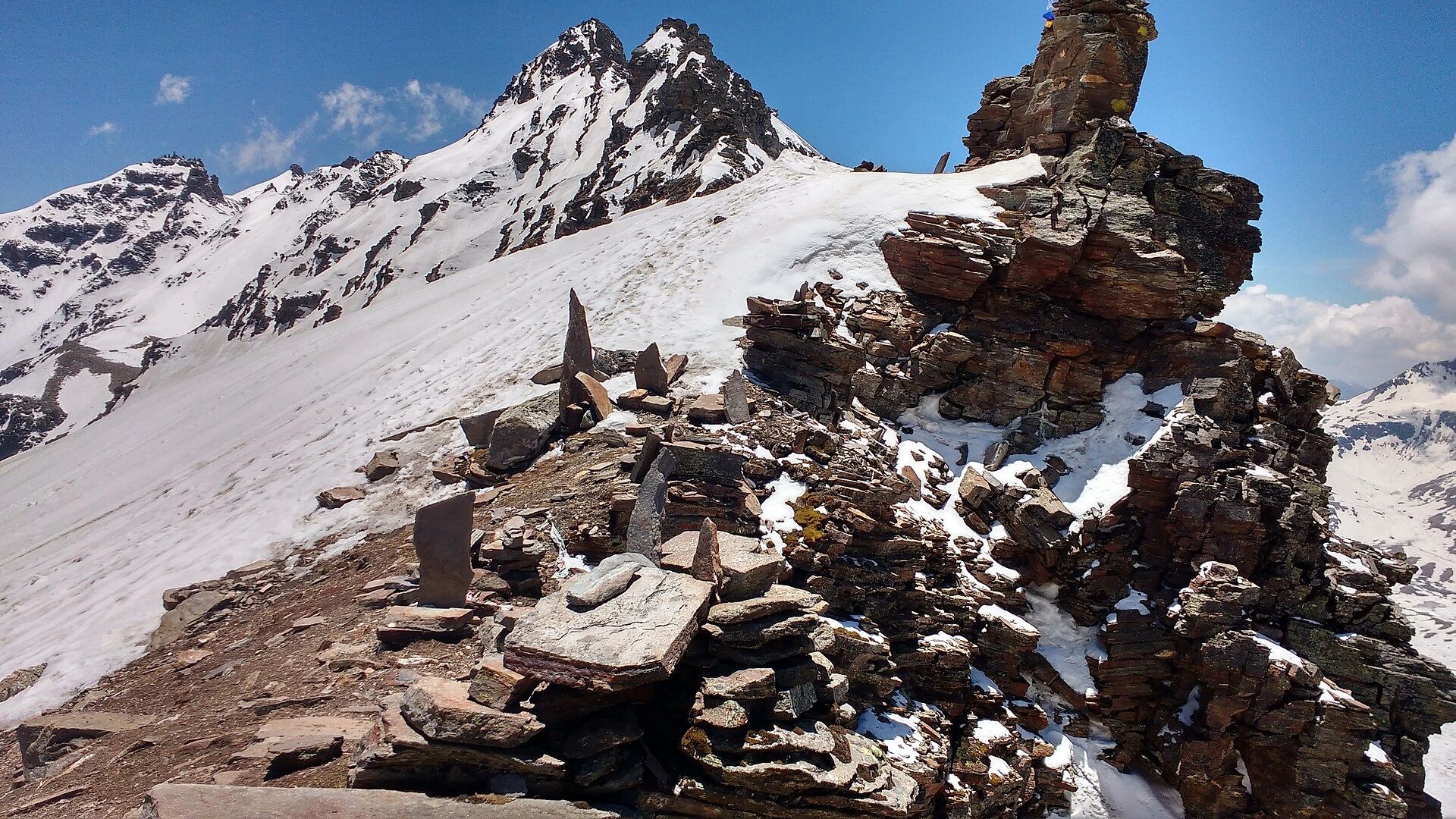
Rupin Pass is a crossover trek that starts in the Rupin valley of Uttarakhand, climbs past a long chain of waterfalls and crosses a snow pass at about 4,679 m into Himachal Pradesh, ending at Sangla in the Baspa valley. It is known for its changing scenery, with hanging villages and the big Rupin waterfall. It is graded moderate to difficult.
Season status (19 November 2026): the autumn batches have finished and the high route is under winter snow. Operators run it from May to June and from mid-September to October, so the next realistic window is May 2027. Booking details can change, so confirm dates and permits with an operator in spring.
Rupin Pass quick facts
| Start | Jiskun, Rupin valley, Uttarakhand (some operators start at Dhaula and Sewa) |
| End | Sangla, Himachal Pradesh |
| Pass | Rupin Pass, about 4,679 m (15,250 ft on one operator page) |
| Distance | About 40.5 km on one operator's route, up to 52 km on others |
| Duration | 7 to 8 days from Shimla to Shimla |
| Level | Moderate to difficult |
| Best months | May to June, mid-September to October |
Rupin Pass itinerary
- Shimla to Jiskun. About 198 km and 10 hours by road, with a homestay night.
- Jiskun to Jakha, 4 km and about 4 hours. Jakha is the last place to buy basic supplies.
- Jakha to Saruwas Thatch, 7 km and 5 to 6 hours, about 800 m of climbing.
- Saruwas Thatch to Dhanderas Thatch, 4 km, with stream crossings and the first close view of the Rupin waterfall.
Operators that start from Dhaula add a day and a walk through Sewa and Jiskun.
Best time
May and June have snow on the upper section and snow bridges. September and October have clearer skies and colder nights. Avoid July and August and winter.
Fitness and requirements
One operator recommends at least one earlier high-altitude trek above 10,000 ft, though a very fit beginner may attempt it. As a fitness test it asks for 5 km in 30 to 35 minutes. Minimum age is 14. Insurance covering high altitude and evacuation is mandatory, and you need a doctor's medical certificate and original photo ID. Trekkers over 60 should be fit, and an ECG or TMT report is recommended.
Rupin Pass trek cost
One operator charges Rs 15,750 plus 5 percent GST (Rs 16,537.50) for the seven-day trek from Jiskun to Sangla. A shared cab from Shimla to Jiskun and from Sangla back to Shimla costs about Rs 3,500 for both ways, paid to the driver, and optional backpack offloading is about Rs 3,990. Another operator sells an eight-day Shimla-to-Shimla package with transport for about Rs 17,500 before GST. The fee normally covers homestays and tents, meals, permits and forest camping fees.
Getting there
The cab leaves Shimla at about 6:30 AM on Day 1, so most people sleep in Shimla the night before. The return cab reaches Shimla about 2 AM on Day 7. Rohru, on the drive in, is the last dependable ATM, and cards are not accepted on the trail. Mobile signal is weak at Jiskun and absent beyond it.
What to pack
- Trekking shoes, a warm down jacket and trekking poles. Poles help on the 1,300 m descent
- Thermals, fleece layers and a rain layer
- Microspikes and gaiters if your operator does not lend them
- Headlamp, sunglasses, cash
FAQ
How hard is Rupin Pass?
It is a long, high crossover with a 9 to 10 hour pass day. It is harder than Hampta Pass.
Where does the trek end?
At Sangla in Himachal, which is why you use two different roads.
Last checked: 19 November 2026.
Sources
- Rupin Pass Trek Cost: Rs 15,750 + GST, Cab and Add-ons, Operator blog, Trekkaro, updated 19 November 2026, route, distances, fees, cab and requirements
- Rupin Pass Trek (Shimla to Shimla), Operator, Madtrek, 2026, eight-day itinerary and package price
- Rupin Pass Trek Itinerary, Travel guide, India Holiday Destinations, 20 July 2026, 52 km distance figure