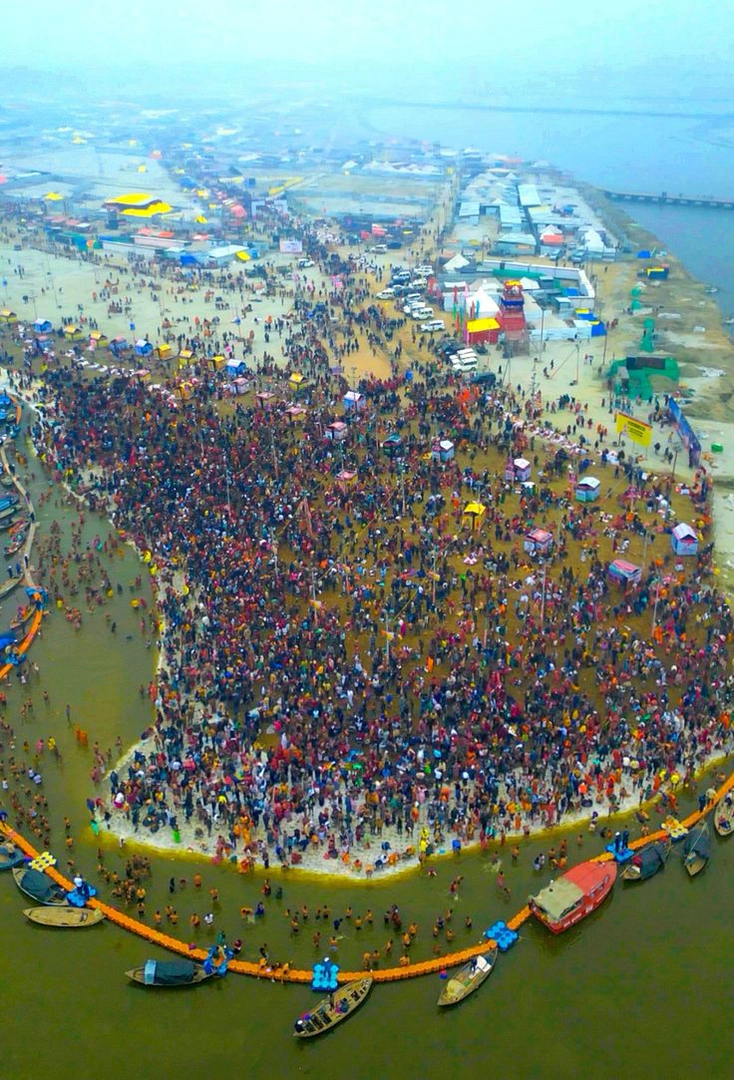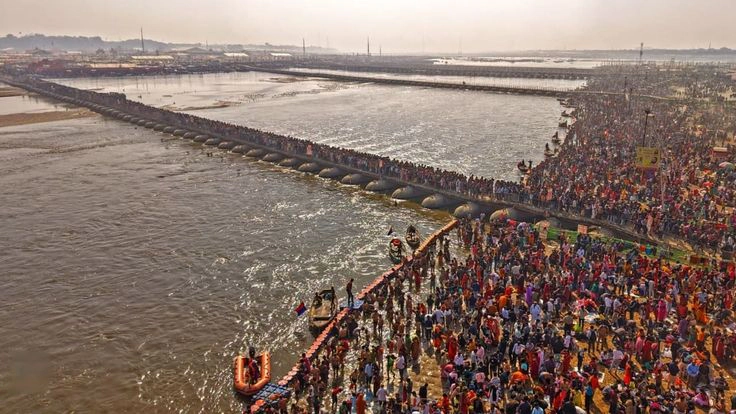
Every winter, Prayagraj becomes a movable city of faith: millions move to the sandbanks for Magh Mela, not only to bathe but to listen, give, study, and begin again.
Major bathing days (2026)
The table below follows the six main snān days widely published for Magh Mela 2026 across tourism and festival round-ups (Paush Purnima through Mahashivratri). Lunar and panchang details can shift how a day is observed; snān order, ghāt access, and vehicle bands are set by Mela police orders, so confirm the final bulletin before you travel.
| Paush Purnima | 3 Jan (Sat): start of the listed Mela window; Kalpvas often begins. |
|---|---|
| Makar Sankranti | 14–15 Jan (Wed–Thu): first major peak; civil calendars usually mark Sankranti on 14 Jan 2026. |
| Mauni Amavasya | 18 Jan (Sun): often the single busiest day; "royal" bathing processions when announced by akhāṛās follow official routes only. |
| Basant Panchami | 23 Jan (Fri): spring / Saraswati observances; another high-attendance snān. |
| Maghi Purnima | 1 Feb (Sun): end of many Kalpvas commitments. |
| Mahashivratri | 15 Feb (Sun): last major bath; aligns with the end of Yatrigo's listed 2026 window. |
Sources aggregating these civil dates include round-ups such as Experience My India, Prayag Tourism-style guides, and Mahakumbh.in-style festival calendars (all non-government). They agree on the overall span of 3 Jan–15 Feb 2026 and the sequence of named baths; always defer to district / Mela notices for exact snān timing and crowd control.
When is Magh Mela in 2026?
On Yatrigo we currently list the main Magh Mela window as 3 January 2026 through 15 February 2026, matching our event database for the annual gathering at Prayagraj. Within that period, the largest crowds usually cluster around Makar Sankranti (solar transition into Capricorn), widely observed on 14 January 2026 across Indian civil calendars, plus other auspicious days such as Mauni Amavasya and Basant Panchami (exact tithis shift with the lunar calendar each year).
What is the Triveni Sangam?
Pilgrims wade into the meeting point of the brown, faster Ganga and the greener Yamuna. The third river, Saraswati, is believed to flow underground. Bathing here during Magh is understood as spiritually potent; academic treatments of these river festivals discuss purification, merit, and community (see e.g. Diana L. Eck's work on India's sacred geography, cited in the same Wikipedia overview).
Registration, police orders, and camps
Magh is smaller than a full Kumbh but still operates as a managed temporary city: sectors of tents (kalpvas), roads on sand, medical posts, lost-and-found, and strict crowd flows on snān days. Rules for vehicles, drones, and camping change yearly. Follow notices from the District Magistrate, Prayagraj and Mela police; your camp organiser should share sector passes and safety briefings.
- Warm layers for cold predawn baths; quick-dry towels; dry bag for valuables
- Water bottle, ORS, high-energy snacks; know the nearest medical tent
- Physical cash in small denominations; mobile networks can choke on peak days
- Footwear you can remove quickly; expect long queues at changing areas
- Respect photography bans near sensitive areas; follow police instructions immediately
Rail, air, and road
Kalpvas, akhāṛās, and daily rhythm
Many pilgrims take kalpvas, living simply in tents for the whole month. Days begin before dawn with cold baths, followed by havan, kīrtan, and langar. Even if you visit for only a few days, adopt the same discipline: sleep early, eat lightly, and avoid unnecessary river crossings when currents are strong.
"Magha melās are great cultural fairs that tie people together with a shared thread of religious devotion, with an attendant bustle of commerce, trade and secular entertainment."Diana L. Eck on Indian river festivals, summarised in Wikipedia · Magh Mela
Heading to Prayagraj?
Save this page, share it with your group, and double-check bath-day timings with official Mela bulletins before you leave home.
Explore all events →