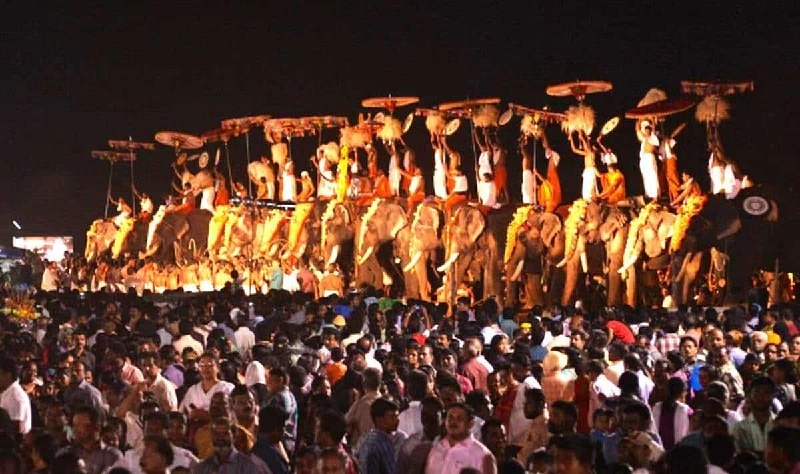
Kollam Pooram is a city-scale temple festival, not a ticketed show. You experience it through processions entering Asramam, percussion waves, elephant formations, umbrella exchange moments, and a long evening build-up to fireworks.
What to know before arriving at Asramam
- Kollam Pooram official portal (notices and updates)
- Kerala Police (traffic diversions and crowd control advisories)
- Kollam district portal (district-level public notices)
- Use ground announcements and barricade instructions as the final authority on event day.
Why Kollam Pooram is distinct in South Kerala
Kollam Pooram is connected to the annual festival cycle of Asramam Sree Krishna Swamy Temple, with the most visible public phase unfolding at Asramam Maidan in the city core.
Unlike many temple festivals experienced mainly inside one temple compound, this Pooram has a strong civic feel: processions and spectators fill the wider city area, and logistics become as important as rituals for visitors.
Planning a longer Kerala itinerary? Pair this with our Thrissur Pooram guide to compare the format and crowd rhythm across regions.
Local vocabulary, simple meaning
| Cheru Poorams | Processions from participating temples that move toward the central Pooram venue. |
|---|---|
| Kudamattam (കുടമാറ്റം) | Choreographed umbrella exchange atop caparisoned elephants, set to percussion rhythms. |
| Melam (മേളം) | Traditional Kerala percussion ensemble featuring chenda-led rhythm blocks, often performed in escalating cycles. |
| Aana Neerattu | Elephant bathing ritual conducted before key public festival moments. |
| Aana Oottu | Elephant feeding ceremony, usually held as part of Pooram-day ceremonial sequence. |
| Vedikettu (വെടിക്കെട്ട്) | Night fireworks finale, subject to safety compliance and official permissions. |
Kollam Pooram 2026 sequence (indicative)
The outline below is a planning snapshot based on published references. Time slots can shift according to weather, permissions, elephant welfare protocols, and administration orders.
| Date / Window | Event | What to expect |
|---|---|---|
| Early Apr | Festival days begin | Asramam Sree Krishna Swamy Temple festival days run before the Pooram finale; local notices publish day-wise programs. |
| 16 Apr · Morning | Aana Neerattu and Aana Oottu | Elephant bathing and feeding ceremonies are usually held before the grand Pooram sequence at Asramam. |
| 16 Apr · Afternoon to evening | Cheru Poorams and Kudamattam | Participating temple processions converge toward Asramam Maidan, followed by melam and umbrella exchange rituals. |
| 16 Apr · Night | Vedikettu (fireworks) | Festival finale with fireworks, subject to safety permissions and district administration orders. |
Final clock timings are published closer to the festival by organisers and local authorities. Treat this as a practical trip planner, not a legal or operational circular.
- Keep safe distance from elephant corridors, never cross ropes or barricades for photos.
- If police move the crowd, follow immediately; routes can change quickly during processions.
- Avoid loud flash near elephants and percussion performers.
- Carry water, ORS, and light cotton wear; April heat in coastal Kerala can be intense.
- Families with children should choose edge viewing points, not dense central pockets.
Travel to Kollam for Pooram day
Planning more Kerala festivals?
Compare dates, routes, and cultural context for temple festivals across the state.
Browse events →