My Day at Benrath: Between Grandeur and the Great Outdoors
A drive from Dortmund to Schloss Benrath in Düsseldorf, where felt slippers turn parquet floors into a slide, swans drift along the water and a royal mystery hangs over a palace its owners never visited.
As a kid I wondered why my grandmom talked a lot about Prince Philip, showed me newspaper and magazine clippings of William and Harry and stirred my imaginations about what life in a palace would look or feel like. And my fantasies soared too high since I was into fairytales that had a prince in it.
So, when Navina came up with the idea of a drive to Schloss Benrath Palace in Düsseldorf, I got all pumped up. Though the drive from Dortmund to Düsseldorf is primarily functional rather than highly scenic. We didn’t care to stop even though Christian suggested a few good places because that would mean a short break from my bestie’s playlist.
Arriving at Benrath
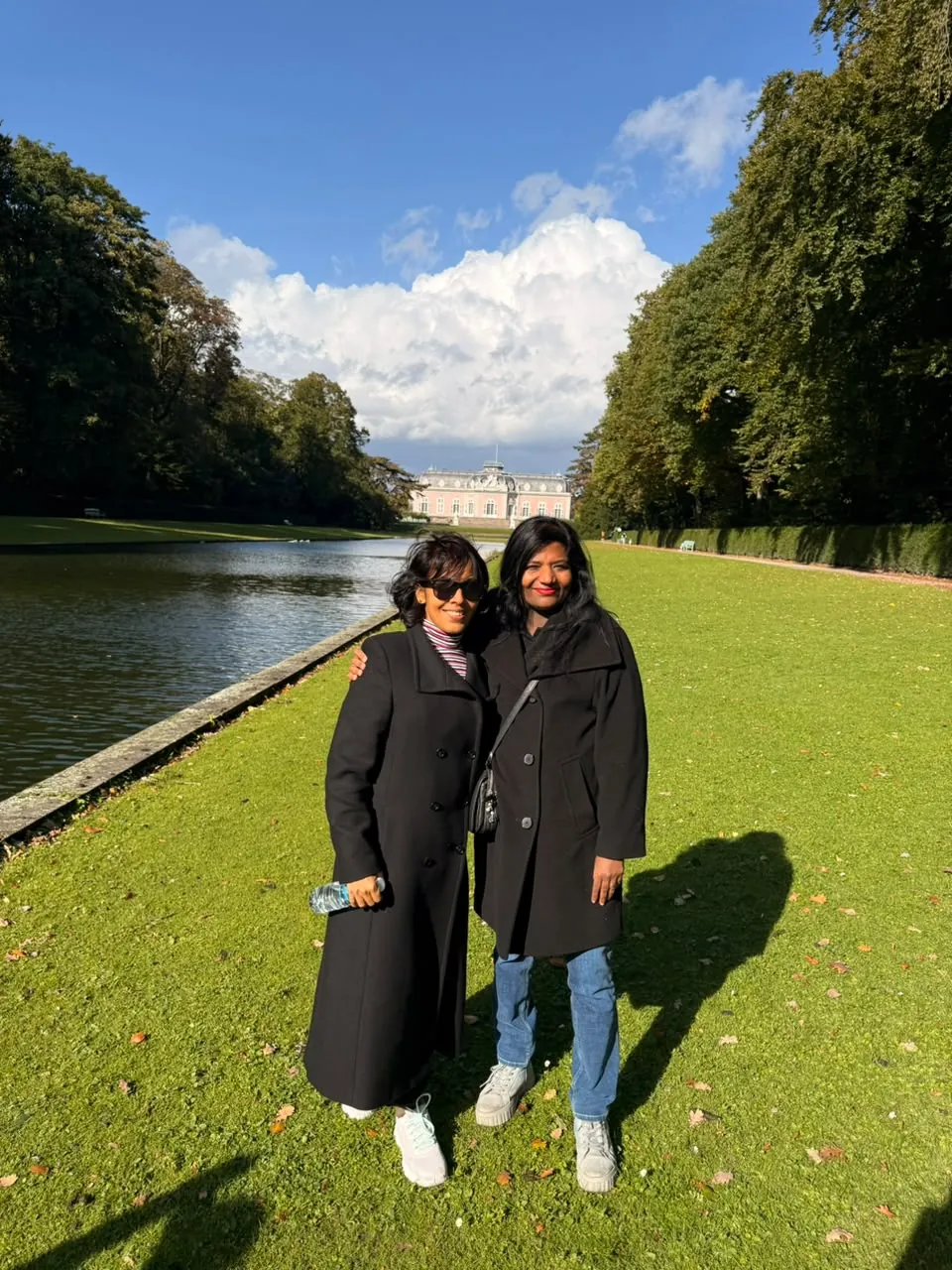
At Düsseldorf, we walked a bit to reach the palace. On the way I updated my leisure contacts of my whereabouts. The entrance to Benrath gave me a feeling of being in the woods amidst trees as old as time.
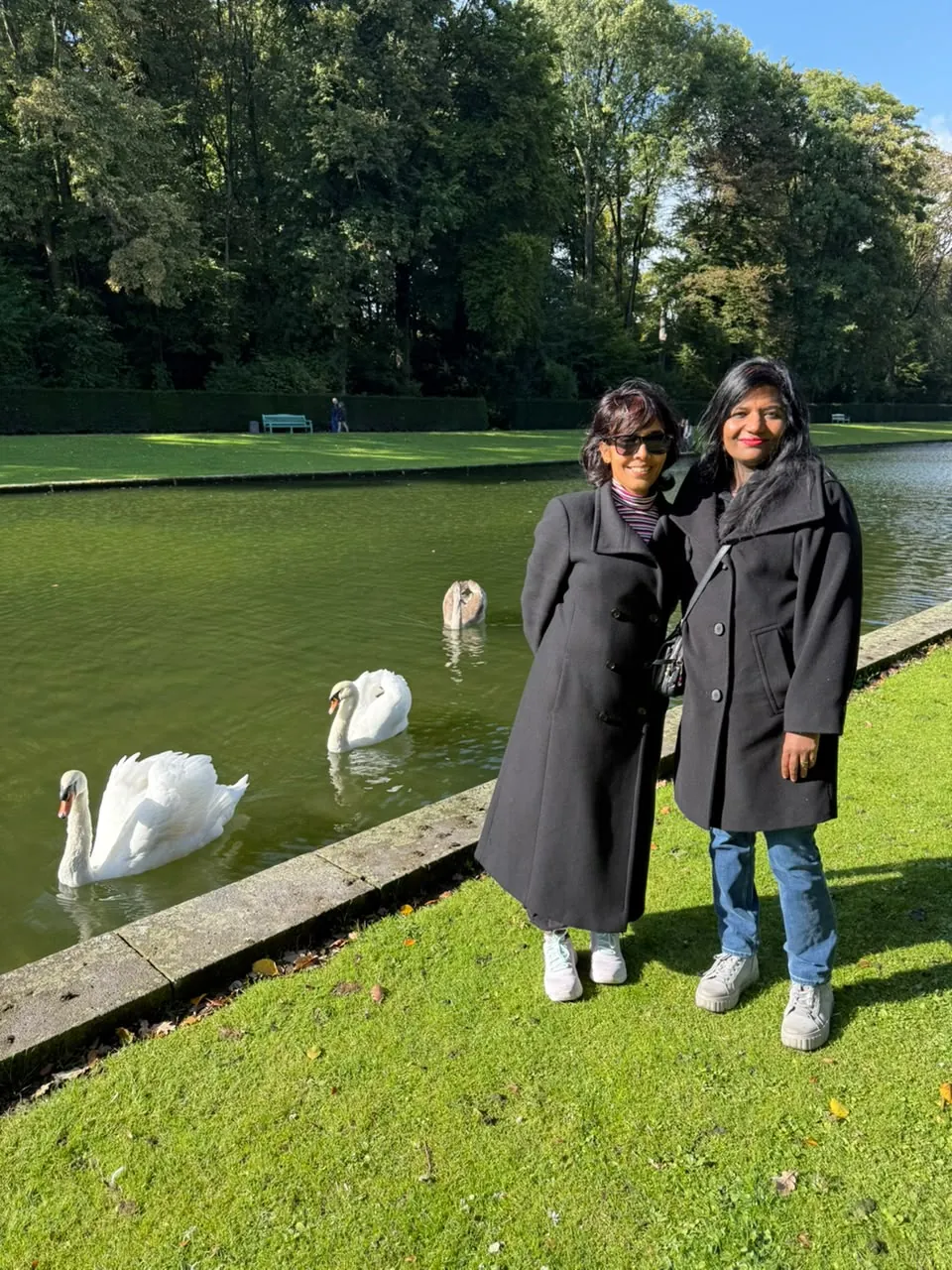
In a few seconds, I was stunned by the most picturesque view of a flowing river graced by mute swans and ducks. Few birds that waddled along the landscaped banks became the underlying subject of photography and small talk on the swan song.
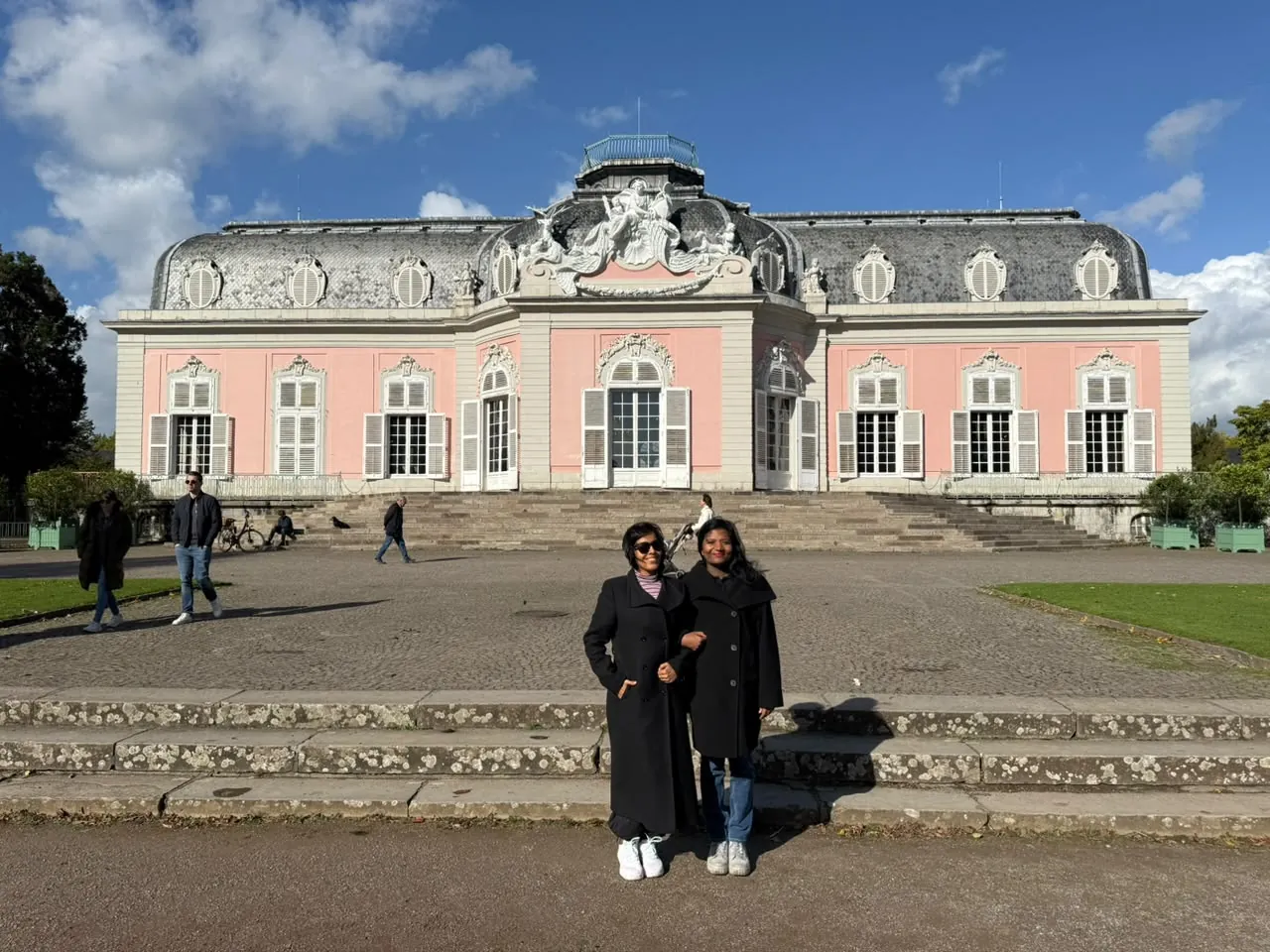
The palace was nothing short of flamboyance, a pink one. No wonder, the collective noun for flamingoes is flamboyance.
Someone behind me was discussing the place with such authority, I’m fairly certain even its mastermind would have taken notes. From that encyclopedia in human shape, people in the vicinity learnt words like ‘Baroque’, ‘Rococo-style’, ‘Neoclassical’, ‘Stucco work’ and many more. Later it became evident that he was describing the architecture. We slowed down our pace to let this ‘know-it-all’ pass by.
The premises seemed more like a favourite excursion spot and wedding venue than palace grounds. It looked like a single-storey lodge.
Sliding Through the Palace in Felt Slippers
In a pair of oversized felt slippers over our shoes, we were ready to explore the interior. True to the word, those slippers were slippery on the polished wooden floors. My feet began to glide through the grand rooms. Many more happy feet followed suit. Travelling turns magic when perfect strangers gather the courage to hold hands and join in the fun.
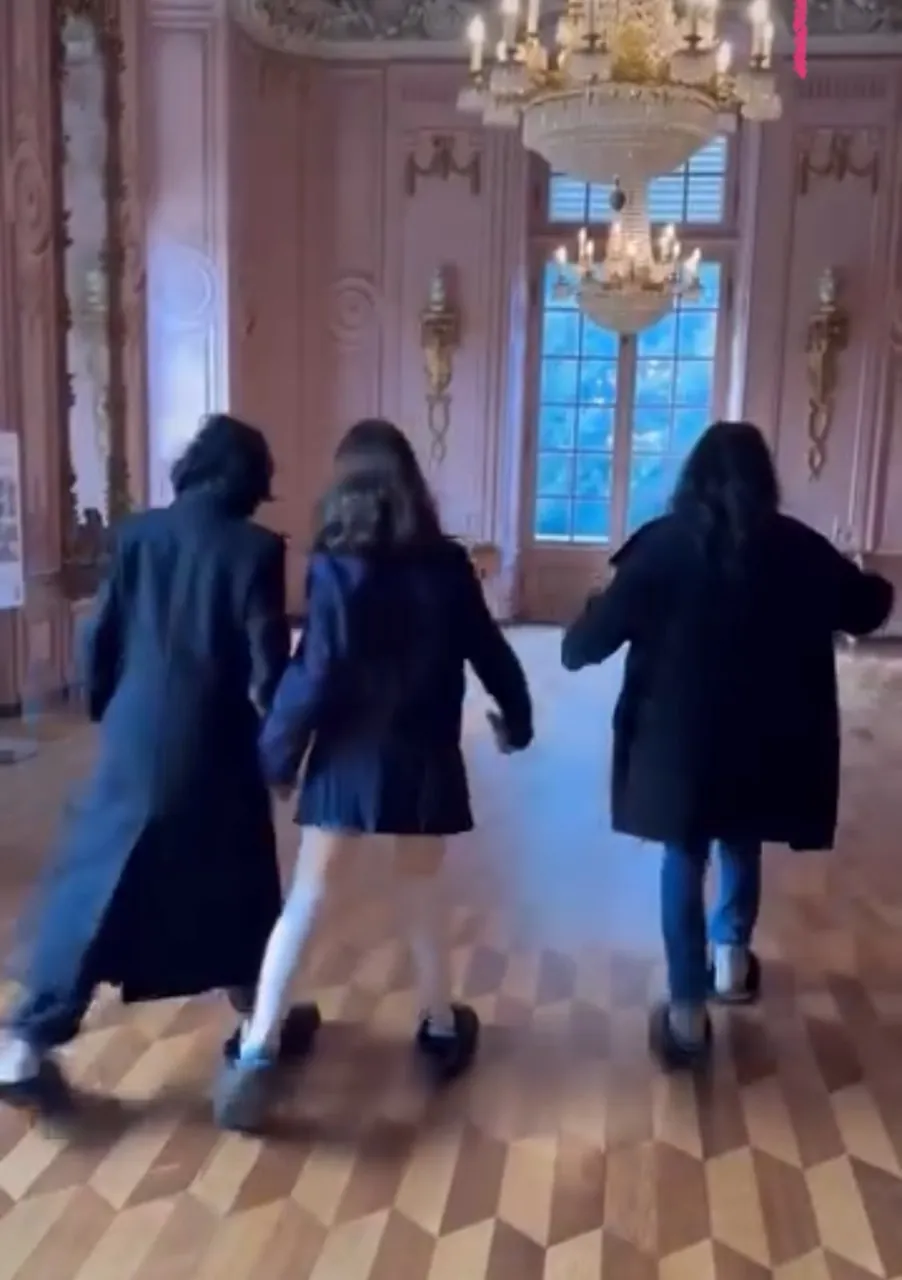
I heard a familiar voice that said, ‘Parquet flooring’. His idea of a palace tour is to educate fellow visitors. A history buff. More than observing the details of the main building being symmetrically split because Elector Palatine and his wife Countess Palatine Elisabeth would anyways have preferred to live in separate living quarters, visitors were curious about what caused the split between the two humans.
Nicolas de Pigage was a man with high hopes. So, he built the secret corridor/tunnel that connected the suites on either side. And that royal emissary who should’ve carried messages to and fro through the secret passage existed only in the protocol book. When gossip turns juicy it is difficult to tell historical facts from fiction and imagination.
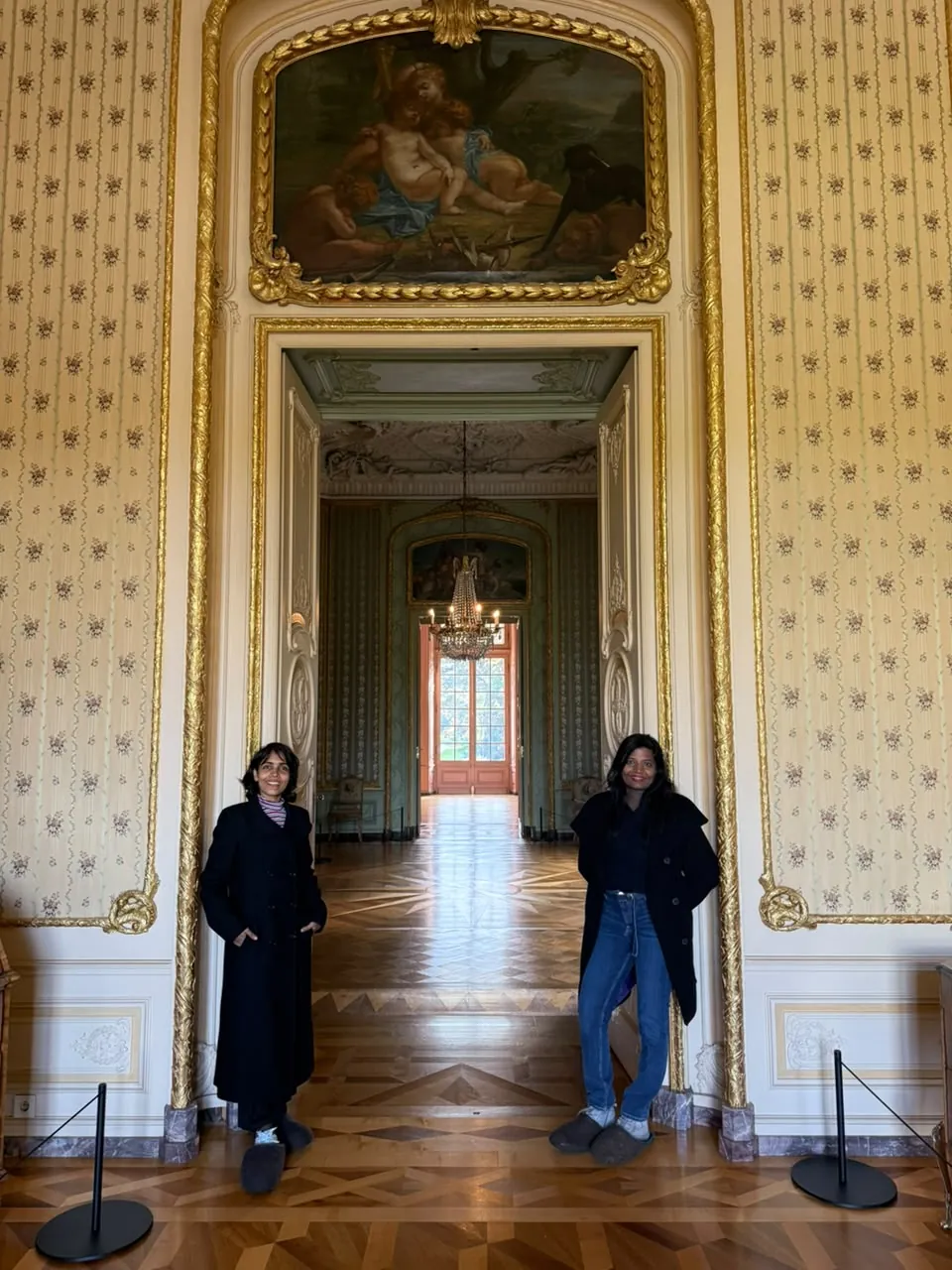
I wondered “Did the couple have a child”. Curiosity got the better of me. My doubts on Parquet flooring were clarified with a mini lecture on herringbone, chevron and basket weave patterns.
Moving from one private chamber to another, the mirrors, cherub motifs and stuccos invited me for photos. The only uncomfortable question that peeped from all parts of my brain was “what was the motive behind such a residence if Charles Theodor, who commissioned this massive beauty never visited it?”
Hunting Trophies and the Domed Hall
Nobody explained as to who hunted down those mounted wildlife specimens and taxidermies that supposedly decorated the chambers. I had never enjoyed the thought of hunting for mere pleasure. Hunting as a means of subsistence can be understood as a cultivated appropriation of nature, since it satisfies essential human needs while remaining part of the ecological cycle.
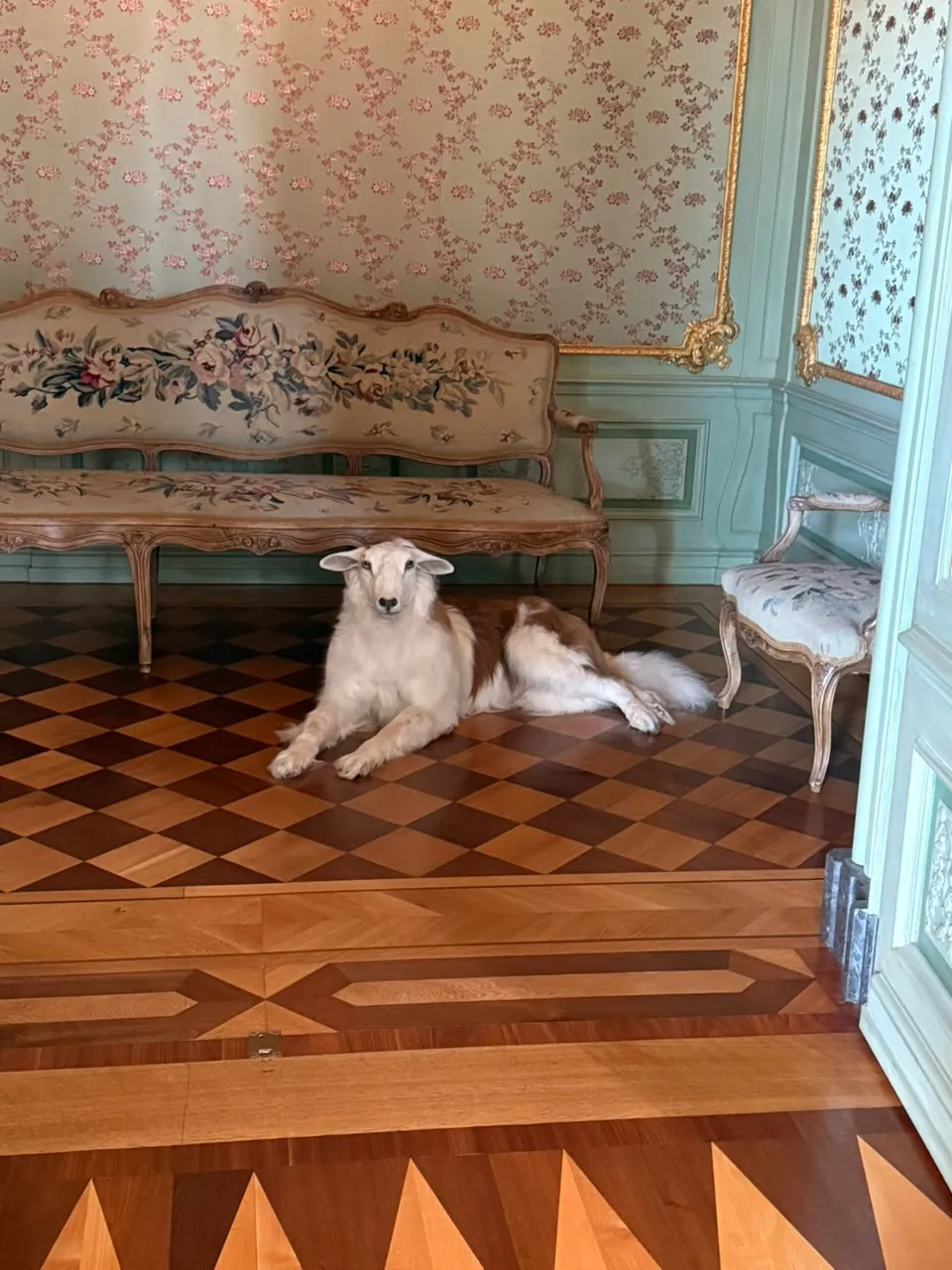
Here, nature is appropriated not for survival but for recreation, prestige, or the assertion of power, making it a form of recreational exploitation rather than cultivated appropriation. The painting of Diana, the goddess of hunting on the central Domed Hall ceiling would stir the thoughts of any right-thinking individual. Mythologies never fascinate the right mind. If a goddess wouldn’t eat what she hunts, then what is the very purpose behind hunting!
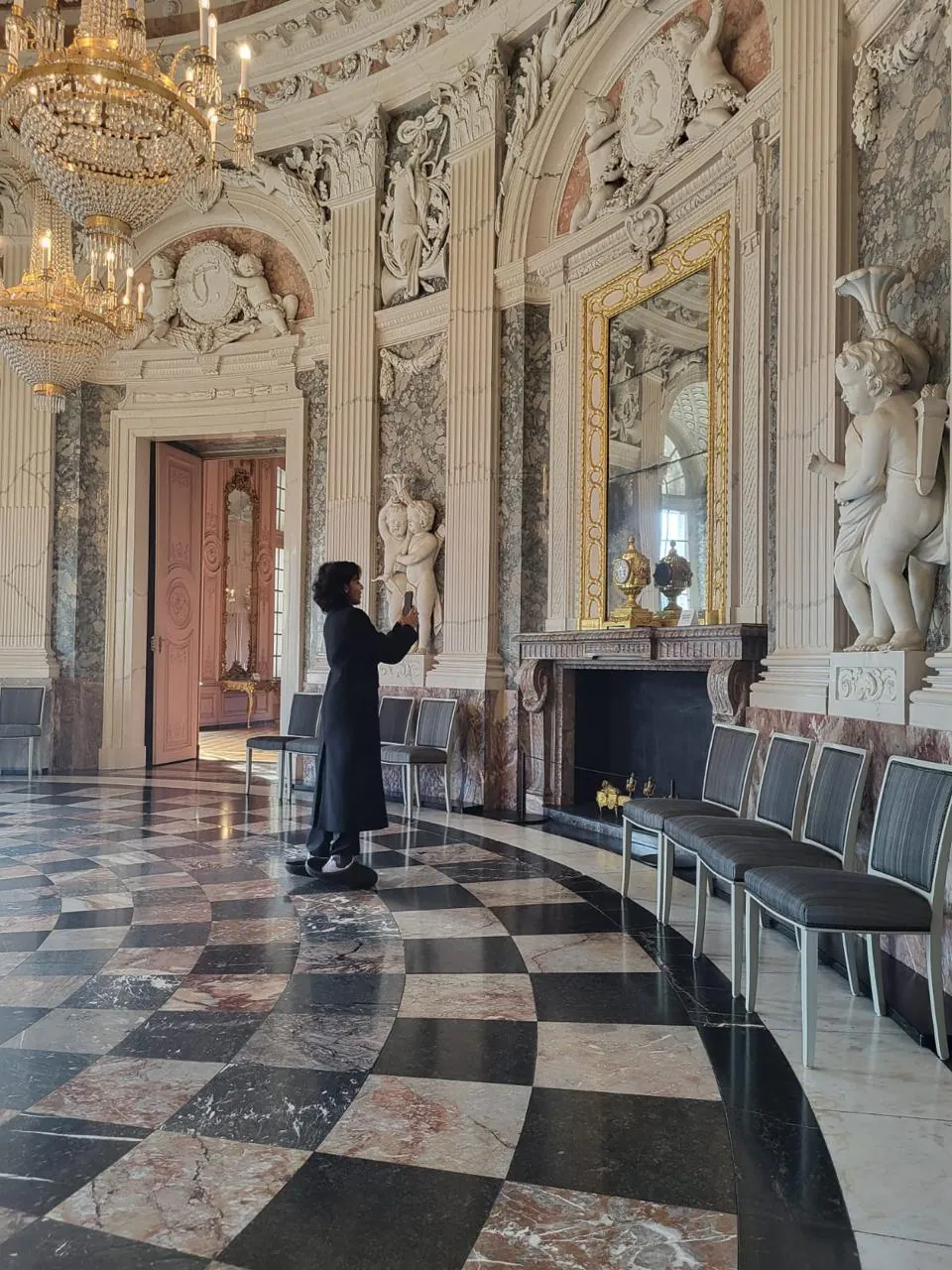
The Ballroom and a Royal Mystery
I had often imagined myself ballroom dancing with my prince. Hence, the ballroom was more than just a ballroom for me. Even as I visualized myself in my court gown, I wondered how exteriors can be a disguise, just as in the saying, “Never judge a book by its cover.”
The modest lodge I walked into turned out to be a massive, four-storey, multifunctional complex with eighty-odd hidden rooms. The two side annex buildings that house the Museum for European Garden Art and the Museum of Natural History were originally built for visitors and other attendants.
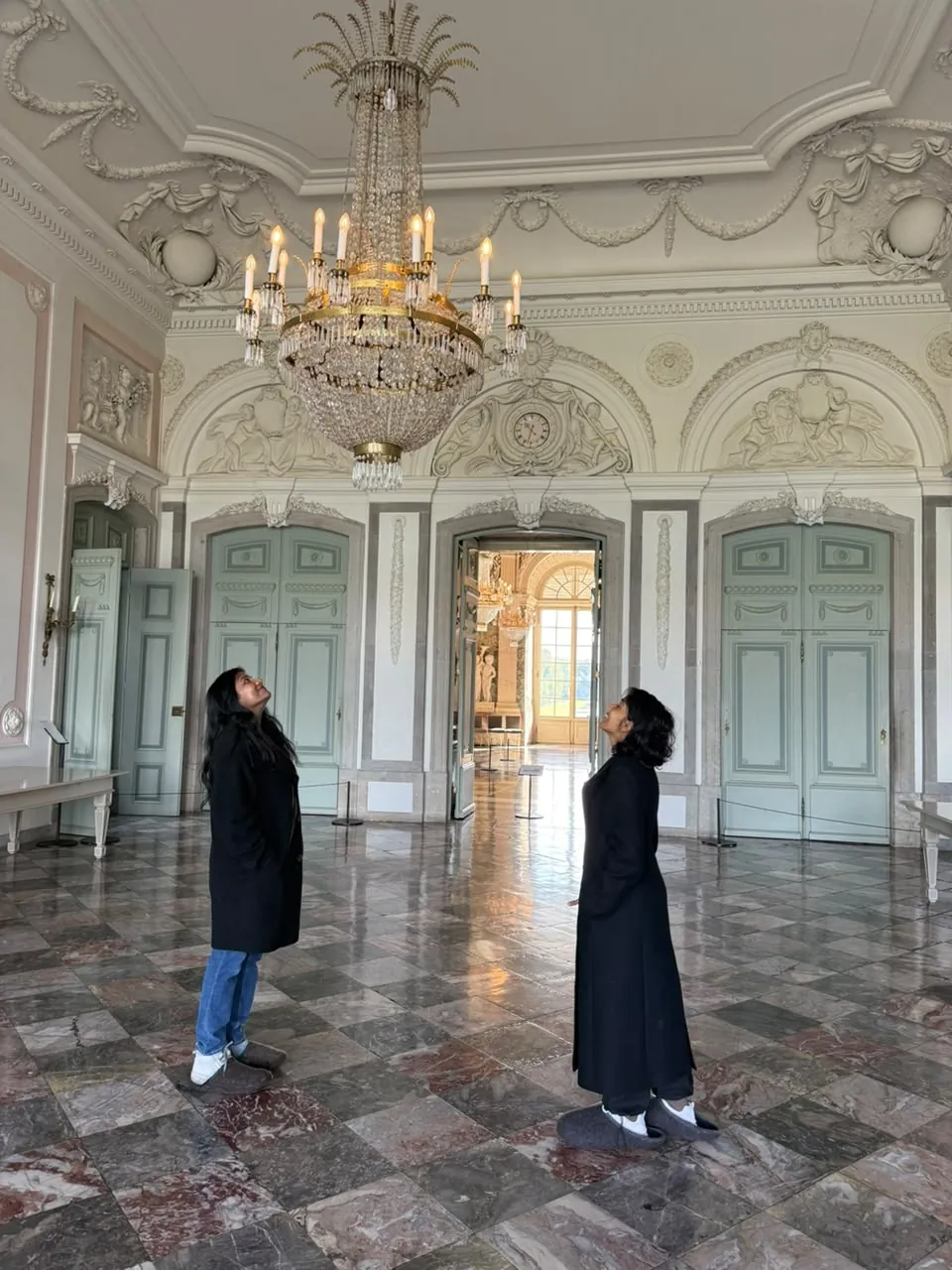
The palace, then, was conceived to be lived in or at least frequented. Yet Charles Theodor and Elisabeth never visited their grand creation once in their lifetime. Was it a matter of circumstance, a change of plans, or simply a royal whim? The reasons remain part of the mystery, leaving every visitor to imagine what might have kept its creators away from the very splendour they had commissioned.
At the very least, the royals could have come here on a botanical, ornithological, or coleopterological excursion.
Lost in the Bosquet
We wandered through the bosquet, the afforested grounds laid out with a regular network of paths radiating in a star-shaped pattern. With glazed eyes after taking in the grandeur of the avenues, I began to think aloud.
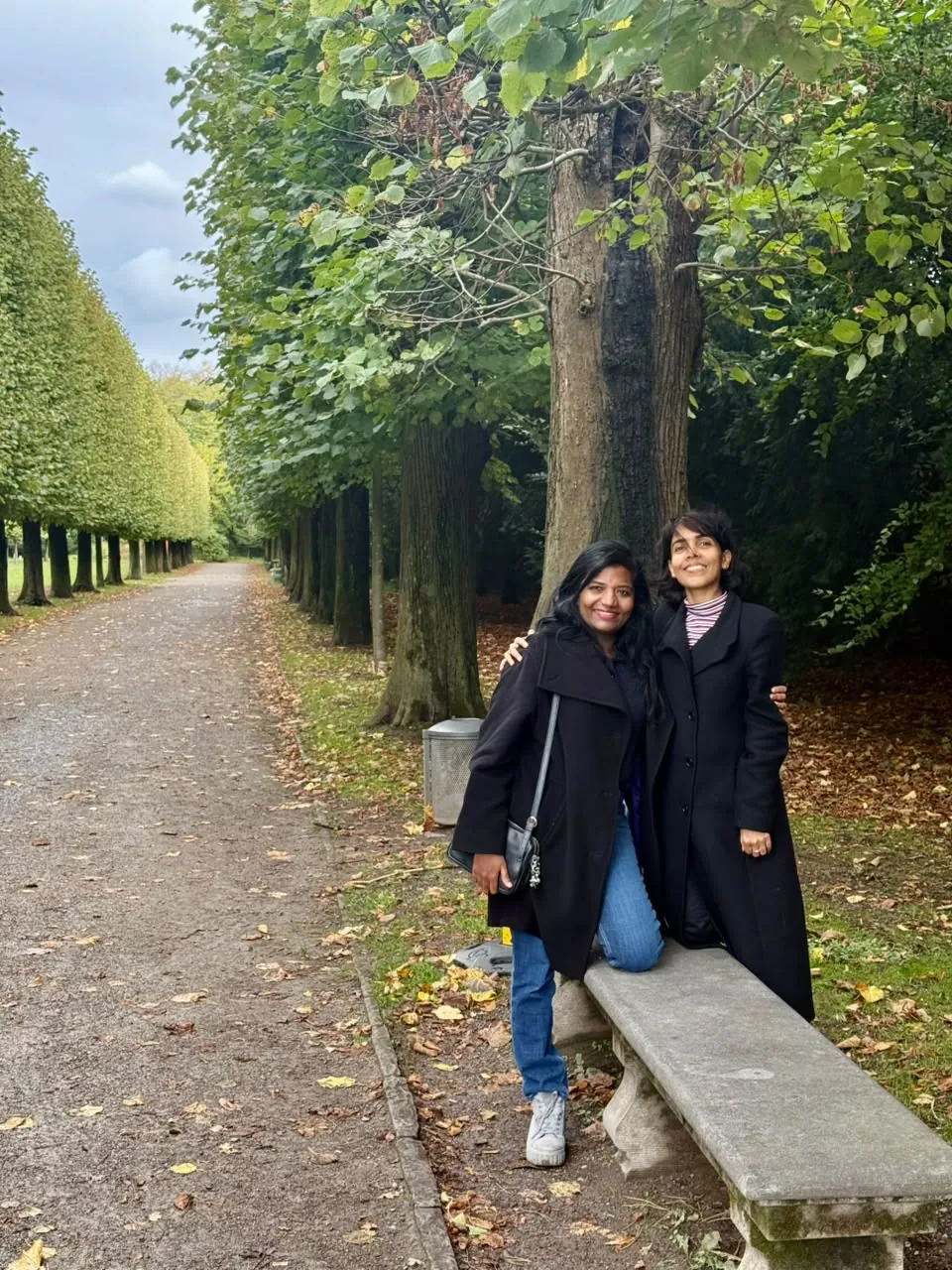
I wondered aloud if I could return as a ghost, go palace-hopping across Europe, and spend eternity pranking mischievous unruly children and eat anything and everything delicious without any worries of falling ill. Navina’s laughter fuelled my fantasies.
Then reality and the palace called us back. There was still far too much to see, and more to discover. Strolling along those Linden-lined paths felt like time travel. With every turn, the trees seemed to close in behind me, the present quietly disappearing, as I imagined myself walking through these very grounds centuries ago.
Those hundreds of birds and beetles, surprisingly, never once interfered with our video shoots or slow-mo reels as if they were warned of staying out of the frame. Surprisingly, the bodies of water behaved. There was none of the usual splashing, gurgling or murmuring that water seems to insist on making. It was as though the entire palace ground ecosystem had agreed to let us have our imaginary celebrity moment.
The Beetles of Benrath
I’ll admit that I had to google the equivalent of ornithology for beetles and that is how I learnt the rather magnificent word coleopterology. Naturally, that sent my mind wandering. Can we deny ourselves the privilege of imagining that Cleopatra might have had a beauty secret involving crushed insects? I certainly can’t claim that she did, but the thought made my fascination of beetle feel strangely royal.
I can safely say, though, that this palace park boasts around 300 species of beetles because no royals ever lived in the palace, and no one was around to recruit them into the royal beauty department. I said a little prayer for the little creatures who have been enjoying their uninterrupted reign here because it takes about 70,000 female cochineal insects to make almost 450gm of carmine dye, an integral component of cosmetics. And we all know that their entire existence depends on procreation.
I’m sure that species numbers will only grow in the years to come, because beetles around the world must surely have their own secret communication network and protocol, stop contributing to human vanity and make a grand escape to this palace park.
Kindly excuse me for these elaborate details on beetles. The clicking, tapping and buzzing seemed to be telling me stories, and I blame it on my bioacoustics instincts as well as my strongest skill of never quite staying on topic. Show me a palace, and I’ll find a dozen different stories hiding inside it. Truth be told, through my entire stroll I looked for Styx from Dr. Dolittle.
The Kitchen Garden
As I walked through the traditional rows of seasonal vegetables, herbs and flowers, past the carefully espaliered fruit trees, I wished my mom, Geetha, and my grandmother, Winnifred, were there with me. They are the only two people in my family who would have truly marvelled at a vegetable garden like this. Both blessed with green thumbs, they could coax life from the soil, whether it is a tiny plant or a flourishing tree. I could imagine their delight as they wandered through the garden, admiring each row and quietly taking pride in the things they, too, have always known.
Beneath the Linden Trees
Despite Nicolas planting hundreds of Linden trees in the park, they brought no good luck to the Elector and his wife. There is nothing quite like the soft psithurism of Linden leaves to make a place feel surreal, make wishes, believe in Freya and her protection and yeet all bad spirits. No wonder we low-key spent more than 50% of our palace time beneath the Linden Trees and that way we did justice to our souls.
By Dr Elsa Lycias Joel
Have a travel story to share? Write for us