Sambhar: Not all that is pink is Salt
Just about 70 km from Jaipur, Rajasthan, lies Sambhar Lake, the country’s largest inland saltwater lake, producing nearly 200,000 tonnes of salt annually.
Just about 70 km from Jaipur, Rajasthan, lies Sambhar Lake, the country’s largest inland saltwater lake, producing nearly 200,000 tonnes of salt annually. The lake is a wetland of international importance under the Ramsar Convention and is also listed on the Montreux Record due to ecological changes affecting the wetland. We set out early one morning in September from Jaipur, not just to see Sambhar’s famous salt pans and salt production, but to witness its beautiful winged visitors: the flamingos. As we entered the town, a board welcomed us with the words, “Rail Nagri Sambhar mein aapka swagat hai.” My father immediately told us that during the British colonial era, a network of meter gauge and narrow gauge railway lines was laid to transport raw salt from the lake bed.
When Pink Turns Out to Be Flamingos
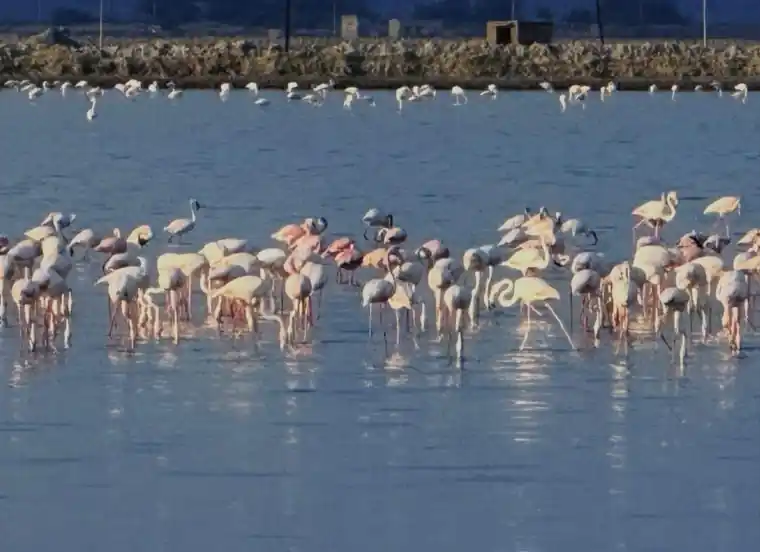
As we approached the lake, two prominent colours caught our attention: off-white and pink. Under the clear blue sky, the colours stood out even more. We assumed the off-white was the salt pan and the pink was unpurified salt lying in the lake. But when we looked through the binoculars, we realised that what we had taken to be pink lines were, in fact, hundreds of flamingos. It was an unexpected and awestruck moment. We were not really expecting to witness such a flock of birds, as it was September and the birding season generally begins in October and continues until March. Along with Greater and Lesser Flamingos, there were other birds such as painted storks, whistling ducks, cormorants and egrets. However, the pink flamingos outshone every other species.
Greater and Lesser Flamingos together at Sambhar Lake
Ride Through the Salt Pans

The Pink Buggy: A Ride Through Sambhar’s Salt Pans
We stopped for refreshments at Sambhar Rawla Palace, where the owner, Mr. Sunil Gurjar, a local, informed us that around 10–20% of the flamingos stay back even after the migratory season and remain along the edges of the lake. We took the famous Sambhar train ride to see the salt-making process, but instead got a small, pink-painted buggy that ran like a train. The ride covered around 7 km through the salt pans, giving us a closer look at the lake and the traditional process of salt making. At some places, the lake had a strong smell, which our guide explained was due to algae and other halophilic microorganisms living in the saline water. At the edge of the lake, we noticed another beautiful shade of pink. This time, it was not the flamingos but the salt itself that had turned pink.
The Science Behind the Pink
The pink colour of the salt is associated with pigments produced by salt loving microorganisms, including microalgae such as Dunaliella salina. These microorganisms produce carotenoid pigments, which help protect them from intense sunlight and the stresses of high salinity. The pigments can remain in the saline environment and give the salt deposits a pinkish hue. Looking at the pink salt, I wondered if this could also be connected to the beautiful pink colour of the flamingos. The answer was yes, but not quite as simply as I had imagined. Flamingos obtain carotenoid pigments through their diet, including algae and small aquatic organisms. These pigments are absorbed during digestion and are transported through the body, where they are deposited in growing feathers and other tissues, giving the birds their characteristic pink to reddish colour.
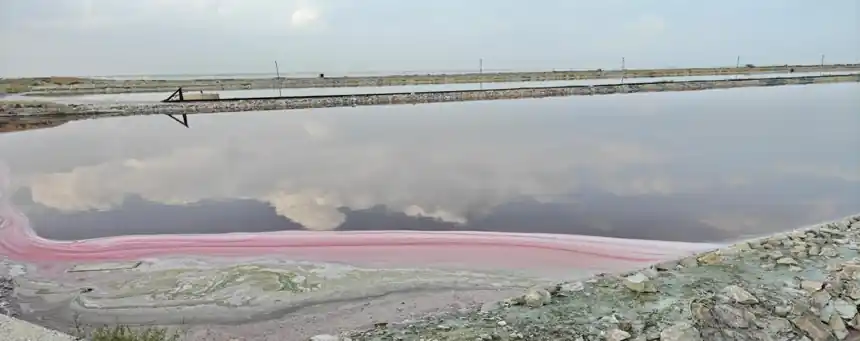
Pink hues along the edges of Sambhar Lake
The guide explained that the colour of the salt gradually fades as it is exposed to sunlight and goes through further purification, eventually becoming whitish. When he placed a salt crystal in my hand, I could see the pink tint up close. From the buggy ride along the lake, we also saw beautiful pink and green trees of Tamarix dioica (salt cedar), perfectly blending with the pink surroundings.
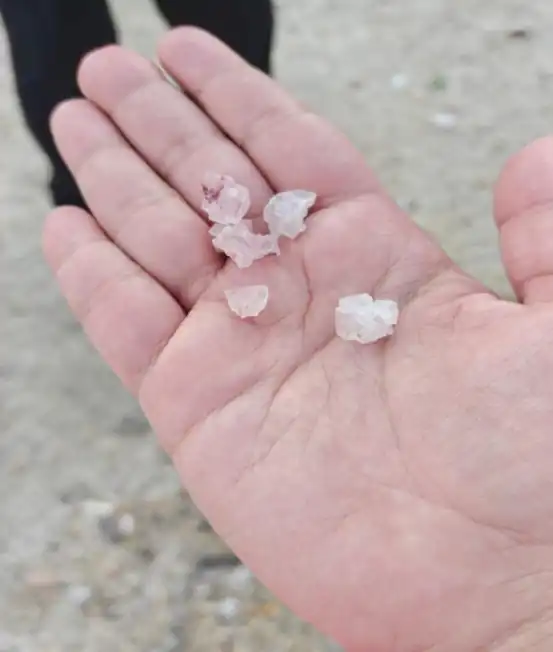
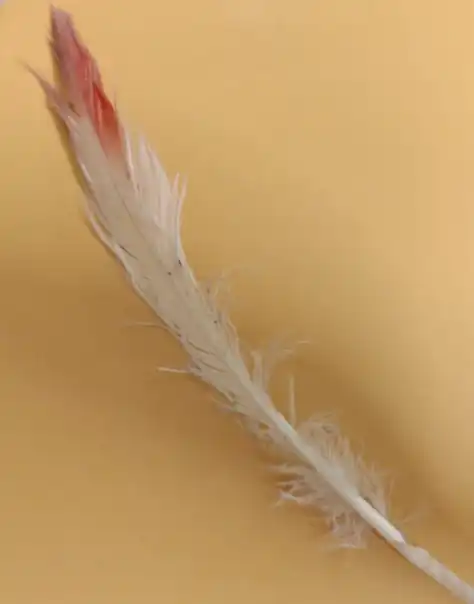
Pink in two forms: Salt crystals and flamingo feather
From the buggy ride along the lake, we saw beautiful pink and green trees of Tamarix dioica (salt cedar), perfectly blending with the pink surroundings.
Beyond the Beauty
However, beneath its breath-taking beauty, Sambhar Lake is quietly facing ecological challenges. A local informed us about excessive salt mining, illegal borewell construction and encroachment. Changes in the lake’s salinity and ecology can have consequences for the species that depend on this saline wetland. The lake has also witnessed episodes of mass bird mortality. In 2019, thousands of migratory birds died in an outbreak attributed to avian botulism, a disease caused by a toxin produced by the bacterium Clostridium botulinum. Investigations identified several factors that could favour the growth of the bacterium, including low salinity. In 2024, another outbreak of avian botulism was reported, with hundreds of birds dying at the lake. These incidents are a reminder that even a small change in the ecology of a wetland can affect the species that depend on it. As the evening grew, I stood by the lake, surrounded by shades of pink, and smiled at the coincidence that I was wearing pink too.
Brief Bio

Dr. Sakeena Gul Niazi is an independent forestry researcher with a Ph.D. in Forestry (Genetics and Tree Improvement) and an M.Sc. from the Forest Research Institute (FRI), Dehradun. She has over seven years of research experience in forest ecology, biodiversity conservation, and natural resource management, along with prior experience in environmental consultancy and impact evaluation.
She has worked with institutions including the Wildlife Institute of India and FRI Dehradun, and has led multiple field-based studies across India. A former All India Radio compere, she is also a science communicator with a strong interest in translating field ecology and conservation science into accessible narratives for wider audiences.
Have a travel story to share? Write for us