Dashain in Nepal: The Festival That Brings Families Home

Dashain is Nepal’s biggest festival and a season of family reunions, home rituals and blessings. Here’s what travellers may experience, and how to plan around the holiday.
During Dashain, Nepal’s roads carry more than visitors. They carry people returning to their family homes for the country’s biggest festival.
The celebrations stretch across several days, with rituals at home and at temples, family visits, shared meals and blessings from elders. For travellers, Dashain offers a way to see Nepal in a deeply personal season, but it also changes the rhythm of travel. Many people leave the cities to celebrate with their families, and shops and services may keep different hours.
A festival that builds towards family reunions
Dashain begins with Ghatasthapana, when families sow barley seeds in a protected place at home. The shoots, called jamara, grow through the festival and are later used in blessings.
The days that follow have their own rituals, including Phulpati, Maha Ashtami and Maha Navami. On Vijaya Dashami, elders give younger family members tika, a mixture that is usually red, and jamara, along with blessings. Families visit relatives, share meals and mark the occasion together. Customs vary between communities and households, so there is no single version of Dashain that represents every Nepali family.

What travellers may notice
In Kathmandu and other cities, the festival can feel quieter as people travel home. In towns and villages, you may see family gatherings, festive clothing, temple visits and children playing on traditional swings. Kite flying is also associated with the season. These everyday scenes are part of Dashain’s character: much of the celebration happens in homes and neighbourhoods, not on a visitor-facing festival stage.
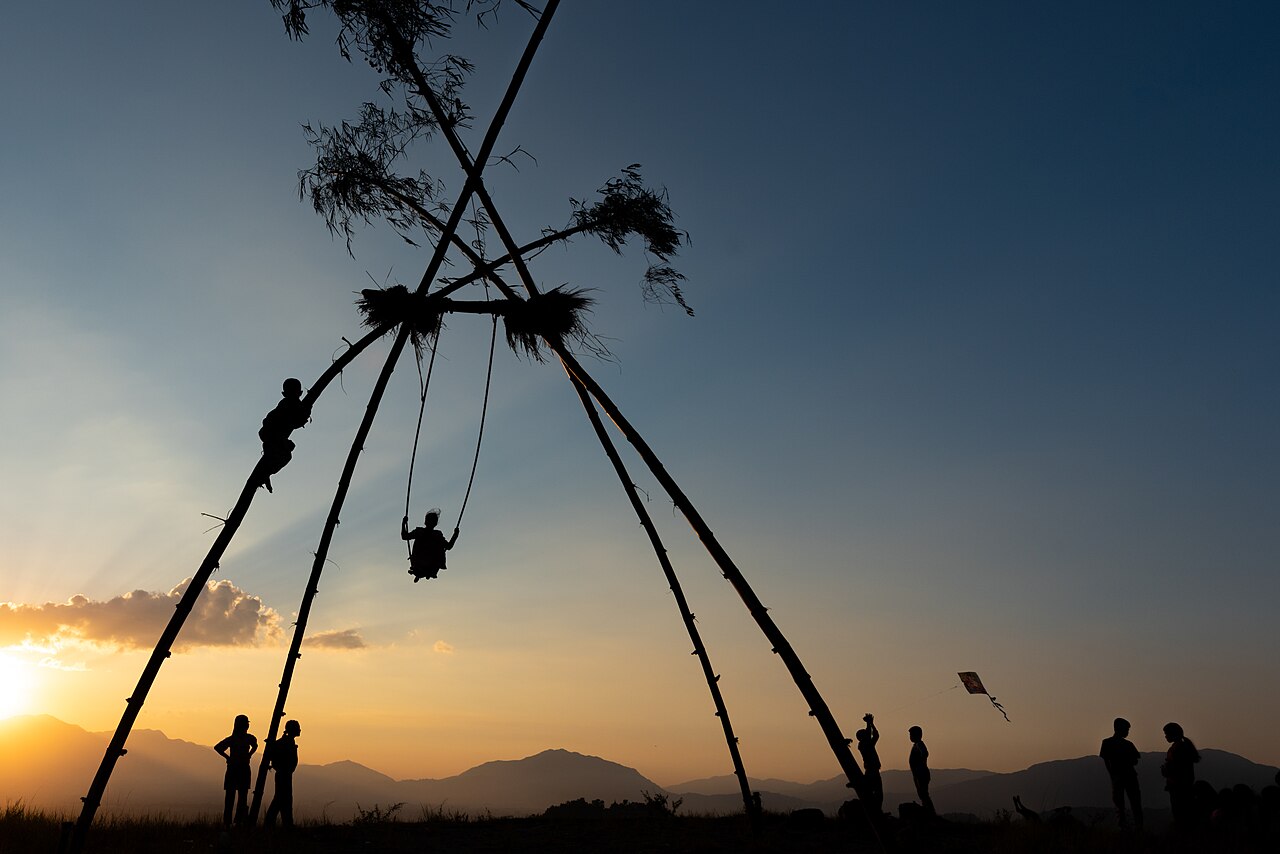
In Kathmandu, the Phulpati procession to Hanuman Dhoka is one public event connected with the festival. The details of processions and ceremonies can change by year, so check current local notices before planning around one.
Plan around the holiday
Dashain is a major family travel period. Book intercity transport early, confirm your accommodation’s arrangements, and check opening hours for restaurants, shops and attractions. Some services may be reduced or closed on important festival days, even when routes remain open. If you have a guide or local host, ask what will be operating during your visit.
Visitors may be invited to receive tika and jamara. If that happens, follow your host’s lead; it is a family blessing, and customs differ. Ask before photographing ceremonies or people, particularly in homes and temples.
A visit shaped by hospitality
Dashain can be a rewarding time to visit Nepal if you travel with flexible plans and realistic expectations. Its most memorable moments may be small: a family welcoming you to a meal, a neighbourhood preparing for the holiday, or a host explaining the jamara growing in a quiet corner of the house.
The festival is not simply Nepal’s version of Dussehra. It has its own calendar of rituals and its own emotional centre: families coming together, elders giving blessings, and the journey home that makes those gatherings possible.
Have a travel story to share? Write for us